
Submission by van Heyningen and Haward Architects.
Being a good ancestor
Practice
1. Do you have a clearly stated purpose aligned with the planetary emergency? We’re looking for a bold ambition here, and a culture which recognises the need for long-term thinking.
We have embedded environmentally conscious design principles into our work for decades; the urgency of the climate and biodiversity emergency has intensified, but our core approach has remained consistent. We believe sustainability should not be treated as a specialist add-on or a final-stage exercise, but integrated into every design decision from the outset.
Our work prioritises retrofit, adaptability, long life and reduced resource use, alongside creating socially valuable places which endure. We regularly challenge clients to consider whether building less, reusing more, or extending the life of existing structures may achieve better long-term outcomes.
This ethos runs throughout our practice culture, project reviews and public advocacy. Through industry talks, LETI involvement and knowledge-sharing, we aim not only to improve our own projects, but to contribute to wider systemic change across the built environment sector.
2. Do you have a clearly stated purpose aligned with the planetary emergency? We’re looking for a bold ambition here, and a culture which recognises the need for long-term thinking.
As a small practice, knowledge transfer happens through daily collaboration rather than rigid corporate structures. Our ethos, technical knowledge and regenerative principles are shared openly across the office, with all staff involved in discussions about projects, practice direction and environmental responsibility.
We actively encourage staff to contribute to research, education and industry initiatives beyond the practice itself, helping to ensure knowledge is disseminated rather than retained hierarchically.
Lessons learned from one project are carried through into the next, whether relating to retrofit strategy, low-carbon materials, conservation, or post-occupancy learning.
The long-term impact of this culture can be seen in former staff members who have gone on to become leaders in sustainable design and climate advocacy, including contributors to retrofit guidance, climate action groups and low-carbon practice leadership. We see this shared culture of stewardship and openness as central to our legacy.
3. Do you share research and knowledge for the benefit of society and the wider world?
At our suggestion, U&C commissioned a POE of Phase 1 of St Gabriel’s CofE Academy, resulting in the subsequent design for Phase 2 being AECB Carbonlite certified, with the whole life carbon of phase 2 c.50% of phase 1. We continue to encourage clients to commission POE services (usually to no avail) and to push for legislation to make this a statutory requirement.
We greatly value our staff, encouraging and empowering them to proactively contribute to improving the wider cultural view: contributing to LETI guidance, sitting on Cathedral FAC, or participation in education programmes such as Open City’s Accelerate and RIBA’s Future Leaders being recent activities. We often speak at conferences and events, where we aim to inform client and stakeholder audiences about the benefits of decarbonisation or retrofit, as well as at industry events where we share lessons learnt from complex projects such as Houlton School.
Project
1. Do you advocate for long-term thinking at the outset of work? Do you initiate work with long-term thinking and challenge clients? Also, can the organisation demonstrate that this approach has worked?
Long-term thinking underpins all of our projects. We advocate for “long life, loose fit” principles, prioritising adaptability, reuse and future resilience over short-term solutions. We regularly encourage clients to step back from immediate project pressures and consider wider estate strategies, retrofit opportunities and lifecycle impacts before committing to new construction.
At King Alfred School, a detailed masterplanning exercise led to refocussing priorities on phased retrofit and energy improvement rather than replacement. At Newnham College’s Rare Books Library, we persuaded the client to pursue a more ambitious retrofit of our original 1983 design, significantly reducing operational carbon while extending the life of the building fabric.
Our work at Houlton School also demonstrates the social and environmental value of long-term thinking: through careful adaptation of historic fabric, the project regenerated both buildings and community, proving that retention and reuse can create enduring cultural and environmental value.
2. Does your work take account of the future climate and the need for resilience?
Climate resilience is embedded into our projects from the earliest design stages. We prioritise passive environmental strategies — orientation, shading, thermal performance, natural ventilation and adaptable layouts — to create buildings capable of remaining comfortable and robust under future climate conditions with minimal energy demand.
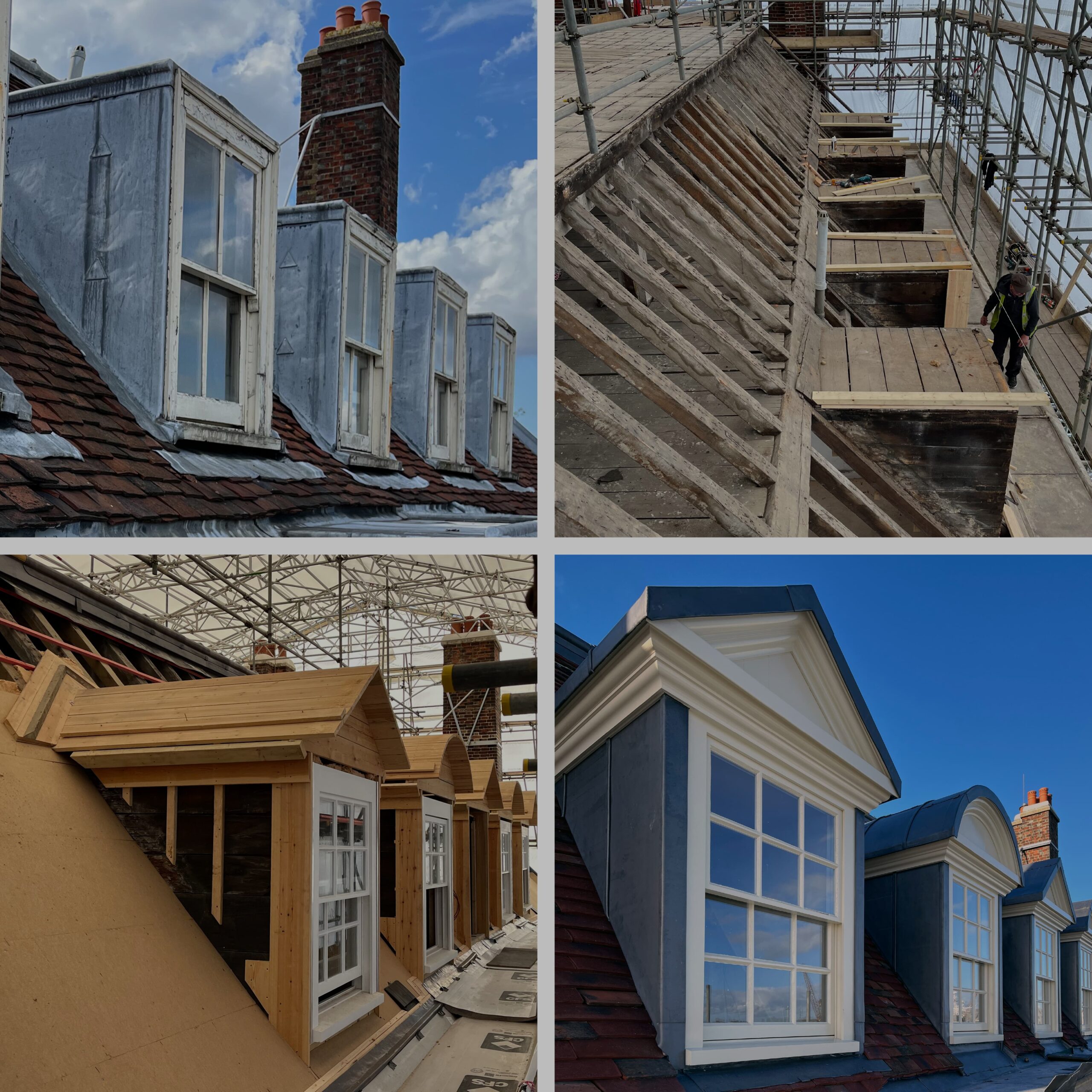
Our retrofit and conservation projects demonstrate that significant environmental improvements can be achieved even within highly constrained historic settings. At Commissioners House, a Grade I listed Scheduled Ancient Monument, energy upgrades are being carefully integrated alongside essential conservation repairs to extend the building’s life for future generations.
Adaptability is also central to resilience. We design buildings and structures to accommodate future change, reducing the likelihood of premature obsolescence or demolition. Where possible we favour low embodied carbon, demountable or reusable construction systems, including CLT and mechanically fixed assemblies that support future disassembly, repair and material reuse.
3. Does the majority of your work go beyond mitigating negatives and towards optimising positives?
We aim for projects that actively improve environmental and social conditions, rather than simply reducing harm. Our approach combines retrofit, biodiversity enhancement, low-carbon design and social value to create places that contribute positively to their surroundings over time.
At Waterbeach Barracks Primary School, landscape and biodiversity strategies were developed alongside low embodied carbon design, maximising the use of timber to help transform a former military site into a healthy learning environment rooted in nature. At Bow School, mature trees were retained and incorporated into the design from the outset, preserving established ecology and long-term amenity value for future generations.
Our conservation work similarly seeks to reanimate existing buildings through careful adaptation, extending their useful life while reducing operational carbon. We see regenerative practice not as a singular technology or aesthetic, but as an ongoing process of stewardship: strengthening relationships between people, buildings, materials, landscape and future generations.
Co-evolving with nature
Practice
1. Do you use biophilia within your premises and/or do you regularly gather in natural settings?
We are a small practice of eight, now based within a shared co-working studio alongside other creative and built environment professionals. This arrangement supports a more resource-conscious way of working: sharing space, energy and facilities, while creating regular opportunities to exchange ideas and learn from others committed to sustainable and regenerative practice.
Our workspace overlooks mature gardens, bringing natural light and greenery into daily working life and encouraging people to step outside throughout the day. We have always valued taking a proper break from screens, and lunchtime walks remain part of our office culture.
Inside the studio, plants and natural material samples contribute to a calm working environment. We see biophilia less as something to be curated for appearance, and more as creating the everyday conditions for people to feel connected to the natural world: access to daylight, views of nature, time outdoors, and a healthy, balanced way of working.
2. Can you share examples of where you have considered nature in decision making?
We have long been a climate-conscious practice and prioritise lower-impact travel wherever possible. For project work and meetings, we favour rail and public transport over car travel and seek to minimise unnecessary journeys. Remote meetings and flexible working also help reduce travel where appropriate, while allowing people to work in ways that best suit their circumstances.
Nature is also a key consideration when deciding whether to take on a project. We assess location, ecological sensitivity, landscape context and material choices against our regenerative design principles. This has led to work in particularly sensitive environments, including two buildings for the RSPB at Rainham, where every stage of design and construction required careful consideration of ecological impact.
We support flexible working based on individual circumstances, including part-time and remote working. We also aim to support staff with caring responsibilities through a flexible, trusting and collaborative working culture.
3. Are you supporting nature locally and nationally?
We publicly support Architects Declare and advocate for a just transition towards a regenerative built environment. Members of the practice contribute to wider industry research and knowledge-sharing through LETI, public talks, education initiatives and participation in professional advisory groups.
Many of our projects directly support ecological enhancement and biodiversity, often in environmentally sensitive contexts. RSPB Rainham required close collaboration around habitat protection and ecological impact, while projects such as Houlton School and Waterbeach Barracks Primary School integrated biodiversity measures including habitat corridors, species protection and landscape-led regeneration. At Mucking, we helped transform a former landfill site into a nature reserve, designing a visitor centre carefully engineered to accommodate ground movement while enabling visitors to experience and learn from the landscape with minimal impact on wildlife
Within our own work we continue to advocate for better environmental product transparency, whole-life carbon thinking, post-occupancy evaluation and stronger climate legislation across the industry.
Project
1. Can you demonstrate work that strives to match the performance of a mature ecosystem?
We always try to work with a landscape architect as part of the core team; it is crucial to not only improve the landscape, but to design each building around the nature of its site. At Houlton School early discussions allowed relocation of great crested newts and a badgers set to the adjacent corridors and minimised impacts of new lighting on bats, as well as integrating bat and swift boxes. Our Cory Centre sits on a former landfill site next to the Thames Estuary, combining sustainable design and visitor facilities in a nature reserve setting to support the restoration of wildlife habitats. Waterbeach Barracks Primary School was also landscape driven, working with Macgregor Smith Landscape Architects to develop a scheme which regenerated the landscape, transforming its previous use as an army barracks, to support a low carbon school actively addressing the challenges of the climate crisis through renewable strategies.
2. Are you working on material stewardship?
Material stewardship is increasingly central to our specification approach. We prioritise durable, repairable and reusable materials, favouring mechanically fixed assemblies, minimising composites and reducing reliance on petrochemical products wherever possible.
Reuse is embedded within our demolition and retrofit strategies. At Leicester Cathedral, existing parquet flooring was salvaged and reused rather than discarded, while locally sourced sweet chestnut and UK stone suppliers reduced transport impacts and supported regional material economies. At Commissioners House in Chatham, historic doors and timber elements are being carefully retained, repaired and reincorporated into the project.
We regularly look at whole-life carbon, using specialist assessment tools, to better understand and reduce embodied impacts. We also continue to advocate for greater material transparency from manufacturers and contractors, recognising that regenerative practice depends upon better understanding the environmental consequences of specification choices across the supply chain.
3. Does the majority of your work demonstrate the use of biologically-inspired approaches such as Bioregionalism, Biophilia or Biomimicry?
The story of how our buildings connect to their landscapes is reflected on at every stage of design. Biogenic and low impact extracted materials such as stone, are becoming core to our practice, and we very often use bio-based solutions such as natural insulation and woodfibre. We think it’s important to balance bio-based solutions with effective resourcing and would be reluctant to put in something like a living wall, which, through watering and drainage consume resources which could be better used elsewhere to create a regenerative system. We often deal with very low budget clients, who will prioritise the delivery of social value over extensive biophilia.
Creating a just space for people
Practice
1. Do you have a progressive EDI policy and can you evidence many forms of diversity, which are welcomed and acknowledged, within your company/organisation?
We are committed to providing a supportive and inclusive working environment where all protected characteristics are respected and safeguarded. This commitment is set out in our Equal Opportunities policy and embedded in our day-to-day practice.
We were a model case study for Women in Architecture’s 50:50 campaign in 2010 and continue to maintain a balanced gender split. Recruitment is approached openly and without preconception, and over the years our team has reflected a broad range of backgrounds and perspectives. Our current cohort of eight includes white British, Irish, Asian British, Japanese British and Scottish colleagues.
Accessibility has also been a key recent priority, having relocated from a poorly accessible office into a fully accessible workspace, allowing us to better support staff and welcome clients and collaborators with a wide range of access needs. Creating an inclusive and welcoming environment for everyone is a vital part of how we work.
2. Do you operate a no overtime culture, meet the living wage consistently, and stipulate a fair salary ratio between staff of all levels?
We ensure we meet the Living Wage as a minimum for all staff and refuse to participate in unpaid internships – all staff are paid for their work. Although we would love to operate a no overtime culture, the social nature of our projects means that budgets (and fees) are incredibly tight and resources are stretched as a result. We never encourage overtime unless it is a necessity for a deadline, and will make sure time in lieu is remunerated. We understand that there are peaks and troughs and we all work collaboratively around that, aiming to achieve a positive work-life balance.
3. Do you support charities, community groups, social enterprises, action groups and others through pro-bono work, charitable giving or in-kind donations?
We believe strongly in using our expertise and experience to positively impact the lives of others, hence why the majority of our projects are for education or charity clients. As a core principle of our practice ethos we strongly encourage staff to undertake pro bono work, and example it at all levels. Our practice Partner is a voluntary member of both LETI (working on the Spine workstream of the upcoming Non-Domestic Retrofit Guide) and on the York Fabric Advisory Committee. We have had staff working with Open City’s Accelerate programme, and the RIBA’s Future Architects Education programme (and previous iteration) since inception. A recent staff member started volunteering through our practice as an Open City Young City Makers mentor in 2019, then became an assistant tutor and subsequently a lead tutor.
4. Do you use an ethical framework to assess opportunities and/or supply chain partners and is them team consulted on these decisions?
Much of our work is centred on education, culture, conservation and community benefit, so ethical decision-making remains important to our practice. We consider environmental and social implications of projects at the point of appointment, including site sensitivity, long-term public value and alignment with our regenerative principles.
We also increasingly assess supply chains through the lens of environmental responsibility and transparency, challenging manufacturers on embodied carbon data and Environmental Product Declarations where information is unclear or insufficient. Where suppliers or products fall short of our environmental or ethical expectations, we are conscientious about ruling them out and seeking more appropriate alternatives.
As a small, collaborative practice, these conversations are not isolated to management level; project teams are actively involved in procurement, material selection and environmental decisions. We believe ethical practice requires continual questioning and improvement, particularly in an industry where greenwashing and short-term commercial pressures remain significant barriers to meaningful change.
Project
1. Does your work demonstrate deep engagement with local stakeholders and end users?
We believe meaningful engagement leads to more inclusive, resilient and successful projects. While the nature of our work does not always allow for direct co-design with all end users, we seek opportunities to involve stakeholders wherever possible and tailor engagement approaches to the needs of each project.
At Platform Performing Arts Centre, we worked closely with a group of Young Advisors appointed by the client to help shape the design. Their input directly influenced the development of the building and ensured the project responded authentically to its intended users. One participant later went on to study architecture, demonstrating the wider social value meaningful engagement can create.
Across our education and community projects we work closely with staff, local authorities, community groups and user representatives to ensure buildings support both immediate needs and long-term social resilience.
2. Does your work create connected and resilient communities which positively contribute to neighbourhoods and allow equality of access?
Our overarching ethos is centred on strengthening connections between people, spaces and places. We recognise that accessibility, shared ownership and community use are key to resilient and supportive neighbourhoods.
Our projects are often designed as civic assets as well as buildings. Houlton School, for example, forms an important part of a wider new community and provides a strong sense of identity within the development. A large proportion of our education and community work includes flexible spaces designed for use beyond core hours, allowing local groups and residents access while maintaining safeguarding.
At Crossway, the building was designed to support multiple congregations and a wide range of local community groups, with flexible spaces that can easily adapt to different uses. It consistently hits exceptional levels of occupation throughout the week and we’re delighted by the broad spectrum of local people who have taken it to heart as a valued community resource.
3. Does the majority of your work promote equity in society, and consider all people, not only building inhabitants
We consider spaces around buildings as part of the building itself, even if outside the footprint. The Rivergate School public square outside the entrance to the school and housing is a multi-use area for public social interactions and events, as well as school pickups. We refurbished the streetscape of St Mary’s School in Cambridge and created new internal spaces, pulling back the building line to widen walking routes and provide outdoor seating and planting for passersby and local residents. Similarly at Eeklo College in Belgium, we created a public square for both students and the public to enjoy. A practice of our size is not legally required to have a formal modern slavery policy, however we do take steps to ensure that we are not directly or indirectly engaged with any practices which may result in the employment of forced labour and cover this in our staff practice handbook.