
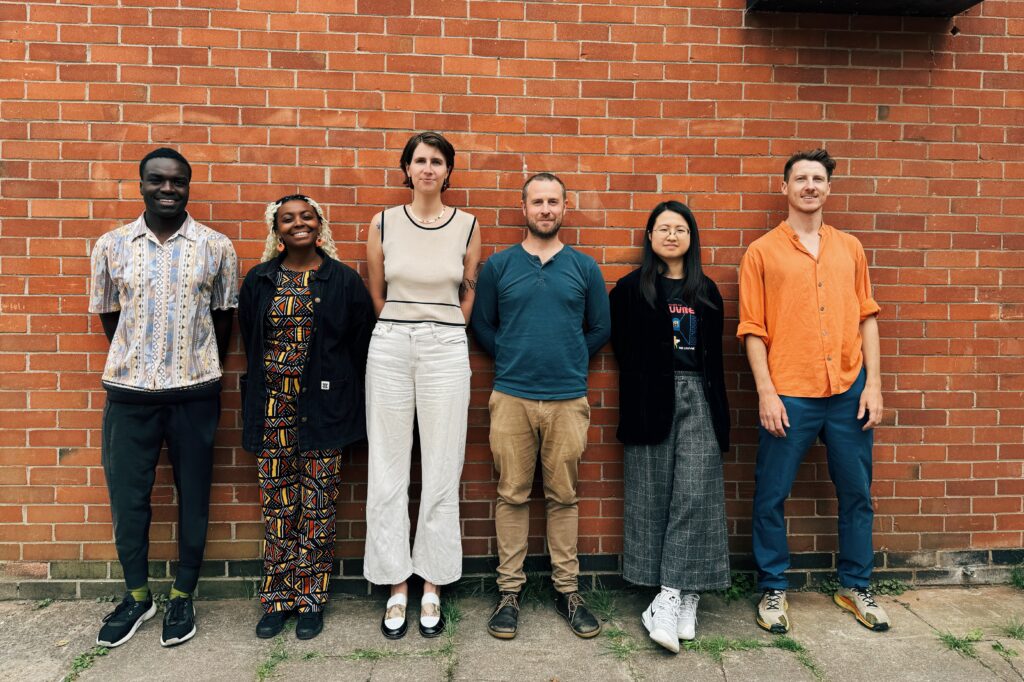
Submission by Transition by Design Co-operative.
Being a good ancestor
Practice
1. Do you have a clearly stated purpose aligned with the planetary emergency? We’re looking for a bold ambition here, and a culture which recognises the need for long-term thinking.
Embedded within the foundations and our articles of association is our core object: ‘We are to carry on activities which benefit the community and in particular (without limitation) to facilitate the transition to an equitable and convivial low carbon society.’ Our North Star is: To lead the way in strategically designing sustainable neighbourhoods that address complex problems in the world we live in. We strive to enable a socially and environmentally just transition to an ecologically sustainable and convivial future. Our approach is community-oriented, inclusive and collaborative delivering breakthrough and bedrock projects that inspire, challenge and change the way we live. Our work is motivated by the belief that collaboration combined with good design and research can solve multifaceted challenges and improve the world we live in.
2. Do you have a clearly stated purpose aligned with the planetary emergency? We’re looking for a bold ambition here, and a culture which recognises the need for long-term thinking.
As a worker’s co-operative, the organisation is owned by its members and succession planning is built into the way we function. Ownership is continuously being distributed and passed whenever an employee becomes a member. We operate using sociocracy, a decentralised way of organising that makes decision-making more equitable, efficient, and transparent. We operate using circles, domains and roles. In the working circles, all the day-to-day work of the organisation is held and guided. All processes and procedures are documented clearly with onboarding and off boarding procedures integrated to ensure clear succession planning when a member moves on, and to protect the values and legacy of those who have co-shaped and built / contributed to the organisation. We have seen this exercised in practice when one of the co-founders and varying long-standing members have moved on, the transition has happened smoothly without losing key values of the organisation.
3. Do you share research and knowledge for the benefit of society and the wider world?
We have completed award-winning action research in how empty and underused spaces could be used to help tackle extreme housing need in Oxford. Together with this we have also developed a strategy for further implementation of an existing pilot project for affordable, community-led housing project on underused urban land. This will involve bringing forward a pipeline of disused parcels of brownfield land owned by Oxford City Council in order to build zero-carbon homes using natural materials, and modular off-site homes, for people on the housing register. Both of these items of research are publicly accessible, and have been used as exemplars across the country, on how underused land can be used for affordable housing, using low-carbon materials.
Project
1. Do you advocate for long-term thinking at the outset of work? Do you initiate work with long-term thinking and challenge clients? Also, can the organisation demonstrate that this approach has worked?
All of our projects from the outset include an ambition to use low carbon and sustainable materials within the construction phase. We always begin with net zero in mind, to ensure that clients are able to run their homes / buildings with renewable energy and with the aim of reducing their running costs. We challenge clients when they explore compromising on these ambitions due to cost, and make the case for saying that the short term cost uplift is worthwhile for the long-term impact of the work, and in several cases, can also mean better longevity due to material choices and reduced maintenance costs. This approach has proved well when exploring the Hutchcomb Road retrofit project we completed, the second domestic enerPHit+ project in the UK. The client now has no energy bills and has a warm and comfortable home in the winter and a cool home in the summer.
2. Does your work take account of the future climate and the need for resilience?
Our work is always taking into account the future climate and the need for resilience. Principally the way we organise as a co-operative embeds this into our function through sustainably reviewing our policies, procedures and approaches to work to ensure we’re always considering resilience. As a team with Passivhaus designer, we use building energy models and climate data sets which model and stress test the building performance against climate change in the future, meaning buildings are designed to be resilient to climate change and have least impact. We seek to integrate regenerative design principles to think beyond just net zero, and build back symbiotically with the environment and Anthropocene meaning it’s inherently resilient.
3. Does the majority of your work go beyond mitigating negatives and towards optimising positives?
Yes, we’re always trying to mitigate negatives and optimise positives. For example, our decision-making processes embed this, as we operate using sociocracy. For example, when a proposal is brought forward by a member it goes through several rounds: Sharing the proposal, initial reactions, clarifying questions, critical concerns, getting creative, and testing for consent. We are always trying to work within the range of tolerance of all of the members to positively move forward a proposal and way of working in the organisation. By testing for consent, as opposed to consensus, we’re going by the principle of “good enough for now, safe enough to try”. Always looking to optimise a way of working that is collaborative and moving towards a shared goal.
Co-evolving with nature
Practice
1. Do you use biophilia within your premises and/or do you regularly gather in natural settings?
Our studio is located alongside the canal in Oxford situated on the first floor behind a willow tree. We have several plants within the studio, and keep the space vibrant, green and alive. We have an annual studio away day in the countryside, last year we visited Tring.
We left the studio for trails in the sun and spent the day walking the Ashridge Drovers Walk. We foraged wild mushrooms, explored old drovers’ paths, shared snacks in the woods, and finished with a well-deserved drink at the Trooper pub. We encourage our peer meetings to be able to engage with the outdoors when there is good whether, by sitting next to the canal or going for walking meetings. We encourage members to eat away from their desks to enjoy the outdoors.
2. Can you share examples of where you have considered nature in decision making?
We are currently engaged with a community-led housing project in Totnes, Devon (Bowden Pillars Future), where they are looking to build up to 50 net zero carbon homes, a common house, shared infrastructure and a regenerative farm. We have embedded a co-design process within this project wherein we have had workshop weekends to shape the site. As part of the decision making processes, we assign everybody a ‘more than human’ aspect, which is attributed to a natural characteristic. This may be a creature, plant, ecosystem, wildlife feature. The purpose of this exercise is to ensure that whilst the person speaking may represent their opinion and views, they must also hold the view or opinion or consider the impact and decisions for the natural aspect that they represent for the day. This ensures that through the decision making process, we are embedding nature into the process.
3. Are you supporting nature locally and nationally?
Locally we are designing with circularity in mind, utilising opportunities to use local materials and to reuse components or aspects in design projects. We work within a co-working building which contains planters and nature in the surrounding area and members have got involved with planting, watering and growing within the local area. Nationally, we have visited hemp farms, exploring this as a material to be used within insulation, and also we have visited several timber modular manufacturing factories to explore integrating these systems into our projects.
Project
1. Can you demonstrate work that strives to match the performance of a mature ecosystem?
The regenerative community-led housing project that we are engaged with in Totnes, Devon (Bowden Pillars Future) is seeking to have a regenerative farm and a mature ecosystem as part of the project. We are designing the homes and the landscape around the site to ensure that it co-exists well within nature and is supplementary to the landscape, working with the terrain, prevailing wind directions and the sun to ensure that the placement of the homes work together with the natural setting. As part of passivhaus and low energy design breathability of the building is important, meaning that the buildings are not fighting against nature but working with it, to the benefit of the inhabitants.
2. Are you working on material stewardship?
We have community-led housing experts within the team, who are experienced in engaging with Community Land Trust and Housing Co-operatives. Community Led Housing and Housing Co-Ops inherently consider material stewardship, especially with the ethos of CLTs involving the affordability and stewardship of land in perpetuity for generations. The Totnes project we’re currently involved with (Bowden Pillars) integrates a regenerative farm within the development that will be stewarded by the community who live alongside it.
3. Does the majority of your work demonstrate the use of biologically-inspired approaches such as Bioregionalism, Biophilia or Biomimicry?
We are working on a community-led housing project in Totnes which is using a bioregional approach towards the design of the site. Exploring the project’s full potential by mapping the different kinds of value it can create, including social, ecological, and economic benefits for the wider community. Within the process we have been envisioning the future of the community and the land over the next 30 years and identifying key connections with the local area through skills, land management, and construction. We have been completing retrofit consultancy for several housing associations and local authorities, and in our methodologies have been integrating an approach that considers bioregionalism. This has also been evident in further community-led housing projects which we have been involved with.
Creating a just space for people
Practice
1. Do you have a progressive EDI policy and can you evidence many forms of diversity, which are welcomed and acknowledged, within your company/organisation?
Our organisation is proactively engaging in EDI through many areas, we have had member-led reading groups on diversity and the built environment, we have embedded reframing conflict sessions annually, which integrated EDI principles. We are proactively ensuring all members with disabilities are supported to ensure that the organisation meets their needs in being able to complete their work with reasonable work adjustments. Our team is 75% people of colour and 50% female and 50% of members currently experiencing a disability. All of this is acknowledged in the ways we work, and we always seek to continually examine ourselves, our attitudes and approaches to the topic of EDI, acknowledging that everyone has a responsibility to address the organisational issues that can be at play, and at the wider systemic issues within the sector. We seek to be a voice publicly within this area as well.
2. Do you operate a no overtime culture, meet the living wage consistently, and stipulate a fair salary ratio between staff of all levels?
We do not encourage overtime, where required, this is done with consent, given parameters, and overtime is always paid. We are always going above the living wage for all staff. We have annual pay workshops with all members, so that we all co-create an equitable and transparent policy that considers each members’ circumstances. We have fixed pay bands for the base of everyone’s pay, meaning there is a fair salary ratio between staff of all levels, no one is paid more than 2x above the lowest staff member’s pay. We go beyond Living Wage and are the first Living Hours accredited architecture practice in England, meaning we provide workers with rights to: a contract that accurately reflects hours worked, at least four weeks’ notice with guaranteed payment if working patterns are shifted within this notice period, a guaranteed minimum of 16 hours a week for all who want it.
3. Do you support charities, community groups, social enterprises, action groups and others through pro-bono work, charitable giving or in-kind donations?
As a Community Interest Company, this is built into the work we do. We are a member of CAG (Community Action Groups Oxfordshire), who supports community organisations and social enterprises, and we actively seek to partner with them for collaborations, opportunities or support. We make donations annually to charitable organisations to support local work. We have partnered with housing and homelessness support charities to enable affordable housing and supported living for those experiencing homelessness. We occasionally offer pro-bono services to early-stage organisations looking to acquire or make changes to a local building which is used by the community. Several of our members support local charities in various forms, whether volunteering time, money or resources. We also have employees who mentor others through initiatives such as POC in Architecture and Black Females in Architecture and RIBA, to address issues of inequity within the profession and support students from underrepresented backgrounds.
4. Do you use an ethical framework to assess opportunities and/or supply chain partners and is them team consulted on these decisions?
We do not engage with clients who have no ambitions for net zero, low carbon or sustainability. If a brief is set which does not take any of these items into consideration then we would not engage with them. We have had a ban of insulate materials from certain companies because of concerns of their supply chain and materials used, their track record and unethical actions playing a key role in the Grenfell disaster. Though our ban has been long established pre-Grenfell. We would not use contractors who do not use a living wage for their employers. The team is consulted on these decisions around material use and projects we would engage with, and if it is outside of our ethical framework, then we would not engage with it.
Project
1. Does your work demonstrate deep engagement with local stakeholders and end users?
Our work centres communities, and we have had award-winning work due to our engagement with local stakeholders. For example, we completed community engagement for a local community centre, which involved over 1,100 residents (1 in 10 of the local area) reached as part of the co-deisgn process. Over 20% of the engagement involved young people, which is significantly higher than the national average for most community engagement projects. Over £2,000 of our budget for the project went towards supporting local organisations, catering companies, renumeration of individuals involved in engagement workshops and using local venues. We have been involved with wider infrastructure projects in and around Oxford and have involved several stakeholders from charities, grassroots organisations and locals, to large landowners, institutions and universities. We always strive to take everyone’s perspective into consideration to ensure a clear and thorough process is embedded.
2. Does your work create connected and resilient communities which positively contribute to neighbourhoods and allow equality of access?
Much of our focus is on community-led housing and community engagement. From our community-led housing work, we have engaged with local residents and the client group to positively gather their ideas on neighbourhoods and how people can have access to shared spaces, public infrastructure and imagine themselves living with the scheme we’re co-designing. When completing community engagement for a new community centre, equality of access was a key concern, especially with regards to young women and girls who have systemically been excluded from design processes and participation. This is why we intentionally completed co-design workshops with young women and girls to shape the urban realm to ensure it would be safe, welcoming and inclusive. We also integrated strategies to have co-design workshops with parents, young people, older generations and in-between to ensure that we took everyone’s perspectives into consideration.
3. Does the majority of your work promote equity in society, and consider all people, not only building inhabitants
Our work considers equity in society through our striving towards housing, environmental and social justice. For example, we are currently completing a project which is exploring a community retrofit plan. It is currently unfair that much of agency in retrofit is only accessible to homeowners who are able to pay / have wealth. Research consistently shows deep inequalities in housing across England and Wales. Structural racism means people of colour are disproportionately represented in rented and social housing, and a lack of home ownership perpetuates health inequality and limits access to homes that are truly comfortable and supportive of wellbeing. The outcomes of these inequalities mean the cycle continues for future generations. Therefore, we are always seeking ways in which our projects are climate-positive and seeking to address health inequalities in housing through retrofits for local authorities and housing associations, and through campaigning for changes in the private rented sector.