
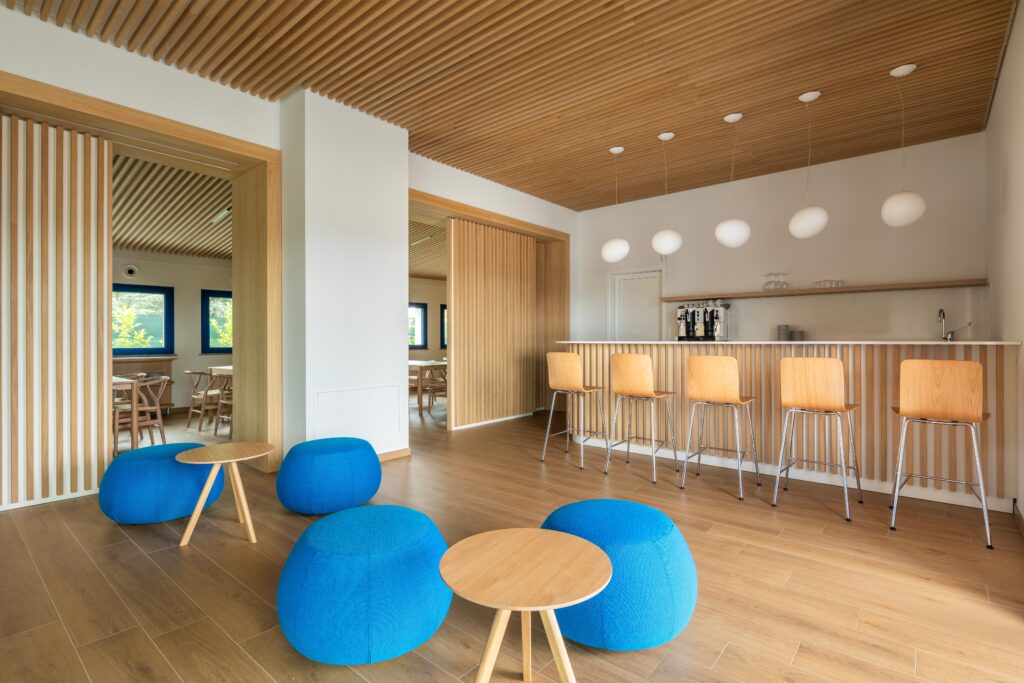
Submission by Pardini Hall Architecture.
Being a good ancestor
Practice
1. Do you have a clearly stated purpose aligned with the planetary emergency? We’re looking for a bold ambition here, and a culture which recognises the need for long-term thinking.
We fully understand the global impact the building industry has on the environment and aim to give our clients a better understanding of energy and resource efficient design.
We always approach the projects we undertake with the aim to reduce environmental impact, moving beyond net zero towards regenerative outcomes. We prioritise retrofit over demolition, use local materials whenever possible, and embed sustainability into every decision from concept to completion. We support and promote local sustainability practices, reinforcing our belief in long-term, eco-conscious architecture at every scale.
We believe architecture must take responsibility for its role in climate and biodiversity breakdown. Our ambition is not incremental improvement, but systemic change, by shaping a built environment that is low-carbon, resource-conscious, addresses biophilic principles and is future-ready.
We aim to create architecture that sits in harmony with it’s context and contributes positively to both people and the environment for generations to come.
2. Do you have a clearly stated purpose aligned with the planetary emergency? We’re looking for a bold ambition here, and a culture which recognises the need for long-term thinking.
No.
3. Do you share research and knowledge for the benefit of society and the wider world?
We are a strong advocate of sharing knowledge and research on an open source basis. On our website we have a page to give an insight into our processes and approach to sustainability, craft and beauty. For all to read and have an open dialogue. This is freely available on our website.
One of our partners has been interviewed a few times and shares her experience as an architect and the process and approach she takes when working with clients.
Project
1. Do you advocate for long-term thinking at the outset of work? Do you initiate work with long-term thinking and challenge clients? Also, can the organisation demonstrate that this approach has worked?
Long-term energy performance, durability of materials, maintenance and adaptability are early conversations. These are non-negotiable starting points, so the client expectations are set early in the process.
Material honesty was the foundation for every decision for a Tuscan House we designed and this approach was agreed at the start. The local natural stone floors form the relationship between inside and outside, achieving a sustainable material continuity that feels appropriate to the Tuscan countryside Every wall was treated with a lime-coloured paste and pulled to a smooth iron finish inspired by traditional fifteenth century plaster techniques. The stone slabs were veiled with natural lime as well. Lime is a sustainable material that helps regulate humidity, supports healthy home materials, and keeps interiors breathable throughout the seasons. Honest materials allow a building to endure. They allow architecture to exist beyond trends and to grow more expressive with time.
2. Does your work take account of the future climate and the need for resilience?
We evaluate all projects to strive to mitigate against climate breakdown, and encourage our clients to adopt this approach. Our ultimate goal is to create a green home, we support and promote local sustainability practices, reinforcing our belief in long-term, eco-conscious architecture at every scale. We adopt regenerative design principles, with the aim of designing architecture and urbanism beyond the standard of net zero carbon. We also aim to include life cycle costing, whole life carbon modelling and post occupancy evaluation as part of our basic scope of work, to reduce both embodied and operational resource use.
The future of sustainable homes 2026 is not defined by technology alone. It is shaped by how architecture responds to place, climate, and the rhythms of daily life. Sustainability is no longer an added layer. It is embedded in how a home is positioned, how it is shaded, how it gathers energy.
3. Does the majority of your work go beyond mitigating negatives and towards optimising positives?
Our approach to regenerative architecture means looking beyond the building envelope. We consider how landscape contributes to comfort, privacy, and ecological health. Existing and newly planted trees at Casa al Pozzo shape microclimates, filter views, and create a sense of enclosure. The garden is not an afterthought. It extends the living experience outward, reinforcing the relationship between home and environment. Here, nature is not decoration. It is structure, shelter, and atmosphere.
For a house we renovated in Tuscany we used sustainable technologies including a heat pump, underfloor heating and cooling, and natural insulation. The owners are able to harvest rain water and use it for their vegetable garden. The introduction of solar paneling means the house is now almost energy neutral and that the house functions using clean electric energy only.
Co-evolving with nature
Practice
1. Do you use biophilia within your premises and/or do you regularly gather in natural settings?
Biophilia is woven into our approach in a way that complements our contemporary, detail-oriented aesthetic. Our workspace is designed to maximize natural light and incorporate organic materials – light woods, stone, and muted greens -creating a calm, balanced atmosphere. Whenever possible, we also plan access to green spaces, including areas for growing vegetables, as we believe nurturing living elements fosters creativity and well-being. Beyond the studio, we regularly gather in natural settings, from local parks to rural retreats, to reconnect with the simplicity and harmony that inspire our work. These experiences reinforce our commitment to designing spaces that subtly celebrate nature’s presence, whether through sightlines to greenery or the integration of natural textures. For us, biophilia is about creating environments that feel grounded, yet effortlessly modern.
2. Can you share examples of where you have considered nature in decision making?
We begin each project with a detailed site analysis to understand the environmental characteristics of the location. This allows us to optimize the building’s orientation and form to harness passive solar energy, while naturally protecting it from excessive heat, wind, and adverse weather conditions.
Casa al Pozzo does not merely occupy the land—it becomes an integral part of it. This project was born from a deep dialogue with its natural context, integrating with the landscape to offer privacy and sustainability.
A new build villa in the Tuscan countryside faces the valley and has been designed in strong adherence to the ground, in a seamless relationship between inside and outside. The location is set on a slope that descends towards the olive trees cultivation. The project was aimed at finding a settled principle that, by introducing the necessary volume, would respect the land morphology and the beauty of the natural environment.
3. Are you supporting nature locally and nationally?
Locally, we prioritize sustainable materials and collaborate with suppliers who share our commitment to environmental responsibility. Our projects often incorporate green spaces, native plants, and designs that encourage biodiversity, even in urban settings. We also actively participate in community initiatives that promote green infrastructure and public access to nature.
Project
1. Can you demonstrate work that strives to match the performance of a mature ecosystem?
We strive to create spaces that emulate the balance and efficiency of mature ecosystems. Our projects prioritize regenerative design principles: passive energy systems, water conservation, and the use of local, sustainable materials to minimize environmental impact. For example, in our residential and public designs, we integrate green roofs, rainwater harvesting, and native landscaping to support local biodiversity and reduce resource consumption. This is evident at our project The Foxes and 602 Tuscany.
2. Are you working on material stewardship?
Material stewardship is central to our design process. We carefully select materials that are durable, non-toxic, and sourced responsibly, prioritizing those with low environmental impact, such as reclaimed wood, recycled metals, and natural finishes. Our designs emphasize longevity and adaptability, ensuring that spaces remain functional and beautiful for years, reducing the need for replacement or waste. That really applies to all our projects. For us, material stewardship means designing with intention, ensuring every choice contributes to a healthier environment and a more sustainable future.
3. Does the majority of your work demonstrate the use of biologically-inspired approaches such as Bioregionalism, Biophilia or Biomimicry?
Our work is deeply influenced by biophilia – integrating natural light, organic materials, and subtle connections to nature to enhance well-being. While our aesthetic leans toward contemporary minimalism with playful details, we prioritize designs that foster harmony between people and their environment.
We also embrace bioregionalism by using locally sourced materials and tailoring projects to their ecological and cultural context, ensuring they resonate with their surroundings. Biomimicry inspires us in functional ways, such as optimizing ventilation or energy efficiency by studying natural systems.
Above all, we strive to create just spaces – inclusive, accessible, and equitable environments that serve diverse communities. Our designs balance beauty, functionality, and sustainability, ensuring that every project not only reflects our signature style but also contributes to a fairer, healthier world.
Creating a just space for people
Practice
1. Do you have a progressive EDI policy and can you evidence many forms of diversity, which are welcomed and acknowledged, within your company/organisation?
As a two-person founding team – an Italian woman and a British man – diversity and inclusion are inherently part of our identity. Our collaboration bridges cultures, perspectives, and experiences, which enriches our creative process and informs our approach to design. We are a small studio which embrace EDI principles by fostering an open, respectful, and inclusive environment, both in our work and our partners.
We celebrate diversity in all its forms – gender, nationality, background, and thought – and we’re committed to ensuring our projects reflect this ethos. From collaborating with a diverse network of suppliers and craftspeople to designing spaces that are accessible and welcoming to all, we prioritize equity in every decision. Our values are rooted in creating spaces that honor and uplift everyone.
As we grow, we’re dedicated to building a team and portfolio that champion these principles, ensuring that diversity isn’t just welcomed but integral to who we are.
2. Do you operate a no overtime culture, meet the living wage consistently, and stipulate a fair salary ratio between staff of all levels?
We prioritize a healthy work-life balance and reject the culture of overtime. As founders, we lead by example, ensuring that our workloads – and those of any future team members – are sustainable, with clear boundaries to protect personal time and creativity. We are committed to fair compensation and ensuring transparency in how pay is determined. Our goal is to create a collaborative environment where everyone feels valued and respected, regardless of their role.
3. Do you support charities, community groups, social enterprises, action groups and others through pro-bono work, charitable giving or in-kind donations?
Personally, we both support a range of charities, community initiatives, and social causes – whether through donations, volunteering, or pro-bono work. However, we choose to keep these contributions private. Below is a confidential list
Regular donations to
wwf
greenpeace
emergency
shelter england
save the children
In the past we have organised in italy concerts or other events to collect money for the local dog kennel …
We have done pro bono work in the past, helping people with no funds really to reorganise their house in a better way and preparing drawings with no fee.
4. Do you use an ethical framework to assess opportunities and/or supply chain partners and is them team consulted on these decisions?
Every opportunity and partnership is evaluated through an ethical lens, prioritizing sustainability, fairness, and social responsibility. We carefully select suppliers and collaborators who align with our values – whether it’s their commitment to eco-friendly materials, fair labor practices, or transparent business ethics.
As a close-knit founding team, we make these decisions collaboratively, ensuring that both voices are heard and that our choices reflect our shared principles. While our studio is small, we believe in accountability: we research, question, and choose partners who demonstrate integrity in their operations.
Project
1. Does your work demonstrate deep engagement with local stakeholders and end users?
At the practice, deep engagement with local stakeholders and end users is fundamental to our process. We believe great design emerges from listening—whether collaborating with clients, consulting community members, or working alongside craftspeople and suppliers. Our projects often begin with conversations to understand needs, aspirations, and the unique character of a place. For example, in residential and public projects, we prioritize inclusive workshops and feedback loops to ensure our designs resonate with those who will live with and use the spaces. This approach not only enriches the outcome but also fosters a sense of ownership and connection. Even as a small studio, we’re committed to creating architecture that reflects the voices and values of the people it serves
2. Does your work create connected and resilient communities which positively contribute to neighbourhoods and allow equality of access?
Our work aims to strengthen communities by designing spaces that encourage connection, accessibility, and resilience. Whether through adaptive reuse of existing structures, integrating public amenities, or prioritizing walkability and green spaces, we strive to create environments that enhance neighborhood life. For instance, our projects often incorporate shared areas or flexible layouts that accommodate diverse needs, fostering inclusivity and social interaction. We also advocate for designs that support local economies and cultural identity, ensuring our contributions are meaningful and enduring. For us, resilience isn’t just about buildings—it’s about people and the relationships they build within them.
3. Does the majority of your work promote equity in society, and consider all people, not only building inhabitants
We design with all people in mind—not just building inhabitants—but the broader community, ensuring accessibility, safety, and dignity for everyone. This means thoughtfully addressing barriers (physical, economic, or social) and creating spaces that welcome diverse backgrounds and abilities. While our portfolio is growing, we actively seek projects that align with this ethos, such as community-focused developments or public spaces that prioritize inclusivity. Our goal is to use architecture as a tool for positive change, promoting fairness and opportunity through thoughtful, human-centered design.