
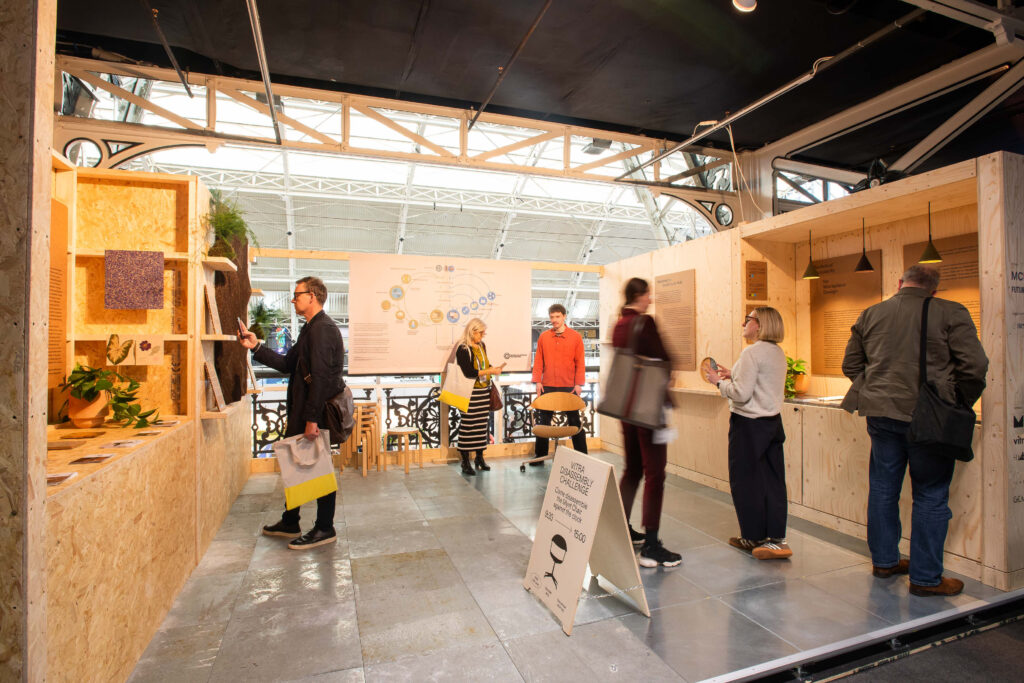
Submission by Nested Living.
Being a good ancestor
Practice
1. Do you have a clearly stated purpose aligned with the planetary emergency? We’re looking for a bold ambition here, and a culture which recognises the need for long-term thinking.
At Nested Living, our purpose is to design in service of life, creating places that enable people, communities, and the wider living systems we are part of to flourish.
We recognise the planetary emergency as a symptom of how we have designed, built, and related to the world. In response, we move beyond reducing harm to a regenerative approach that restores and strengthens ecological and social systems.
Our work is grounded in long-term thinking, shifting away from short-term, extractive models toward stewardship and care across generations.
As an integrated design and making studio, we embed this through designing for longevity, adaptability, and repair; working with existing materials and structures; and prioritising healthy, low-toxicity environments.
We see each project as part of a wider system, and our role as custodians — making decisions that support the enduring health of people, place, and planet.
2. Do you have a clearly stated purpose aligned with the planetary emergency? We’re looking for a bold ambition here, and a culture which recognises the need for long-term thinking.
No.
3. Do you share research and knowledge for the benefit of society and the wider world?
Sharing knowledge is a core part of our role and responsibility as a practice.
We actively contribute to the wider industry through talks, CPDs, workshops, and collaborations, helping to open up conversations around regenerative design, circular thinking, and designing in service of life. This includes speaking at industry events and delivering CPDs to architects and practices.
We are part of the sustainability steering group at the British Institute of Interior Design (BIID), contribute to the steering group for Interior Design Declares (IDD), and are involved in the core group for Living Place within the emerging Thames Bioregion, supporting collective learning and systems-level change.
Our work has also been featured in press and publications, extending these ideas to a wider audience. Alongside this, we share insights through our own platforms and project storytelling, making regenerative thinking accessible and relevant to both industry and clients.
Project
1. Do you advocate for long-term thinking at the outset of work? Do you initiate work with long-term thinking and challenge clients? Also, can the organisation demonstrate that this approach has worked?
Yes, long-term thinking is embedded from the outset of every project.
We begin with a detailed discovery stage, taking time to understand the essence, potential, and existing conditions of a place before any design decisions are made. This includes questioning whether new work is needed at all, or if value can be created through reuse, adaptation, or refinement.
We actively challenge briefs where appropriate encouraging clients to think beyond immediate needs and consider the full lifecycle of a project, including longevity, adaptability, maintenance, and end-of-life.
This approach has led to projects where existing materials and structures are retained and reimagined, reducing unnecessary intervention while increasing long-term value.
By embedding lifecycle thinking early, we support more considered decisions that result in spaces designed to endure, evolve, and remain meaningful over time.
2. Does your work take account of the future climate and the need for resilience?
Yes our work takes account of future climate conditions through a living systems approach to resilience, grounded in regenerative principles.
We design spaces and joinery to respond to changing environmental conditions, prioritising durable, repairable, and low-toxicity materials. We also consider specific climate risks, for example, in flood-prone contexts we design raised, moisture-tolerant joinery with replaceable components, supported in one project by a Lloyd’s of London-backed material system.
Beyond performance, we consider resource resilience through local and traceable supply chains. We work directly with estates and local networks to recover timber such as ash affected by dieback, ensuring valuable materials are used rather than lost to low-value processes like biomass. We are actively moving toward using UK-grown timber wherever possible.
This whole-system approach supports environmental, social, and material resilience creating spaces that can endure, adapt, and remain connected to place over time.
3. Does the majority of your work go beyond mitigating negatives and towards optimising positives?
Yes the majority of our work is focused on moving beyond mitigating negative impact toward optimising positive outcomes.
We begin by understanding the essence and potential of a place using audits and detailed questionnaires to explore how spaces are used, what already exists, and how nested systems operate, from the building itself to wider considerations such as water, energy, and resource flows.
This allows us to identify opportunities to add value rather than simply reduce harm. We actively work with clients to reframe short-term thinking into long-term lifecycle considerations, supporting decisions around durability, adaptability, and ongoing care.
Through our integrated design and making approach, we design for life creating healthy environments, reusing materials, and strengthening connections between people and place.
This approach enables projects that enhance wellbeing, resource use, and the long-term resilience of the systems they sit within.
Co-evolving with nature
Practice
1. Do you use biophilia within your premises and/or do you regularly gather in natural settings?
Yes our connection to nature is embedded within our regenerative approach, rather than treated as a separate biophilic layer.
Our workshop and studio are grounded in natural materials, particularly timber, where the grain, texture, and variation of wood create a direct, ongoing relationship with living systems. This daily engagement with materiality forms part of how we understand and respond to nature in our work.
We also prioritise natural light, material honesty, and sensory quality within our working environment, supporting wellbeing and awareness.
Beyond our premises, we regularly engage with natural settings through site visits and local material sourcing, maintaining a connection to the landscapes and ecosystems our work sits within.
This is not an applied strategy, but part of a wider regenerative process — staying in relationship with nature through both practice and place.
2. Can you share examples of where you have considered nature in decision making?
For example, we have created bespoke furniture using timber from a felled tree within the Kensington Palace estate, transforming it into a legacy piece that retains cultural and ecological value. In other projects, such as Red Stones, we worked with locally sourced and reclaimed timber to embed material continuity and reduce resource extraction.
We also respond to environmental conditions directly, for instance, designing flood-resilient joinery using moisture-tolerant materials and replaceable components to support recovery after extreme weather events.
At the outset of each project, our discovery process includes questionnaires and audits that explore natural systems such as water, light, and material flows, alongside biophilic design principles.
These examples demonstrate how nature is not an afterthought, but actively shapes our decisions from concept through to making.
3. Are you supporting nature locally and nationally?
Yes we actively support nature at both a local and wider level through how we source materials, operate as a practice, and engage with wider systems.
Locally, we work with nearby estates, farmers, and suppliers to recover and reintroduce materials such as felled timber, including trees affected by ash dieback ensuring they are used meaningfully rather than lost to low-value processes like biomass. We also prioritise reclaimed and recycled materials wherever possible.
At a national level, we are actively shifting toward the use of UK-grown timber, supporting more resilient, lower-impact supply chains. Alongside this, we experiment with our own production waste, exploring ways to reintroduce it as a material resource rather than discard it.
We design for longevity, repair, and reuse, reducing pressure on natural systems.
Through this approach, we support nature not only within individual projects, but across the material systems we are part of.
Project
1. Can you demonstrate work that strives to match the performance of a mature ecosystem?
While built projects cannot fully replicate the complexity of a mature ecosystem, our work strives to reflect its key qualities, circularity, resilience, diversity, and the ability to adapt over time.
We design out waste wherever possible, reusing materials and ensuring offcuts are reintegrated or used as biomass. Our workshop is supported by on-site solar, reducing reliance on external inputs.
Across our projects, including Red Stones, we prioritise locally sourced and reclaimed materials, working with estates and landowners to recover timber, including oak and ash and reintroduce it into meaningful, long-lasting use.
We design for full lifecycle performance, focusing on durability, repairability, and adaptability. This includes resilient strategies such as flood-responsive joinery, alongside a commitment to craftsmanship and legacy, creating pieces intended to endure and be valued over generations.
This approach supports systems that are not only sustainable, but capable of evolving and improving over time.
2. Are you working on material stewardship?
Yes we take a responsible and transparent approach to all materials we use, considering their full lifecycle from sourcing through to future reuse.
While we prioritise locally sourced and reclaimed materials where possible, we also work with a wider range of materials and undertake a detailed assessment process for each reviewing Environmental Product Declarations (EPDs), certifications such as FSC and Cradle to Cradle, and material health data to support informed, responsible selection.
We are developing greater transparency through chain of custody tracking, alongside material passports and ethical declarations to clearly communicate origin, impact, and performance.
Our design and making approach focuses on durability, repairability, and adaptability, ensuring materials remain in use for as long as possible. Within our workshop, we minimise waste by reusing offcuts and exploring ways to reintroduce production waste as a resource.
Through this, materials are treated as part of an ongoing cycle of use and renewal.
3. Does the majority of your work demonstrate the use of biologically-inspired approaches such as Bioregionalism, Biophilia or Biomimicry?
Yes the majority of our work is informed by biologically-inspired approaches, particularly through a bioregional and living systems lens.
We work in relationship with place, prioritising locally sourced and recovered materials, and responding to the ecological, cultural, and material conditions of each project. This reflects a bioregional approach, where design is shaped by the characteristics and resources of the local environment.
We also integrate biophilic principles, not as surface-level additions, but through the use of natural materials, sensory qualities, and connections to light, texture, and atmosphere that support human wellbeing.
While we do not apply biomimicry in a literal sense, our work is guided by similar principles designing for circularity, adaptability, and resilience, informed by how natural systems operate.
Through this, our work reflects a deeper alignment with nature, where design emerges from place rather than being imposed upon it.
Creating a just space for people
Practice
1. Do you have a progressive EDI policy and can you evidence many forms of diversity, which are welcomed and acknowledged, within your company/organisation?
We do not yet have a fully formalised EDI policy, but we recognise its importance and are actively developing this as part of our growth.
As a small, values-led practice, we aim to create an inclusive and respectful working environment where different perspectives, skills, and experiences are welcomed. We work collaboratively with a diverse network of clients, makers, and partners, and seek to foster open, supportive relationships across all projects.
Inclusion is also reflected in our design approach, where we consider how spaces can support a wide range of users including multi-generational living, accessibility, and wellbeing.
We are committed to strengthening this area of our practice through the development of a clear EDI framework, alongside more conscious recruitment, collaboration, and engagement strategies.
Our intention is to ensure inclusivity is embedded not only in policy, but in how we work and the environments we create.
2. Do you operate a no overtime culture, meet the living wage consistently, and stipulate a fair salary ratio between staff of all levels?
We do not yet have all of these elements formally defined as policies, but we are committed to fair and responsible working practices as our business grows.
As a small practice, we aim to maintain a healthy and sustainable working culture, being mindful of workloads and avoiding a reliance on overtime wherever possible. We prioritise realistic project timelines and open communication to support this.
We are committed to fair pay and aim to meet or exceed living wage expectations, alongside building long-term, supportive relationships with both employees and collaborators.
As we develop, we are exploring more formal structures around pay transparency and fairness, including how salary ratios and working practices can be clearly defined and maintained.
Our intention is to ensure that fairness, wellbeing, and respect are embedded within both our culture and future business structures.
3. Do you support charities, community groups, social enterprises, action groups and others through pro-bono work, charitable giving or in-kind donations?
Yes we actively support charities, community groups, and industry initiatives through pro-bono contributions of time, knowledge, and expertise.
We contribute to wider change through our involvement in a number of key groups, including the Thames Bioregion Living Place initiative, where we support the development of a more connected, place-based approach to regeneration.
We are also part of the steering group for Interior Design Declares (IDD) and the sustainability steering group at the British Institute of Interior Design (BIID), contributing to industry-wide efforts to improve environmental and social practices.
These roles involve ongoing voluntary input, collaboration, and knowledge sharing, helping to influence thinking and action beyond our own projects.
Through this, we aim to contribute to a wider cultural and systemic shift — supporting more responsible, regenerative approaches across the built environment.
4. Do you use an ethical framework to assess opportunities and/or supply chain partners and is them team consulted on these decisions?
Yes we use a values-led framework to assess both opportunities and supply chain partners, grounded in our regenerative approach to design and making.
We consider a range of factors when making decisions, including material provenance, environmental impact, working conditions, and alignment with our principles around longevity, care, and responsibility. This includes prioritising suppliers who can demonstrate transparency through certifications, traceability, and responsible practices.
These decisions are not made in isolation. As a small, collaborative practice, we involve the team in discussions around materials, suppliers, and project direction, encouraging shared responsibility and critical thinking.
We also recognise the importance of continuing to formalise this process, and are working toward clearer frameworks such as ethical declarations, material passports, and chain of custody tracking.
Through this, we aim to ensure that ethical consideration is embedded in everyday decision-making, not treated as a separate exercise.
Project
1. Does your work demonstrate deep engagement with local stakeholders and end users?
Yes deep engagement with clients, end users, and local stakeholders is central to our process.
We begin every project with a detailed discovery phase, using questionnaires, conversations, and site-based understanding to uncover how spaces are currently used, what matters to the people living or working there, and the wider context of the place.
This process goes beyond functional requirements, exploring lifestyle, wellbeing, and long-term aspirations to ensure the design reflects real needs rather than assumed ones.
We maintain close collaboration throughout, working iteratively with clients and, where relevant, other stakeholders to refine decisions and respond to feedback.
Our integrated design and making approach strengthens this relationship, ensuring continuity from concept through to delivery.
This level of engagement enables us to create spaces that are deeply personal, contextually grounded, and more likely to endure over time.
2. Does your work create connected and resilient communities which positively contribute to neighbourhoods and allow equality of access?
Yes our work supports connected, resilient communities by designing spaces that prioritise inclusivity, wellbeing, and long-term usability.
At a project level, we consider how spaces can support a wide range of users, including multi-generational living, accessibility, and ease of use. This includes designing layouts and joinery that reduce physical strain, improve access, and enable participation supporting greater equality within the home environment.
Through our commercial work, we extend this thinking into shared spaces. For example, the Circular Hub project was designed as a reusable, adaptable environment, demonstrating how spaces can support collective use while reducing waste and encouraging more responsible material practices.
We also focus on creating environments that bring people together, recognising the role of spaces in supporting connection and community.
Through this, our work contributes to more inclusive, adaptable, and socially resilient places.
3. Does the majority of your work promote equity in society, and consider all people, not only building inhabitants
Yes the majority of our work considers equity both within and beyond the immediate occupants, recognising that design decisions have wider social and environmental implications.
At a project level, we prioritise inclusive design supporting accessibility, multi-generational use, and ease of interaction, ensuring spaces can be used by a broad range of people.
Beyond the individual project, we consider the wider systems our work contributes to. This includes supporting local supply chains, working with regional makers and materials, and reducing reliance on extractive practices that can have unequal global impacts.
Through our commercial and collaborative work, such as the Circular Hub, we also contribute to shared environments and knowledge that extend beyond private clients.
Alongside this, our involvement in industry and regional initiatives supports a broader shift toward more equitable and responsible approaches to design and the built environment.8