
Submission by Material Cultures.
Being a good ancestor
Practice
1. Does the practice have a clearly stated purpose aligned with the planetary emergency? We are looking for a bold ambition here, and a practice culture which recognises the need for long-term thinking. For example, a strong mission, a theory of change, or a sustainability roadmap.
Material Cultures is an interdisciplinary, not-for-profit research, action and design studio working to address the intersecting issues of climate and social justice in the built environment. We argue for the reintegration of architecture and agriculture, understanding buildings as irrevocably linked to landscapes of extraction. We challenge the systems, technologies, supply chains, regulations and materials that make up the construction industry, with the aim of transforming how we build and who we build for.
Our mission is to work towards a bio-regional construction industry which is integrated into regenerative and socially just land and building systems. We do this through three key activities: designing buildings, carrying out strategic research and creating practical learning spaces for exploring bio-regional construction.
2. Does the practice have a clear succession plan, which passes on ownership and protects the values and legacy of those who built and contributed to the practice? For example is the practice an employee owned trust.
We are a mission-led organisation and we recognise the work we are doing has generational impact, and that we are stewards of an organisation that is part of a broader movement. Material Cultures is currently a not-for-profit organisation limited by guarantee with three directors and we are always exploring and evolving the structure of the organisation to be able to best meet our objectives. We are currently in the process of developing bespoke articles of association and an asset lock which would ensure that our assets remain dedicated to that purpose set out in our mission. Alongside this we are in discussions with Unite-SAW to establish Material Cultures as the first private sector union-recognised architectural practice in British history. We have co-developed a set of policies that respond to and consolidate the cultures that we have cultivated, and we publish these on our website as an accessible resource and reference for others. As a young organisation we have not yet begun succession planning but are actively exploring potential alternative organisational structures that ensure the organisation continues to exist beyond its current ownership structure.
3. Does the practice share research and knowledge for the benefit of society and the wider world? For example, you regularly carry out post occupancy evaluation and share information with others.
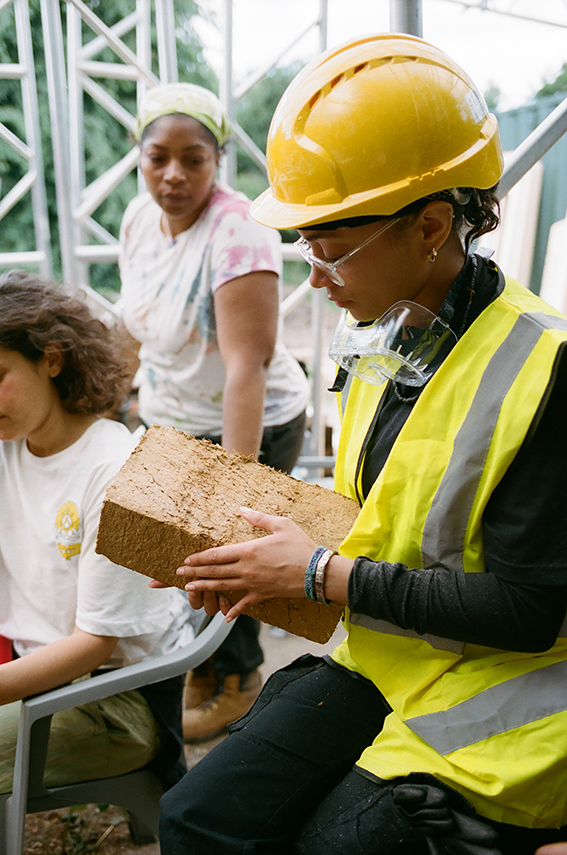
We are working to build knowledge and literacy, carrying out strategic research, and sharing and disseminating ideas. We have developed a set of research methodologies interrogating how bio-regional material production could impact the economy, carbon, biodiversity, landscape regeneration, equity and construction. We publish and speak with a view to influencing opinion and public policy by demonstrating the impacts of a bio-regional material transition. We publish all our research reports under creative commons licence online in order to further the utility, distribution and impact of the work. In 2022 we wrote and published Material Reform, a short and accessible primer addressing regenerative construction. Alongside this we teach at various institutions as well as running our own learning programme MAKE. Supporting interdisciplinary action, knowledge exchange and collaboration, MAKE was established to equip communities and professionals to respond to the polycrises of climate, biodiversity and housing.
Project
1. Does the practice advocate for long-term thinking at the outset of projects? Do you initiate projects with long-term thinking and challenge the client on design life? Also, can the practice demonstrate that this approach has worked – with a shorter or longer design life, or an innovative approach to financing or payback period?
Achieving longevity is about robust design, detailing and material specification but it is equally determined by the ability of a building to be maintained and repaired. In our architectural projects we advocate for investment in the primary fabric of the building and high-quality materials. With fewer layers of construction natural buildings are often more readily diagnosed and repaired, but repair is dependent on the skills and knowledge being available to do so. This is part of why we see our skills programme MAKE as so critical to our broader work and why we always encourage clients to engage directly with the process of construction, empowering them as custodians and caretakers.
Across all of our work we centre long-term and systemic thinking, seeing the site of construction as contingent on many other sites of production and extraction, each with its own temporality and cycle of regeneration and ecological repair.
2. Do your projects take account of the future climate and the need for resilience? For example, do the projects demonstrate flexibility, design for adaptation, design for disassembly, non-deterministic solutions, or demountable structures.
We apply a bio-regional framework to the way we design, meaning wherever possible buildings are made from components and materials which are sourced regionally rather than from imported and precarious supply chains. This means that the materials needed to maintain them should still be accessible for decades to come. We work with natural materials which are much more climatically adaptive due to their ability to regulate both heat and moisture. Uncomplicated building systems are adaptable and resilient to change – we avoid working with systems that are fragile to obsolescence and collapse. In parallel our research work speculates on a future where climate breakdown means that we cannot rely on many of the resources on which we have become dependent. We are looking at how resilient species can be integrated into landscape regeneration and how this will shift the materials with which we can build, developing new systems in response.
3. Do the majority of your projects go beyond mitigating negatives and towards optimising positives? For example, are they meeting or exceeding the RIBA 2030 Challenge.
Our design projects are undertaken as demonstrators and opportunities to evidence best practice. We see each building as a research project in which we can test and showcase opportunities to reduce not just the carbon but the systemic damage that can accompany construction. We are often working at the edge of emergent, or resurgent technology. Where relevant we benchmark our buildings and systems to existing sustainability frameworks, however we do not feel it is always relevant to do so and can in many cases be a highly reductive lens. Our research addresses how this approach can be scaled and the ecological and socio-economic impacts of doing so. Increasingly our research takes ecosystem regeneration as it’s starting point, working backwards towards a building system. For us regeneration means more than just working with bio-based materials: we seek to ensure our building systems can genuinely contribute to ecological recovery.
Co-evolving with nature
Practice
1. Does the practice use biophilia within the office or regularly host meetings and retreats in natural settings? For example do you have extensive planting within the office or rely on natural patterns and imagery for stress relief or quiet areas.
Bringing the practice of architecture closer to that of agriculture, land management and landscape regeneration is central to our practice. This means we are intentionally seeking out contexts where building and growing can happen in parallel and developing spaces, frameworks and processes for collaboration and interdisciplinary exchange. We run most of our learning programmes on growing sites, meaning both our participants and staff experience this connection and understand it’s value and impact first hand. Alongside this we are working to apply the principles of agroecology in the built environment. Building agroecologically means establishing new cultures of construction that are inherently less damaging to those along its supply chain – including the architectural worker – and in which we understand ourselves to be part of, rather than apart from, the ecological system.
2. Can the practice share examples where it has considered nature in decision making? For example by having a nature proxy to encourage eco-centric decision making, using natural systems as inspiration for the company structure, recognising the seasonal nature of people’s capacity and workload or celebrating equinoxes and solstices together.
We see the land as the primary stake holder in all of our work, be it at the site of construction or it’s many contingent sites of production, extraction and pollution. Growing Place is a knowledge exchange project based at an active growing site in north London. The process was designed to establish a meaningful transfer of ideas and skills between peers working across agriculture, architecture and construction. The project explores the role of seasonality, temporality, growing cycles and restorative cultures, in constructing the infrastructure required to access and nurture land. It involved a process of participatory design and construction, with each phase of the project involving cross-pollinated thinking in which the process of design and making became a tool for reimagining a reparative relationship with the land. We opened each session with a rooting ritual, addressing and thanking the land we are in.
3. Is the practice supporting nature locally and nationally? For example, does the practice support local gardens, gardeners, planting programmes, rewilding programmes or advocate for changes in legislation to protect nature.
We see agroecological food growing and wildlife spaces as critical to our future resilience and are committed to building resilience, connection and access to these sites at a community level. We are working across a series of north London green spaces such as Wolves Lane Centre, Hawkwood Plant Nursery, Pasteur Gardens and Harolds Park Wilding, as designers but also through raising funds and investing time and resources and building infrastructure and capacity. We understand ourselves to be part of a network of organisations dedicated to developing core infrastructure for the just transition. Our research projects such as Wetlands in Construction and Constructive Land demonstrate how regenerative land management practices can sustain productive landscapes, feeding into existing economies. These research projects are part of our broader advocacy work, seeking to influence change at a legislative level.
Project
1. Can the practice demonstrate projects which strive to match the performance of a mature ecosystem? As a minimum this would mean achieving biodiversity net gain.
Whilst we always work to improve the biodiversity of the sites in which we design a project we also look to take a broader view of a construction project’s ecosystem impact. Metrics such as biodiversity net gain don’t account for the embodied bio-diversity loss associated with material production, distribution and waste. In this frame the construction site itself is only part of the overall biodiversity picture. Consequently, our work increasingly focuses on biodiversity impact at the point of extraction and cultivation of the materials used. Whilst bio-based materials are seen as an ecological alternative over mineral and oil-based materials, 80% of bio-diversity loss is associated with agricultural production. This is why in projects such as Woodland Goods, Planting Buildings, Wetlands in Construction, Mosaic Landscapes, and Construction Land we are working to push the industry towards regenerative sourcing of materials- centring materials that can be produced in complex ecosystems like agroforestry.
2. Is the practice working on material stewardship? For example, evidence could be shown through repeated use of low carbon materials, extensive material libraries and research or publications supporting responsible use of materials and elimination of waste.
Material Cultures was founded in 2019 with an explicit aim of taking action to decarbonise the built environment through a fabric first approach. Our mission has since evolved and become increasingly interwoven with bioregionalism and landscape regeneration. To this end we have:
- Developed 96 bio-regional construction systems
- Published and co-produced 20 reports and publications about bio-based and bio-regional materials, landscape regeneration and the circular economy
- Carried out 4 fellowships, undertaking research into resilient forestry, agroecology and wetland restoration and the relationship to the built environment
- Facilitated the construction of 34 full scale bio-regional construction fragments
- Written 1 book, an accessible primer about bio-regional design and construction
- Delivered 514 hours of facilitated learning programmes
- Given 100+ lectures and seminars
- Sat on 4 advisory committees
- Supported the production of 17 films about bio-regional material production
- Delivered 15 architectural demonstrator projects centring bio-regional and bio-based materials
3. Do the majority of projects demonstrate the use of biologically-inspired approaches such as Bioregionalism, Biophilia, Biomimicry, Ecomimicry (also referred to as Ecosystems Thinking, Industrial Ecology or Industrial Symbiosis) or BioTRIZ?
All of our projects are undertaken under a bio-regional framework. Our research and design methodologies reinstate the connections between material production, carbon, biodiversity, landscape regeneration, equity, health and construction. Drawing from agroecology Material Cultures have developed 8 principles to govern our work:
- Collaboration & co-creation – promoting horizontal sharing and creation of knowledge, skills, and innovation
- Synergies between ecosystems – creating buildings and construction systems that enhance ecosystems and biodiversity
- Circularity & solidarity – supporting low carbon bio-regional supply chains
- Resilience – valuing a diversity of practices, approaches and knowledge
- Culture & tradition – developing systems rooted in the culture, tradition, innovation and knowledge of regional communities
- Responsible governance – ensuring transparent, clear and participatory processes
- Human & social value – fostering a culture of care and accountability
- Health & wellbeing – support the creation of high-quality, well designed buildings
Creating a just space for people
Practice
1. Does the practice have a progressive EDI policy and can you evidence many forms of diversity, which are welcomed and acknowledged, within the practice?
We recognise the extractive and destructive nature of the construction industry, and the oppressive cultures it fosters – in the office, in the classroom, on the construction site and in the factory. Material Cultures is a not-for-profit design and research organisation with a diverse team, that is female, POC and Queer led. We work to challenge the industries systems, technologies, supply chains and ultimately transform the cultures that surround the way that we build. This begins in our own office and our policies but extends to the other spaces we hold, whether it be establishing a design team, holding a construction site or creating a learning space. At Wolves Lane all of the core design team practices (architects, structural and mechanical engineers, planning consultants, principal designer and contractors) have global majority ownership.
2. Does the practice operate a no overtime culture, meet the living wage consistently, and stipulate a fair salary ratio between staff of all levels?
Material Cultures actively discourages overwork. We recognise the organisation’s responsibility to help ensure work is not negatively impacting on the wellbeing of staff, through quantity (overwork) and quality (conditions) of work. We recognise our role in combating exploitative labour practices that are prevalent within architecture, such as normalised culture of working late to deliver projects and unfair contracts and policies. We aim to treat overwork primarily as a collective issue of organisational planning and resource allocation, and secondarily as an issue of individual support needs and working habits. We have created an equitable TOIL policy account for occasional unplanned overtime and processes to address and limit future work outside of standard hours. We pay the London Living Wage as a minimum and have a transparent salary framework with no-one in the organisation earning more than 1.82 the lowest paid staff member, significantly below the 3.2 industry benchmark.
3. Does the practice support charities, community groups, social enterprises, action groups and others through pro-bono work, charitable giving or in-kind donations?
Material Cultures is a not-for-profit and we recognise the need to build social and ecological resilience though mutual aid and strong partnerships. Alongside our more standard architectural commissions we operate as part of a network of other charities, community groups, social enterprises and action groups working towards environmental and social justice. Within this ecosystem of organisations we see our role as increasing access to bio-regional knowledge, skills, buildings and infrastructure. We do this by bringing the particular technical, strategic, and practical skill sets of architects into these conversations and networks and actively seeking funding to co-produce projects and build capacity.
We operate a tiered fees system which makes us accessible to community groups and organisations that may otherwise not be able to work with us. This is enabled by the surplus created by larger-scale and more commercial projects and functions as a form of internal redistribution.
4. Does the practice publicly refuse to work with certain clients, suppliers or organisations on ethical grounds?
We have a robust Project Evaluation and Selection Policy for evaluating potential partners and funders. In terms of ethics we assess clients and partners on the basis of their company structure and governance, whether they perpetuate social injustices or human rights violations, are members of lobby groups, are facing a boycott call or third-party criticisms, their EDI cultures and policies, internal representation and leadership, and alignment of values and goals. We assess potential funders in terms of their links to colonial capitalism or white supremacy, policies on pay, job security and benefits, involvement in destructive activities such as the production of arms, mining, logging or fossil fuels, pesticides, GM, mega farms, whether they are engaged in reparative processes, and in alignment with our mission and values. This process has resulted in us turning down projects, changing our suppliers, not participating in invited competitions and removing our work from international exhibitions.
Project
1. Do the projects demonstrate deep engagement with local stakeholders and end users? For example, is there evidence that your project engagement goes beyond consultation towards co-design?
We build relationships with our partners that are centred on trust and reciprocity, viewing relationships as central rather than incidental to our work and pursuit of environmental, material, and social justice. We engage with stakeholders directly, rather than through third party organisations, as we believe it is critical to have a first-hand understanding of people’s visions, ideas and needs.
For The Phoenix Project in Lewes we engaged local people in the development’s material strategy with conversations around performance and ecology and a public exhibition of 1:1 fragments, samples and visualisations as part of Human Nature’s design festival.
The vision for Wolves Lane Centre emerged through co-design workshops with the clients, stakeholders, local residents and schools. This shaped the project’s design principles, programme and the spatial arrangement with clear priorities which centred participation, ecology and diversity. This extended into the construction process, which saw participation and learning intergrated into every phase.
2. Do your projects create connected and resilient places which positively contribute to their neighbourhoods and allow equality of access? For example, do your projects create economic opportunity, retain value locally and generate social value?
Design and construction are some of the most exclusionary sectors in the UK, with a distinct lack of representation and elitist cultures dominating the design profession. Design services are usually only accessible to wealthy individuals and organisations, and there is increasingly little public investment in good design. We aim to increase the accessibility and availability of high-quality design through the creation of construction templates, specifications and models. Alongside this we are working to make the knowledge needed for transition to bio-regional materials more accessible to more people and removing the many barriers to access and give individuals and communities greater agency to fix, repair, and understand the buildings that they live in. We have built a national network of artisanal material specialists and builders, alongside regional suppliers. This means our building projects are increasingly rooted in place, creating local opportunities and jobs and reinforcing bio-regional practice and knowledge.
3. Do the majority of your projects promote equity in society, and consider all people, not only the building inhabitants? For example, do your projects show due regard for workers within the supply chain and take active steps to avoid modern slavery?
Addressing discriminatory cultures and the unequal impacts of the built environment on health and the environments people inhabit is critical for meaningful change. We address racial and social justice at three levels:
Internally
We are representative the communities we support (POC, queer and female-led), have developed a suite of anti-oppressive policies – including a Modern Slavery Policy and are constantly refining our not-for-profit organisation.
Collectively
We are part of network of organisations co-creating the knowledge and infrastructure of transition, working through both grass roots and institutional mechanisms. Partners include those who directly support victims of modern slavery.
Outwardly
Working in solidarity to produce and share knowledge and information, and platforming underrepresented voices such as those of construction workers. Increasing access to healthy and high-quality materials, designs and buildings for those traditionally marginalised.