
Submission by Marks Barfield Architects.
Being a good ancestor
Practice
1. Does the practice have a clearly stated purpose aligned with the planetary emergency? We are looking for a bold ambition here, and a practice culture which recognises the need for long-term thinking. For example, a strong mission, a theory of change, or a sustainability roadmap.
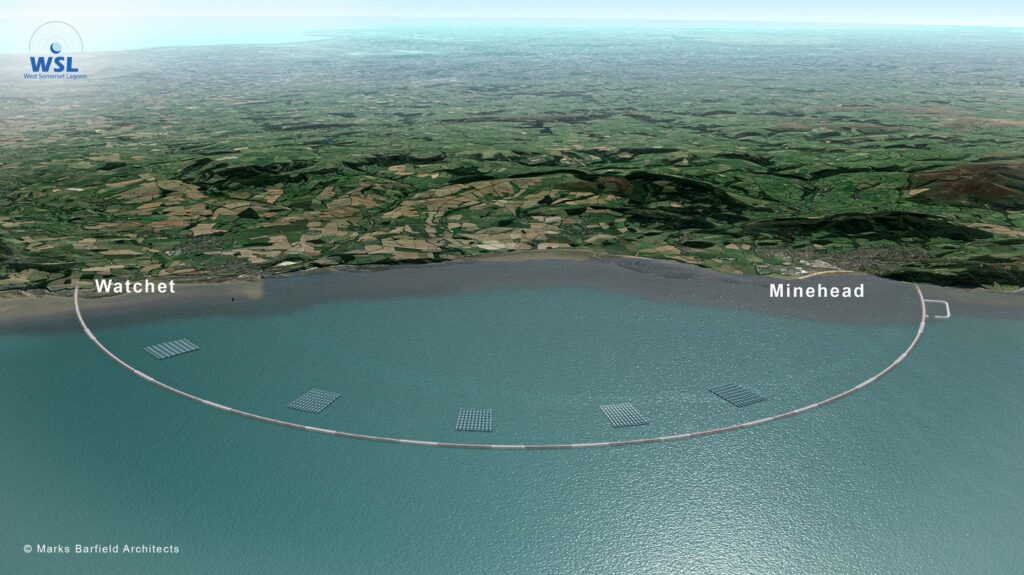
At MBA we collectively developed a vision for MBA to “Become a regenerative design practice, aligned with planetary emergency where all projects are designed, constructed and operated within planetary boundaries, maximising social justice and biodiversity outcomes”. To achieve our vision we developed a regenerative design roadmap with a 1-year 2-year 5-year plan with a process that includes advocacy, knowledge sharing and fostering circular economy principles. We have refocused on retrofit and reuse, adopted the donor-recipient building model, and – as a test case – are attempting to build a project entirely out of used material. We review our plan as a team on an annual basis. Our efforts in the past year include lobbying the government for regulatory change through Architects Declare and co-initiating the West Somerset Lagoon – a speculative tidal energy project which would become the UK’s largest renewable energy scheme, providing power to over 2 million homes.
2. Does the practice have a clear succession plan, which passes on ownership and protects the values and legacy of those who built and contributed to the practice? For example is the practice an employee owned trust.
MBA is currently transitioning from a Private Limited Company – 89.5% owned by Julia Barfield and 10.5% by a Share Incentivisation Plan Trust – towards an Employee Ownership Trust (EOT). A formal succession plan was initiated in 2024 to preserve the practice’s legacy and embed its regenerative values. Julia and the directors have co-authored a values charter that articulates our ethos: architectural excellence, social and environmental commitment, collaboration, and integrity. This charter will form part of the governance structure of the new EOT. Conversations with staff are ongoing. The transition will ensure continuity of purpose and stewardship, while enabling wider staff ownership, voice, and agency in practice direction.
3. Does the practice share research and knowledge for the benefit of society and the wider world? For example, you regularly carry out post occupancy evaluation and share information with others.
The practice advocates for knowledge sharing/transparency in the industry for the betterment of people and the environment. We undertake pro-bono POEs on several of our buildings. One example is our input into the Measuring Mass Timber Research Project (with DRMM, Quality of Life Foundation, Edinburgh Napier University) reviewing the performance of the Cambridge Central Mosque. For all projects we assess Whole Life Carbon, develop material audits/ passports, sharing our findings with wider industry. We regularly collaborate across the industry on circular economy strategies. For example, we are writing a deconstruction handbook summarising our learnings on reuse from a partnership with a deconstruction contractor. Research activities this year include: contributing to ASPB’s reuse of glass partitions paper, talking at Footprint on material reuse, a collaboration with Circotrade linking projects together to enable material reuse, an article for BE news on material reuse, lecturing on regenerative design for the School of Specification.
Project
1. Does the practice advocate for long-term thinking at the outset of projects? Do you initiate projects with long-term thinking and challenge the client on design life? Also, can the practice demonstrate that this approach has worked – with a shorter or longer design life, or an innovative approach to financing or payback period?
We use the regenerative primer framework to help clients establish their deep purpose and consider future scenarios. At project inception, we interrogate the site and question any need for new construction, prioritising retrofit and reuse. For example, as masterplanners for a UK government project we reviewed the proposed demolition, calculated the embodied carbon and suggested structures and buildings which could be saved, resulting in the reuse of several buildings which were set to be demolished. Our work is grounded in ‘seven-generation thinking’, the best example of this being our speculative West Somerset Tidal Lagoon which will provide renewable energy for 200+ years. We are using circular economy principles to both minimise waste and save costs – crucial for wider spread adoption. On an office fit-out we were able to save 577 tonnes of CO2e and £1.65m through material reuse, enabled by close coordination with client, contractor and industry specialists.
2. Do your projects take account of the future climate and the need for resilience? For example, do the projects demonstrate flexibility, design for adaptation, design for disassembly, non-deterministic solutions, or demountable structures.
We approach every project through the lens of the climate emergency, designing for long-term adaptability and resilience. Scenario planning tests how our designs might evolve, with structural strategies that maximise open spans and reduce fixed elements. For an office building in India, where extreme temperatures are already impacting comfort and performance, we’ve worked with MEP and façade engineers to project future climate data – shaping a façade of stone fins that block direct sun while maintaining daylight. We view buildings as material banks and connect projects through a host-donor model, creating a mini-circular economy. Early material audits identify components for reuse and inform strategies for future disassembly. This approach, developed through collaboration with a deconstruction contractor, is forming the basis of a forthcoming handbook. A recent project with the charity Oasis Play is designed entirely from reclaimed materials – demonstrating our commitment to resource-conscious, demountable design that adapts to changing environmental and social needs.
3. Do the majority of your projects go beyond mitigating negatives and towards optimising positives? For example, are they meeting or exceeding the RIBA 2030 Challenge.
We are signed up to the RIBA 2030 Challenge and committed to going beyond ‘business as usual’, working under a just and regenerative mindset. Many of our projects meet or exceed both RIBA and LETI carbon targets. Our mixed-use scheme, The Lantern, achieved this even before the targets were formally established. But we aim beyond compliance – designing to benefit the environment, community, and future generations while respecting planetary boundaries. We seek opportunities on every site to enhance biodiversity and generate renewable energy. For Croydon High School for Girls, we encouraged the client to expand the decarbonisation brief to include landscape improvements, benefiting both wildlife and students. We always look past the original scope to uncover opportunities for greater impact and guide clients toward realising them.
Co-evolving with nature
Practice
1. Does the practice use biophilia within the office or regularly host meetings and retreats in natural settings? For example do you have extensive planting within the office or rely on natural patterns and imagery for stress relief or quiet areas.
Our studio, based in a repurposed 19th-century warehouse, integrates biophilic principles to support wellbeing and productivity. Skylights provide even daylighting, and planting is curated throughout the space – including a living green wall, stairwell creepers, and individual desk plants – managed by our office manager. These features are part of a broader approach to regenerative workplace design, supported by our evolving material library, which features natural fibres, bio-based materials, and reclaimed timber. Our ongoing refurbishment includes a terrazzo kitchen surface made from recycled woodchip – sourced via our reuse network. Our layout supports calm focus and natural cues for rest, supported by passive ventilation and views to the sky. Our staff culture reinforces this: we have lunchtime picnics in Clapham Common and host offsite annual trips in natural environments. Together, these spatial and cultural practices bring biophilia into daily life – embedding nature as a collaborator in both our space and thinking.
2. Can the practice share examples where it has considered nature in decision making? For example by having a nature proxy to encourage eco-centric decision making, using natural systems as inspiration for the company structure, recognising the seasonal nature of people’s capacity and workload or celebrating equinoxes and solstices together.
Nature actively shapes our practice culture. We’ve adopted a decentralised, collaborative structure inspired by biomimicry – teams function interdependently, like cells in an organism, fostering adaptability and resilience. Seasonal rhythms guide our working patterns, with an awareness of capacity shifting across the year. Recent internal workshops explored how we could deepen our engagement with local ecologies, leading to regular lunchtime walks to the Oasis Nature Garden and Clapham Common, and plans to join community rewilding efforts, including tree planting. Our zero-waste office policy, prioritisation of low-impact materials, and support for local conservation projects reflect our commitment to embedding nature at every level. Biophilic design – abundant planting, natural light, and passive ventilation – creates a space where nature is not just present, but integral. We see nature not as a backdrop, but a co-designer – guiding our operations, influencing our systems, and reminding us of the value of connection, reciprocity, and seasonal care.
3. Is the practice supporting nature locally and nationally? For example, does the practice support local gardens, gardeners, planting programmes, rewilding programmes or advocate for changes in legislation to protect nature.
MBA completed a new high quality, urban piazza in Clapham Old Town, which reversed the percentage of road to pavement and planted more than 80 new trees. We are actively involved in the Clapham BID and are lobbying for a greening of Clapham High Street with tree planting. We – through Julia – are supporting Larkhall Park. Our involvement over a 40-year period as part of an action group (now friends’ group) includes helping grant funding applications, advocating improvements in biodiversity, playgrounds, seating and organising community events. We are also supporting a local youth charity OASIS nature garden to build them a new forest school nursery and play building. Through our involvement in AD as part of the Steering Group, MBA is advocating changes in legislation to tackle the biodiversity crisis, for example the AD Building Blocks manifesto. This was launched in parliament in March 2024, presented by Julia Barfield.
Project
1. Can the practice demonstrate projects which strive to match the performance of a mature ecosystem? As a minimum this would mean achieving biodiversity net gain.
We consider our projects through a regenerative framework, understanding ‘a building’ as a small part of network of not only a physical ecosystem (of flora, fauna, soil, building etc..) but also metaphysical (culture, people, past, future, identity etc…). The relationship between these elements makes us consider how our interventions are affecting the whole. For example, reviewing a masterplan in Delhi, we convinced the client to redesign a building to avoid two mature Peepal trees. These trees have cultural significance in India, host a variety of wildlife (including peacocks) and can live for 1000 years. They now form the centre piece of a garden as part of the masterplan. Other projects include the Cambridge Central Mosque which is designed as a ‘grove of trees’ with sculptural tree-like columns. As part of enhancing the curb appeal and increasing biodiversity we created a community garden using native plants and creating aquatic habitats.
2. Is the practice working on material stewardship? For example, evidence could be shown through repeated use of low carbon materials, extensive material libraries and research or publications supporting responsible use of materials and elimination of waste.
We approach material stewardship as a regenerative practice – mining the Anthropocene, not the Earth. Research includes reuse of secondary timber members into a modular structural framing system (in collaboration with Simpleworks engineers), input into the material passports working group with Orms, developing our own passports for existing materials, material working groups with the ASBP (currently looking at reuse of glass partitions), our deconstruction pocketbook (in progress) as an industry guide of tips and tricks to design for deconstruction and mine the Anthropocene effectively, hosting a roundtable with NBS to consider material re-use within standardised specifications, collaborations with fire experts to recertify fire doors and partnerships with deconstruction contractors to develop material hubs in London. For new materials we have developed a digital and physical sustainable materials library which was featured in Architecture Today. Here we consider embodied/sequestered carbon, water use, locality, ethical sourcing, durability, cost, recycled content and deconstructability.
3. Do the majority of projects demonstrate the use of biologically-inspired approaches such as Bioregionalism, Biophilia, Biomimicry, Ecomimicry (also referred to as Ecosystems Thinking, Industrial Ecology or Industrial Symbiosis) or BioTRIZ?
MBA’s approach to structural efficiency and expressions takes regular inspiration from nature. Projects include the competition winning Bridge of the Future- a bridge inspired by the spine of a dinosaur; The Spiral Cafe based on the Fibonacci spiral, The Cambridge Central Mosque with timber tree-like columns which use passive principles to ventilate/light the space like a forest. We are currently designing a building with a hexagon shaped plan – using the structural strength and efficiency of the hexagon shape used throughout nature (beehives, carbon molecules, snowflakes) to minimise the structural material. Across projects we are mapping materials local to our sites at early stages to inform the design proposals, with the aim of reducing carbon and benefitting the local economy. We use biophilia across our projects, for example, the Lantern – a mixed-use office building; the central atrium acts as ‘forest floor’ with a rill and large trees and planting.
Creating a just space for people
Practice
1. Does the practice have a progressive EDI policy and can you evidence many forms of diversity, which are welcomed and acknowledged, within the practice?
We embrace and celebrate diversity in many forms, with staff from a range of ethnic, cultural, and professional backgrounds. We maintain gender balance and value different perspectives across ages and experiences. Our recruitment process is designed to be bias-free. Staff receive regular EDI training, and our flexible working policies support those with caregiving or other needs. Our commitment extends beyond the practice: we deliver pro bono work for underserved communities and offer work experience to inspire young people from underrepresented backgrounds. We are also taking steps to make our workplace more inclusive. Recent improvements include an accessibility audit (inspired by work with a wheelchair-using client) and the creation of a dedicated prayer space for Muslim staff. Through these efforts, we aim to build an open, supportive, and progressive culture where equality, diversity, and inclusion are truly embedded and help drive our innovation.
2. Does the practice operate a no overtime culture, meet the living wage consistently, and stipulate a fair salary ratio between staff of all levels?
The practice operates a no overtime culture where working beyond our business hours of 37.5 hours per week is discouraged, and we consider the work-life balance and the overall wellbeing of the staff to be enormously important to the efficiency and productivity of the work that we do. Clear policies are in place outlining the conditions under which overtime is allowed to achieve project and competition deadlines, how it should be managed, and when it can be compensated with time off in lieu.
We carry out thorough annual industry-wide salary benchmarking, resulting in the provision of good, fair, and gender-equal pay (from the inception of the practice). We determine a fair salary ratio between the staff of all levels by balancing equity, market standards, and the specific roles and responsibilities within the company; also ensuring that an intern, and our cleaner, are paid above the London Living wage.
3. Does the practice support charities, community groups, social enterprises, action groups and others through pro-bono work, charitable giving or in-kind donations?
Since its inception in 1989 the practice has been embedded in the local community and has throughout carried out both pro-bono and cost only work for charities and good causes. We have worked on a variety of projects for Oasis Play Group in Stockwell by providing services pro-bono to submit planning applications on their behalf and in one case helped them source, deconstruct and re-build a demountable Walter Segal building from a Coin Street Builders plot through our contacts on the South Bank. Additionally, we have also carried out a number of small-scale refurbishment projects for Clapham Omnibus Theatre
Our involvement with the London Eye saw our community activity widen to incorporate the Southbank where we were able to embed our most notable charitable initiative which ensures that 1% of ticket sales go to the local community in perpetuity.
4. Does the practice publicly refuse to work with certain clients, suppliers or organisations on ethical grounds?
Our work is primarily focused in a European context where we best believe we can make a positive impact. There are certain regions where we have actively chosen not to work, based on ethical considerations and alignment with our values. We are currently expanding on this by developing a “what not to do” guide, designed to support staff in making informed decisions and upholding our standards and values in new and complex contexts. When it comes to working with other design teams, we have created a tracker to ensure the organisations align with our values.
Project
1. Do the projects demonstrate deep engagement with local stakeholders and end users? For example, is there evidence that your project engagement goes beyond consultation towards co-design?
Our projects demonstrate deep engagement with local stakeholders and end users, moving beyond consultation to embrace co-design. We understand co-design as extracting local intelligence and embedded knowledge for the benefit of the project. In Leyton, for the refurbishment of an historic cricket pavilion, we developed youth workshops with Matt+Fiona and J&L Gibbons. Local young people (paid for their time) contributed ideas through these creative sessions using collage and model making. For Touretteshero (centre for Disabled and Neurodivergent Arts) we held visioning workshops that combined lived experience with regenerative design principles, shaping a shared vision. A live scribe visually captured the conversations, helping record and reflect ideas creatively. We also build long-term relationships: 19 years after completing the Lightbox Gallery in Woking, we’ve returned to support maintenance and improvements. Through sustained and inclusive engagement, we create designs that reflect community needs, encourage ownership, and embed value well beyond project delivery.
2. Do your projects create connected and resilient places which positively contribute to their neighbourhoods and allow equality of access? For example, do your projects create economic opportunity, retain value locally and generate social value?
We approach each project individually, responding to the site and its community. Rather than applying a singular style, our work is shaped by local context. The London Eye, for example, generated significant economic opportunity, with 1% of ticket sales reinvested into local initiatives like Jubilee Gardens. Many of our projects retain value locally by engaging local craftspeople – at the Lantern, timber finishes were made by a business based in Stevenage. We embed social value throughout our design and construction processes: in Leyton, young people participated in workshops to co-design the Cricket Pavilion and landscape, fostering a sense of authorship and pride. With Touretteshero, we are developing a relaxed venue – an inclusive, accessible centre for Disabled and Neurodivergent Arts – which aims to shift public perception around disability. In all cases, we aim to create connected, resilient places that leave a lasting, positive legacy within their neighbourhoods.
3. Do the majority of your projects promote equity in society, and consider all people, not only the building inhabitants? For example, do your projects show due regard for workers within the supply chain and take active steps to avoid modern slavery?
Our design process places the wider community at its heart, engaging local people to ensure our buildings address demographic, social, and cultural needs. We carefully specify responsibly sourced materials with appropriate certifications, prioritising local suppliers to support regional economies and reduce emissions. We also consider the ethical implications of sourcing, such as visiting stone quarries in Delhi to ensure safe working conditions and no child labour. Politically, we have taken a stand, divesting from Russian plywood in response to the war in Ukraine. Beyond the built outcome, we believe our time can offer the greatest social value. At Leyton Cricket Pavilion, for example, we pledged to run eight workshops across four local schools, mentor three young people throughout the construction process, and hold three additional workshops to involve local youth directly in the design – demonstrating our commitment to equity, education, and meaningful community contribution.