
Submission by LEEP Architects.
Being a good ancestor
Practice
1. Do you have a clearly stated purpose aligned with the planetary emergency? We’re looking for a bold ambition here, and a culture which recognises the need for long-term thinking.
We are committed to transforming buildings by adaptive re-use striving to optimise as much of the building and landscape as possible making a virtue of new and old components coming together
2. Do you have a clearly stated purpose aligned with the planetary emergency? We’re looking for a bold ambition here, and a culture which recognises the need for long-term thinking.
The buildings take on the succession – there is a legacy i leave . I am sole practitioner working with like minded collaborators.
3. Do you share research and knowledge for the benefit of society and the wider world?
participation at architecture festivals and conferences particularly in Poland where there is a strong interest in research based and experimental architecture.
Project
1. Do you advocate for long-term thinking at the outset of work? Do you initiate work with long-term thinking and challenge clients? Also, can the organisation demonstrate that this approach has worked?
My mantra is design for change even during the design process and after allowing for re-use of buildings or the dismantling of components for re-use.
2. Does your work take account of the future climate and the need for resilience?
Our work is focussed on adaptive re-use with key projects changing use to give new life new purpose.
3. Does the majority of your work go beyond mitigating negatives and towards optimising positives?
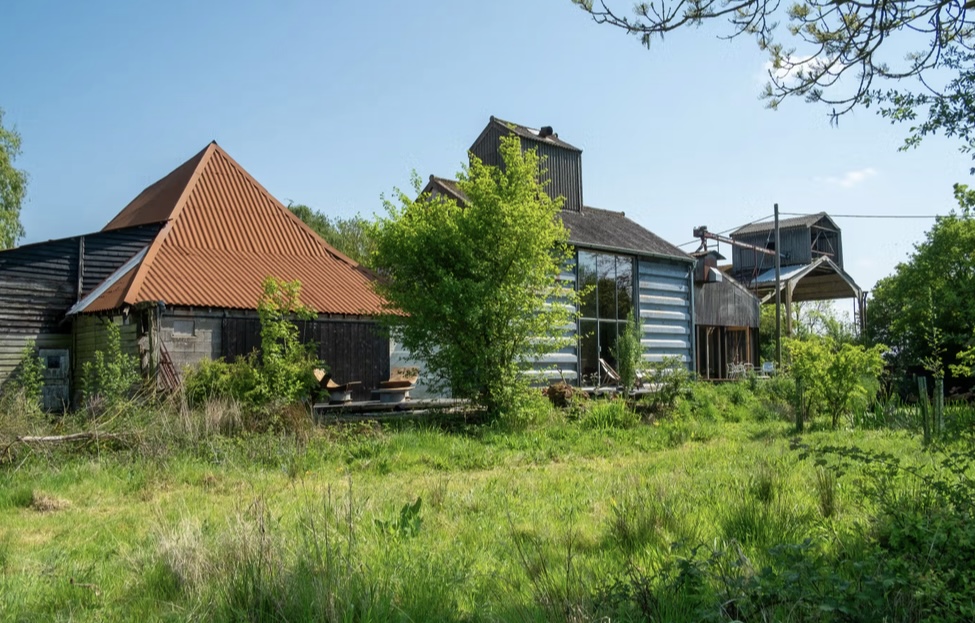
Finding ways to re-use all materials found often for a different purpose eg sheet steel cladding repurposed as planter containers or outdoor decking structures.
Co-evolving with nature
Practice
1. Do you use biophilia within your premises and/or do you regularly gather in natural settings?
Surrounded by enhanced nature , re-wielded landscape , handmade bricks experimenting with bio receptive bricks made at local brick factory in conjunction with architecture students . Floating reed beds on former horse pond as part of landscape contexts
2. Can you share examples of where you have considered nature in decision making?
Former derelict grain sheds in Suffolk transformed into residential and arts spaces.
3. Are you supporting nature locally and nationally?
We using local ametreials but also from other UK suppliers – eg recycled Harris tweed wool insulation bats .
Project
1. Can you demonstrate work that strives to match the performance of a mature ecosystem?
No.
2. Are you working on material stewardship?
Working closely with local brick factory to explore more sustainable brick products .
Re-using drying brick floor relocated and used as a barn floor surface.
3. Does the majority of your work demonstrate the use of biologically-inspired approaches such as Bioregionalism, Biophilia or Biomimicry?
Landscape forms a central part of our work workjimg closely with ecologists and Landscape architects.
Creating a just space for people
Practice
1. Do you have a progressive EDI policy and can you evidence many forms of diversity, which are welcomed and acknowledged, within your company/organisation?
As sole practitioner this is difficult but try to compensate when selecting consultants and collaborators.
2. Do you operate a no overtime culture, meet the living wage consistently, and stipulate a fair salary ratio between staff of all levels?
Difficult as a sole practitioner but pay fair wages to collaborating free-lancers.
3. Do you support charities, community groups, social enterprises, action groups and others through pro-bono work, charitable giving or in-kind donations?
Ukraine, Gaza contributions .
Local arts groups , Mencap, much pro-bono work with local council offering master planning advice in the local town.
4. Do you use an ethical framework to assess opportunities and/or supply chain partners and is them team consulted on these decisions?
So far as is possible consultation is carried out.
Project
1. Does your work demonstrate deep engagement with local stakeholders and end users?
Commitment to understanding the brief and working closely woth stakeholders and end users to achieve desired aims
2. Does your work create connected and resilient communities which positively contribute to neighbourhoods and allow equality of access?
The transformation of farm buildings into a home as well as providing for community use – a resident artist using a converted space in a listed barn opened up for visitors on regular basis
3. Does the majority of your work promote equity in society, and consider all people, not only building inhabitants
The wider context is always the main driver