
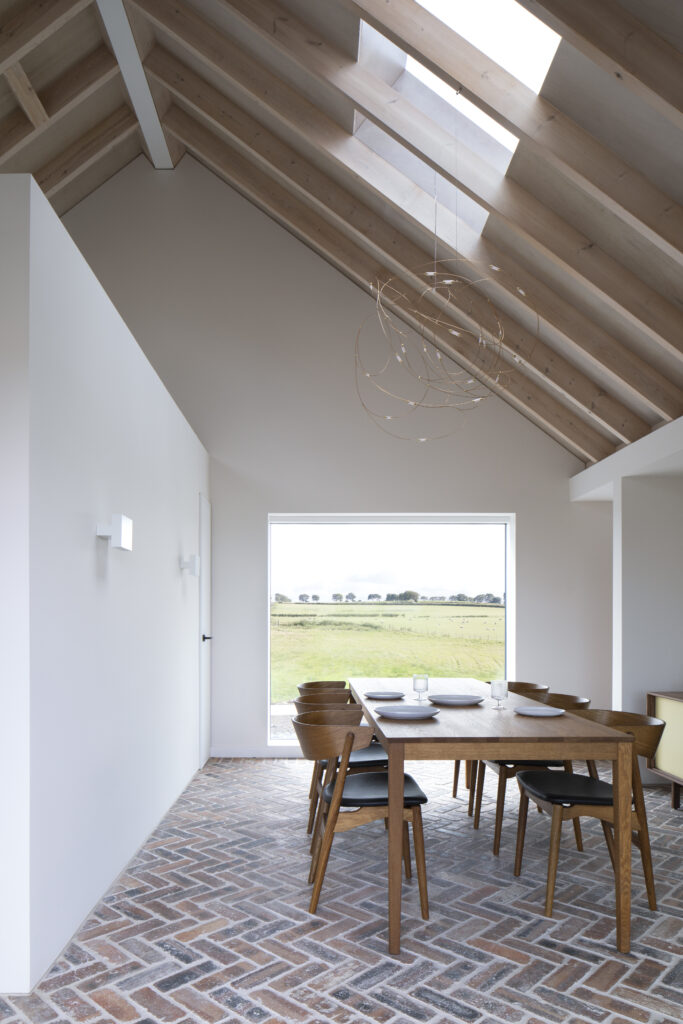
Submission by Loader Monteith.
Being a good ancestor
Practice
1. Do you have a clearly stated purpose aligned with the planetary emergency? We’re looking for a bold ambition here, and a culture which recognises the need for long-term thinking.
Yes. Loader Monteith Architects is committed to addressing the major social and environmental challenges facing society through both its projects and business operations. Working closely with the Carbon Trust, the practice has developed a Net Zero Plan focused on significantly reducing operational and embodied carbon, aiming to exceed Scotland’s 2045 net-zero target and support the construction industry’s transition to a low-carbon future.
Recognising that much of its carbon impact comes from project-related activity, particularly embodied carbon and operational energy use, Loader Monteith will design new projects to meet or exceed recognised low-energy and net-zero standards. This includes passive design, fabric-first principles, high-performance envelopes, whole-life carbon assessments, and responsibly sourced low-impact materials.
The practice will also reduce emissions from its own studios, energy use, and travel, while tracking and reviewing progress annually. Through collaboration, staff training, and knowledge sharing, Loader Monteith aims to lead by example.
2. Do you have a clearly stated purpose aligned with the planetary emergency? We’re looking for a bold ambition here, and a culture which recognises the need for long-term thinking.
Yes. Loader Monteith has a clear and active approach to succession planning, focused on protecting the values, culture and legacy built by those who have contributed to the practice’s growth.
The organisation is actively up-skilling and investing in the next generation of leaders, including long-term studio members such as Jamie Mack and Eireann Iannetta-Mackay, who bring strong talent, commitment and leadership potential within the practice.
Emerging leaders are being supported through project leadership opportunities, mentoring and increased responsibility, ensuring knowledge, relationships and standards are passed on in a structured way.
Loader Monteith is also nurturing staff who have helped grow the practice in specialist areas such as conservation and sustainability, recognising their role in its continued success.
This is supported by evolving HR policies, including paternity leave, designed to create a sustainable, inclusive workplace that benefits working parents and the wider team.
3. Do you share research and knowledge for the benefit of society and the wider world?
Yes. The organisation actively shares research, knowledge and professional experience for the benefit of society and the wider profession. Iain Monteith teaches and mentors the next generation, with a particular focus on widening access to architectural education for students from low-income and discriminated backgrounds.
This work supports greater diversity, equity and inclusion within architectural education and the profession. Through involvement with initiatives such as the ‘Class in Architecture’ body at MSA, Iain shares knowledge of architectural practice, experience of entering the workforce, and practical advice on routes into employment. This includes training, mentoring and guidance designed to demystify the profession and support students who may face barriers to access.
By contributing time and expertise in this way, the organisation helps broaden participation in architecture and supports a more inclusive, representative and socially engaged profession.
Project
1. Do you advocate for long-term thinking at the outset of work? Do you initiate work with long-term thinking and challenge clients? Also, can the organisation demonstrate that this approach has worked?
Yes. From the outset our initial briefing always reviews the potential for enhancing sustainability for the benefit of both current and future generations.
The organisation also shares and applies research-led knowledge through project work, including our ‘Old Red House’ study, which explores the value of existing buildings and materials.
This thinking is carried into practice by actively challenging and encouraging clients to retain, reuse and repurpose materials already available on site. Examples include the reuse of stone at Cairnconan Byre, bricks at Ceangal House, and stone at Dulnain.
This approach promotes a more responsible, circular use of resources, reduces waste and embodied carbon, and helps demonstrate the wider environmental and cultural value of working carefully with existing fabric.
2. Does your work take account of the future climate and the need for resilience?
Yes. Loader Monteith’s projects take account of the future climate and the need for long-term resilience. We recognise that buildings must respond not only to current conditions, but also to increasing risks such as overheating, heavier rainfall, flooding, changing weather patterns and pressure on resources.
Our approach considers passive design, orientation, daylight, natural ventilation, fabric performance, durable materials, adaptability and opportunities to reduce operational and embodied carbon. We also seek to protect and enhance existing buildings, landscapes and biodiversity, recognising that resilience is environmental, social and cultural.
By working closely with clients, consultants and contractors, we aim to make design decisions that support comfort, wellbeing, longevity and responsible resource use. Our projects seek to create robust, flexible places that can adapt over time and continue to serve communities positively in a changing climate.
3. Does the majority of your work go beyond mitigating negatives and towards optimising positives?
Yes. The majority of Loader Monteith’s projects seek to go beyond simply mitigating negative impacts, aiming instead to optimise positive outcomes for people, place and the environment. We believe architecture should not only reduce harm, but actively contribute to wellbeing, community resilience, social value and ecological awareness.
Our approach considers how each project can strengthen its context, support users, improve access, enhance existing buildings or landscapes, and create lasting value for the wider neighbourhood. This includes prioritising reuse and repair, improving environmental performance, supporting biodiversity, encouraging connection to nature and designing inclusive, welcoming places.
Projects such as Harmeny Outdoor Learning Hub, Govan Lyceum, The George Cinema and The Pipe Factory demonstrate this ambition, seeking to deliver cultural, educational, social and environmental benefit. Through careful engagement and responsible design, we aim to create places that leave communities stronger than we found them.
Co-evolving with nature
Practice
1. Do you use biophilia within your premises and/or do you regularly gather in natural settings?
Yes. Loader Monteith recognises the value of biophilia in supporting wellbeing, creativity and connection to place, and reflects this within its premises and working culture. Our workplace prioritises natural light, outlook, fresh air through cross ventilation, indoor plants, natural materials, including reclaimed timber furniture, and tactile finishes, helping to create a calm, healthy and welcoming environment for staff, clients and visitors.
We also value time in natural settings, through site visits, walking meetings, project research and team activities that encourage reflection, observation and connection with landscape. Socially, our team includes keen hill walkers, cyclists and runners, reinforcing our relationship with nature beyond the studio.
By applying biophilic thinking to our own environment and practice culture, we reinforce the values we promote through our project work: wellbeing, sustainability, human-centred design and a restorative relationship between buildings, people and nature.
2. Can you share examples of where you have considered nature in decision making?
Yes. Loader Monteith considers nature as an important part of design decision-making, particularly where projects have the opportunity to protect, enhance or reconnect people with the natural environment.
At Harmeny Outdoor Learning Hub, the building was carefully formed around existing trees to retain the character and ecological value of the woodland setting. Rather than treating the trees as a constraint, they became central to the design response, helping preserve the woodland while supporting its use as a therapeutic education space.
This approach reflects our wider belief that architecture should work with natural systems, not against them. By considering existing landscapes, biodiversity, daylight, views, materials and user wellbeing from the outset, we seek to create buildings that are more sensitive to place, support healthier relationships with nature and deliver long-term environmental and social value.
3. Are you supporting nature locally and nationally?
Yes. Loader Monteith supports nature locally and nationally through its project work, practice culture and wider commitments. Locally, our projects seek to protect and enhance existing landscapes, biodiversity and access to nature, recognising the important role natural environments play in wellbeing, learning and community life.
At Harmeny Outdoor Learning Hub, for example, the building was carefully shaped to retain existing trees and preserve the woodland setting as part of a therapeutic education environment. This demonstrates our commitment to working with nature rather than against it.
Nationally, we support initiatives that promote outdoor play, wellbeing and connection to nature, including our role as a Play Champion supporting Play Scotland’s work to uphold every child’s right to play. Through these commitments, we aim to contribute positively to local ecologies, wider environmental awareness and more nature-connected built environments.
Project
1. Can you demonstrate work that strives to match the performance of a mature ecosystem?
Yes. Loader Monteith supports nature locally and nationally through both its project work and wider practice values. Locally, our projects seek to protect and enhance existing landscapes, biodiversity and access to nature, recognising the important role natural environments play in wellbeing, learning and community life. At Harmeny Outdoor Learning Hub, for example, the building was carefully shaped to retain existing trees and preserve the woodland setting as part of a therapeutic education environment.
More broadly, our approach promotes design that works with natural systems, reduces environmental impact and strengthens people’s connection to landscape. We also support initiatives that encourage outdoor play, wellbeing and access to nature, including our role as a Play Champion supporting Play Scotland’s work to uphold every child’s right to play.
Through these commitments, we aim to contribute positively to local ecologies, national conversations around wellbeing and more nature-connected built environments.
2. Are you working on material stewardship?
Yes. Loader Monteith is actively working on material stewardship through considered specification, reuse, repair and long-term value. We recognise that materials carry environmental, social and cultural impact, and that careful decisions can reduce waste, lower carbon and support more responsible construction.
Where possible, we prioritise retaining and adapting existing buildings, using durable materials, reducing unnecessary replacement and specifying products with lower embodied carbon, responsible sourcing and longevity in mind. Our conservation and retrofit work helps reveal the value already held within existing fabric, ensuring materials are not discarded unnecessarily and that interventions are proportionate, robust and respectful of place. This is demonstrated through our work at Jenners Department Store in Edinburgh and The Pipe Factory in Glasgow.
We also work with clients, consultants and contractors to promote circular thinking, including reuse, reclaimed materials and designing for future adaptability, supporting our wider commitment to sustainability and responsible resource use.
3. Does the majority of your work demonstrate the use of biologically-inspired approaches such as Bioregionalism, Biophilia or Biomimicry?
Yes. The majority of Loader Monteith’s projects are informed by biologically inspired approaches, particularly biophilia and bioregional thinking. We seek to create buildings that strengthen the relationship between people, nature and place, responding carefully to local climate, landscape, materials, ecology and community context.
Biophilic principles are embedded through the use of natural light, views, ventilation, tactile materials, planting, landscape connection and careful consideration of wellbeing. Projects such as Harmeny Outdoor Learning Hub demonstrate this approach but also our rural projects such as Balnain working with the local vernacular.
Our work also reflects bioregional principles by prioritising reuse, repair, local character and sensitivity to existing buildings and landscapes. While biomimicry may not be applied formally on every project, our design process consistently learns from natural systems, promoting resilience, adaptability and healthier relationships between people, buildings and the environment.
Creating a just space for people
Practice
1. Do you have a progressive EDI policy and can you evidence many forms of diversity, which are welcomed and acknowledged, within your company/organisation?
Yes. Loader Monteith is committed to eliminating discrimination, encouraging diversity and creating an inclusive workplace where every employee feels respected, valued and able to give their best. We oppose all forms of unlawful and unfair discrimination and provide equality and fairness for all, regardless of gender, gender reassignment, marital or civil partnership status, race, ethnic origin, colour, nationality, disability, sexual orientation, religion or age.
All employees, whether part-time, full-time or temporary, are treated fairly and with respect. Recruitment, promotion, training and development are based on aptitude and ability, with opportunities made available to all staff. We promote dignity and respect in the workplace and do not tolerate intimidation, bullying, harassment or discrimination.
We value the diverse talents and perspectives of our team, recognising that they strengthen our culture and improve the creative solutions we provide to clients. Our equality, diversity and inclusion policy is reviewed annually.
2. Do you operate a no overtime culture, meet the living wage consistently, and stipulate a fair salary ratio between staff of all levels?
Yes. Loader Monteith is committed to maintaining a fair, respectful and sustainable working culture. We do not promote a culture of routine overtime and seek to manage workloads responsibly, recognising that wellbeing, balance and rest are essential to a healthy and creative practice.
We are committed to fair pay and ensure salaries meet or exceed the Living Wage and are a Living Wage Accredited employer. Pay, progression and reward are reviewed to support fairness, transparency and consistency across the team, with decisions based on role, responsibility, experience and contribution.
We also recognise the importance of maintaining a fair relationship between salaries at different levels of the organisation. While roles carry different responsibilities, we seek to ensure that pay structures remain proportionate and equitable, supporting dignity, retention and opportunity for all staff. This reflects our wider commitment to equality, inclusion and responsible employment practice.
3. Do you support charities, community groups, social enterprises, action groups and others through pro-bono work, charitable giving or in-kind donations?
Yes. Iain Monteith is a Director of The Merchants House of Glasgow, a charitable organisation supporting communities across the West of Scotland. He contributes to governance and strategic direction, advising the board on community engagement and helping ensure charitable activity responds to local need and delivers social value.
Iain is also an SFA-qualified children’s football coach, volunteering with a grassroots club to give young people opportunities to participate in sport, build confidence, teamwork, discipline and resilience, and form positive relationships within their community. His coaching supports children from a range of backgrounds and promotes inclusion, wellbeing and life skills through mentoring.
Loader Monteith is also a Play Champion, supporting Play Scotland’s work to uphold every child’s right to play, as set out in UN Article 31.
Together, these commitments demonstrate Loader Monteith’s dedication to community benefit, youth development and inclusive participation across Glasgow and the West of Scotland.
4. Do you use an ethical framework to assess opportunities and/or supply chain partners and is them team consulted on these decisions?
Yes. Loader Monteith applies an ethical approach when assessing new opportunities, clients, collaborators and supply chain partners. We consider whether potential work aligns with our values, including social benefit, environmental responsibility, fairness, inclusivity, quality of design and respect for people and place.
When reviewing opportunities, we consider the likely impact of the project, the values of the client and wider team, and whether the process will allow us to deliver meaningful, responsible and regenerative outcomes. This helps ensure we work with organisations that share our commitment to positive social, environmental and community value.
These decisions are not made in isolation. The team is encouraged to contribute views through open discussion, project reviews and wider practice conversations. This collaborative approach helps ensure ethical considerations are embedded in our decision-making and that our work remains aligned with the values of the practice.
Project
1. Does your work demonstrate deep engagement with local stakeholders and end users?
Yes. Loader Monteith’s projects are rooted in meaningful engagement with local stakeholders, clients and end users. We believe successful architecture must respond to the people and places it serves, and that listening carefully from the outset is essential to creating buildings that are relevant, inclusive and lasting.
Our process seeks to understand local context, community needs, user experience and wider social impact. Engagement includes dialogue with clients, building users, community representatives, local authorities, consultants and other stakeholders, ensuring a broad range of voices informs the design response.
Across our work, we aim to create places that reflect their communities and support everyday life. Key projects include Govan Lyceum, The George Cinema, Harmeny Outdoor Learning Hub and the Up-2-Us residential care facility. By embedding stakeholder and end-user insight throughout the design process, our projects seek to deliver lasting value for immediate users and the wider neighbourhood.
2. Does your work create connected and resilient communities which positively contribute to neighbourhoods and allow equality of access?
Yes. Loader Monteith’s projects aim to create connected, resilient communities by designing places that respond to their social, cultural and physical context. We believe architecture should strengthen neighbourhoods, support everyday life and encourage a sense of belonging for all users, visitors and passers-by.
Our approach considers how buildings connect with streets, landscapes, public spaces and existing communities, ensuring projects contribute positively beyond their immediate boundaries. We seek to create inclusive, welcoming environments that promote equality of access and are sensitive to the needs of people of different ages, abilities and backgrounds.
Across our work, from residential and community-focused projects to education, ecclesiastical, leisure and tourism, we aim to support wellbeing, social connection and long-term resilience. By placing people and place at the centre of our design process, our projects seek to deliver lasting value for neighbourhoods and wider society.
3. Does the majority of your work promote equity in society, and consider all people, not only building inhabitants
Yes. The majority of our projects seek to promote equity by considering the needs of all people, not only those who directly inhabit the buildings we design. At Loader Monteith, we believe the greatest strength of architecture is its humanity, and that well-considered design can empower, support and uplift both building users and the wider communities who encounter our work.
Our projects span many areas of society, including therapeutic education, ecclesiastical, residential, leisure and tourism. Across these sectors, we aim to create places that are inclusive, accessible and beneficial to a broad range of people. This means considering how buildings contribute to daily life, community wellbeing, social connection and a shared sense of place.
By placing people at the centre of our design approach, we aim to ensure our work contributes positively to society and delivers lasting value for everyone it touches.