
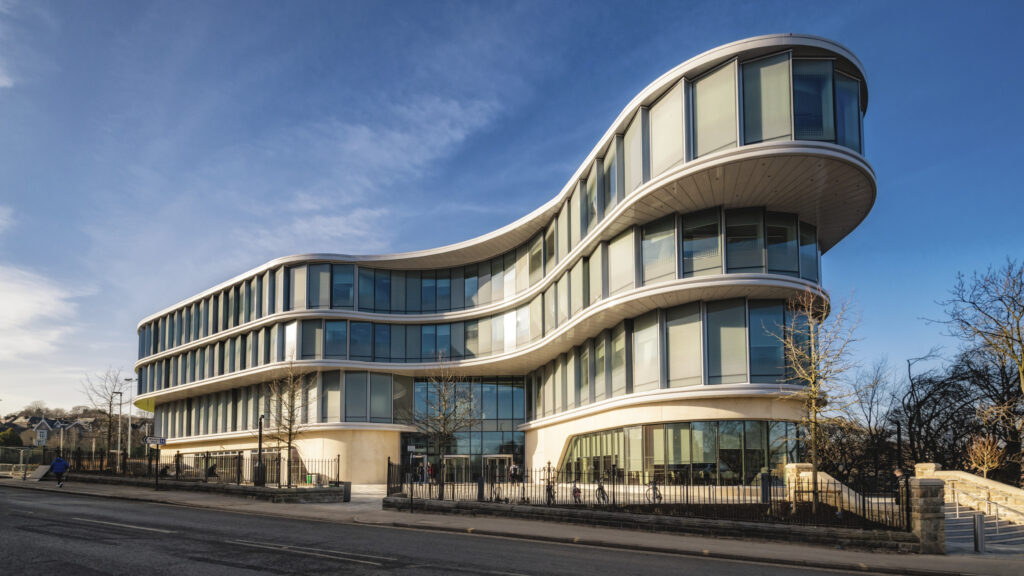
Submission by HLM Architects.
Being a good ancestor
Practice
1. Do you have a clearly stated purpose aligned with the planetary emergency? We’re looking for a bold ambition here, and a culture which recognises the need for long-term thinking.
We are Employee‑Owned Trust driven by a powerful belief in ‘Thoughtful Design for a Regenerative Future’—a commitment to creating places that don’t just reduce harm but actively help heal people and planet. Every project is anchored in RIBA 2030 Sustainable Outcomes and net‑zero principles, guided by our in‑house sustainability experts.
But we refuse to stop at sustainability. The next frontier is regenerative design—restoring ecosystems, rebuilding natural capital and sequestering carbon—and we are investing boldly in research into bio‑based and geologically abundant materials capable of delivering net‑positive impact for generations. Our work on the Circular Twin project proved what’s possible, achieving an 84% reduction in whole‑life carbon and 66% in embodied carbon.
As founding members of the Regenerative Materials First Hub and advisors to the UKGBC Systems Change Programme, we channel this pioneering insight directly into every project we shape.
2. Do you have a clearly stated purpose aligned with the planetary emergency? We’re looking for a bold ambition here, and a culture which recognises the need for long-term thinking.
We are an Employee Ownership Trust (EOT), ensuring that the people who drive the success of the practice share directly in its value, culture and long-term direction. A Voice Hub, drawn from a diverse cross‑section of staff, provides a direct channel for our 250+ employees to influence strategic decisions. This model strengthens collaboration, transparency and accountability, empowering staff to shape the future of the business, and helping retain talent by fostering a genuine sense of shared purpose and ownership.
Alongside this our Academy initiative delivers bespoke training and development for all staff, supporting career progression and nurturing future leaders to ensure long‑term continuity and success.
Central to this achievement is our “One Team” ethos, which promotes clear company values and a shared purpose and is reflected by us being ranked one of the UK Best Companies to Work For and nominated for Architect of the Year 2025.
3. Do you share research and knowledge for the benefit of society and the wider world?
Our award‑winning research is regularly published, presented at conferences or available on public forums, reflecting our commitment to transparency and knowledge sharing for future generations. Examples include:
The Edigi2Life project: Collaborating with IES, the University of Glasgow and Sciencescope to develop a campus‑scale Digital Twin that evolves compliance models into live operational tools optimising whole‑life performance. Innovate UK
The MMC Standardisation and Kit of Parts: research for the Department for Levelling Up, Housing and Communities, informing the use of standardised components in Modern Methods of Construction.
The Regenerative Twin: How prioritising carbon and regenerative approaches over capex can drive environmental benefit and support local business growth Published through SCAPE.
Designing with Empathy: Reflecting on Art, Design and Inclusivity Panel at European Healthcare Design Conference 2025
UKGBC Systems Change Programme and the Regenerative Materials First Hub: Advancing transdisciplinary collaboration across research, industry and policy.
Project
1. Do you advocate for long-term thinking at the outset of work? Do you initiate work with long-term thinking and challenge clients? Also, can the organisation demonstrate that this approach has worked?
On every project we aim to maximise social, environmental and project value, a commitment exemplified by The Wave for the University of Sheffield. What began as a conventional faculty brief was transformed through extensive stakeholder engagement and the application of our research into modern pedagogies, environmental modelling and workplace exemplars. The result is a BREEAM Outstanding, net‑zero‑in‑operation building that accommodates five departments rather than the three originally envisaged, enabling a strategic reduction of the wider university estate and associated carbon emissions. Its adaptable façade supports future reconfiguration, extending the building’s lifespan and long‑term relevance, while geometry rationalisation and panel optimisation reduce material use and embodied carbon and support diassemby.
This evidence‑based methodology also informed our collaboration with Morgan Sindall on the Regenerative Twin, which demonstrated how a whole‑life, regenerative approach allows buildings to continually adapt, renew and remain environmentally and socially resilient over time.
2. Does your work take account of the future climate and the need for resilience?
We help address future climate risk by retaining and adapting existing structures wherever possible, then minimising material use and prioritising durable, low‑impact materials aligned with circular principles for new construction.
Our designs integrate adaptability, disassembly and circularity from the outset, using Modern Methods of Construction to support flexible use and future reconfiguration. As long‑standing ambassadors for DfMA, we promote design for disassembly by standardising components, simplifying interfaces and using mechanical fixings that can be cleanly separated, ensuring buildings are assembled from modular elements that can later be removed, replaced or reconfigured without destructive work. This approach enables long‑term adaptability, material recovery and circular‑economy outcomes throughout a building’s life.
Projects such as the PBBS Demonstrator with Laing O’Rourke and our contribution to the Department for Levelling Up’s MMC Standardisation and Kit of Parts illustrate how our architectural expertise continues to shape building resilience across the industry.
3. Does the majority of your work go beyond mitigating negatives and towards optimising positives?
Our projects are crafted to meet—and consistently exceed—the RIBA 2030 Sustainable Outcomes, setting a clear trajectory toward fully regenerative design within the next decade. We design for net‑zero operational and embodied carbon, embedding circularity, environmental stewardship and social value from the outset, while enhancing biodiversity and creating places that champion equality, diversity and inclusion.
The Wave project exemplifies this ambition through Net Zero Carbon Operation powered by ground‑source heat and onsite photovoltaics, supported by rain gardens and grey‑water systems that emulate natural cycles. Active travel is prioritised, with walking, cycling and public transport complemented only by accessible parking and EV charging. A robust biodiversity net gain strategy shapes the landscape, while community gardens and a welcoming café foster social connection. Designed for long‑term adaptability and supportive of neurodiversity and inclusion, the building evolves with future educational needs and ensures every learner can thrive.
Co-evolving with nature
Practice
1. Do you use biophilia within your premises and/or do you regularly gather in natural settings?
Immersing our team in nature strengthens our ability to design places that are not only sustainable but actively restorative. We embed biophilic design principles across all our studios to support wellbeing, focus and creativity, beginning with encouraging active travel through walking and cycling, supported by dedicated bike storage and showers.
Natural textures, colours and planting — including greenery on every desk — create calm, restorative environments that mirror the qualities we aim to deliver in our projects, and quiet booths allow staff to retreat to more focussed areas.
We also cultivate a deeper connection to the natural world through activities such as Plant Swaps, green‑fingered tea breaks and Studio Connect Days, when we close our studios for group activities like tree planting, nature walks or social value initiatives. These shared experiences strengthen team cohesion and reinforce our appreciation of the environment that inspires and informs our work.
2. Can you share examples of where you have considered nature in decision making?
Our working culture reinforces our commitment to planetary care. Every project undergoes sustainability‑focused design reviews that act as an ombudsperson for future generations, ensuring decisions consider ecological health and biodiversity stewardship. This is strengthened through place‑based engagement, the use of nature‑based solutions and the application of circular economy principles. In essence, nature is treated as a stakeholder, valued and protected through strategic, design and operational decision.
The same ethos shapes our internal culture, where our Smartblend working policy—including a four‑day week, flexible hours and remote working options respect individual circadian rhythms. Alongside this our employee ownership structure reflects nature’s deepest patterns — reciprocity, resilience and the understanding that when every part is valued, the whole becomes more vibrant, more stable and more capable of thriving over time.
3. Are you supporting nature locally and nationally?
We support nature through landscape‑led and community‑driven design, creating edible landscapes and biodiverse green spaces that reconnect people with nature.
As active members of Wood Knowledge Wales’ regenerative materials first initiative, we champion home‑grown timber and regenerative materials, with a live pilot project underway. We contribute to national dialogue through the UKGBC Systems Change programme, shaping strategies that embed nature recovery across the built environment.
Our commitment is demonstrated through projects such as public gardens, allotments and a nature‑rich public realm at Ebbsfleet, our involvement in Coed Caerdydd, Cardiff’s 10‑year tree‑canopy initiative, and our landscape‑based outreach with Developing the Young Workforce. Our pro‑bono design of a sensory garden for SEN students further demonstrates our commitment to inclusive access to nature. Collectively, these actions reflect our belief that we must be future stewards, restoring natural systems at every scale, from neighbourhood to nation.
Project
1. Can you demonstrate work that strives to match the performance of a mature ecosystem?
We embed Biodiversity Net Gain and Urban Greening Factor metrics from the earliest design stages to drive nature‑positive, evidence‑based decisions that prioritise habitat protection and ecological enhancement. On government projects we deliver a minimum 10% net gain, often targeting 20% or more. For education projects we create climate-responsive designs with resilient planting, living walls and rain gardens to help mitigate the effects of climate change.
At The Wave we sought to restore a natural landscape previously lost to a sports pitch. Existing wildlife corridors were protected and enhanced with more than 80 flowering trees to support birds, insects and pollinators. New dry‑stone walls introduce rich microhabitats for insects, reptiles, small mammals and plant species such as lichens, ferns and mosses, while also providing nesting and sheltering opportunities for sparrows, finches, wrens and even bats. This clearly demonstrates our comprehensive approach to protecting and enriching the natural environment.
2. Are you working on material stewardship?
We place material stewardship at the heart of our design process, using the principles of retain, reduce, reuse wherever possible, using low carbon regenerative materials first then exploring off site manufacture, future adaptability and disassembly.
This is informed by our role in a two-year collaborative research and development project – The Regenerative Twin. It reimagined design, procurement and delivery processes to unlock low carbon public buildings by focusing on embedding whole-life carbon reduction from the earliest stages. The research tested a palette of regenerative materials applied to a baseline 2FE primary school, resulting in reductions of 84% whole-life carbon emissions, 66% upfront embodied carbon, 45% lower annual energy use with any increase in capital costs offset within 11 years.
We are now looking beyond Design for Manufacture and Assembly to consider how projects can be disassembled and reused to reduce material wastage and input to a circular economy.
3. Does the majority of your work demonstrate the use of biologically-inspired approaches such as Bioregionalism, Biophilia or Biomimicry?
We create sustainable spaces that work in harmony with nature. Our integrated architecture, interiors and landscape teams coordinate this approach from project inception, prioritising natural environments that support users’ health and wellbeing.
At the National Manufacturing Institute for Scotland, we used a CLT lattice structure inspired by plant cell walls to achieve long spans, distribute stresses efficiently and deliver a lightweight, flexible, low‑energy building flooded with natural light.
The geodesic glass dome over the atrium of The Wave similarly draws on the inherent strength of cellular geometries.
At the University of Leeds Health Sciences Library, we collaborated with staff and students to introduce a palette of timber, natural colours and planting to create a restorative environment that reduces stress responses, lowers heart rate and blood pressure, and supports good mental health.
Together, these projects demonstrate our consistent commitment to biologically-inspired approaches to design.
Creating a just space for people
Practice
1. Do you have a progressive EDI policy and can you evidence many forms of diversity, which are welcomed and acknowledged, within your company/organisation?
We recognise gender identity, ethnicity, neurodiversity, disability, socioeconomic background, age, caring responsibilities and lived experience and as an Employee Ownership Trust, every person has a genuine voice in shaping the organisation.
Our flexible working framework ensures equitable access to opportunities, while mentoring, inclusive recruitment and staff networks strengthen belonging. Our Diversity and Inclusion Group created the I BELONG Framework and Guiding Principles — Be Thoughtful, Be Curious and Be You — and leads forums and events that celebrate our diversity.
We are active members of the RIBA EDI Leaders Action Group and signatories of the Social Mobility Pledge and Opening Doors Campaign. Of the 65+ work experience places we provide each year 50% are reserved for low‑social‑mobility schools and we are currently working with care leavers to develop a tool that helps employers understand their specific challenges.
We believe this is diversity as lived practice, not policy on paper.
2. Do you operate a no overtime culture, meet the living wage consistently, and stipulate a fair salary ratio between staff of all levels?
As an Employee Ownership Trust we put people at the centre of every decision, with profit‑sharing ensuring rewards are spread fairly across the team. We operate a no‑overtime culture, supported by accurate time recording to protect wellbeing.
All employees are consistently paid above the Real Living Wage, and our pay structure is reviewed annually through benchmarking and gender pay‑gap analysis to ensure fairness and transparency. We also maintain a fair and proportionate salary ratio between staff at all levels, ensuring senior leadership pay remains responsible and aligned with our values.
Alongside this our SMARTBlend policy offers job‑sharing, part‑time roles, staggered hours, back‑to‑work schemes for parents, career breaks, sabbaticals and the option to work remotely for 50% of the week.
Together, these measures create a flexible, people‑first environment where people are supported, trusted and able to thrive.
3. Do you support charities, community groups, social enterprises, action groups and others through pro-bono work, charitable giving or in-kind donations?
We have a long‑standing commitment to social value, demonstrated through extensive charity partnerships, community engagement and volunteering. We are ambassadors for the Give Every Child A Chance and See It Be It programmes, visiting schools to broaden pupils’ understanding of career pathways and have developed a Built Environment Project in a Box which has engaged over 1,800 pupils. We run skills workshops, CV‑building sessions, portfolio reviews and provide 65+ annual work placements with 50% reserved for low‑social‑mobility schools.
In the wider community we deliver pro‑bono design work, hold volunteering days and match‑fund staff fundraising. We donate surplus office furniture and equipment to charities, and since co‑founding the Sheffield Charity Construction Ball, have helped raise over £400,000 for local charities. Last year, 55% of employees took part in these outreach activities, contributing more than 4000 hours — a clear demonstration of meaningful, sustained community impact.
4. Do you use an ethical framework to assess opportunities and/or supply chain partners and is them team consulted on these decisions?
We embed a clear ethical framework into how we assess opportunities and supply‑chain partners, drawing on structured governance and active team consultation to guide every decision. Our Integrated Management System, supported by ISO 9001 and ISO 14001, ensures that partners are evaluated against environmental impact, responsible sourcing, compliance, and alignment with our values, including sustainable and ethical material selection.
This approach is strengthened by open dialogue across the practice, enabling staff to raise issues, suggest improvements, and contribute meaningfully to supplier and sub‑consultant selection. By working only with partners who demonstrate reliable and responsible delivery, and by empowering our team to shape continuous improvement, we embed ethical thinking into everyday activity. This reinforces transparency, strengthens supply‑chain engagement, and ensures that our decisions consistently reflect our commitment to quality, environmental responsibility, and corporate social responsibility.
Project
1. Does your work demonstrate deep engagement with local stakeholders and end users?
Co‑design is central to how we shape architectural projects, ensuring the people who use a place genuinely help define it. We blend community workshops, design charrettes and our award‑winning Insight Tool to give every stakeholder a meaningful voice — including those who are neurodiverse, socially anxious or less confident in traditional consultation settings. This approach uncovers lived experience, priorities and barriers that would otherwise be missed, leading to richer briefs and more inclusive outcomes.
At Ysgol Pen Rhos, staff, students and the local community co‑created a new primary school model that unites educational and environmental goals, resulting in a nature‑based learning environment that revitalises a former industrial site and reflects genuine community ownership — a place shaped directly by the people who use it, including the children themselves. As the Head Teacher said, “Our children chose the furniture, the teachers modelled their classrooms…the school is a magical place”.
2. Does your work create connected and resilient communities which positively contribute to neighbourhoods and allow equality of access?
We design places that strengthen communities placing social, economic and environmental value at the heart of every project. Through community workshops and design charrettes we bring diverse voices into the design process, uncovering lived experience, needs and ambitions that drive genuine social benefit.
At The Wave, for the University of Sheffield, this resulted in a public café and community gardens used by residents, students and the neighbouring hospital; our fire‑station designs include drop‑in workstations for community nurses; and our innovation districts introduce vital third spaces — cafés, event venues, public squares and parkland — for wider sustainable growth. To strengthen regional prosperity, we target 30% of supply‑chain spend with local SMEs. We achieved 82% local spend at Ysgol Pen Rhos and created a place‑specific supply chain at Tigh na Croit that used local materials and skilled craftspeople.
We believe good architecture should leave a legacy.
3. Does the majority of your work promote equity in society, and consider all people, not only building inhabitants
Our designs prioritise building users, the wider community and the onsite teams delivering projects. Equality, diversity an inclusion informs all our design decisions creating spaces that foster dignity, accessibility and belonging, particularly for marginalised groups by engaging directly with users to understand lived experiences.
Alongside this safe working and construction are key considerations as designs develop. When partnering with local consultants and suppliers, we apply rigorous due‑diligence checks to ensure our values run through the entire delivery team.
We maintain strong visibility on site through design‑team meetings, site visits and reporting, working with contractors to keep welfare standards, fair working conditions and responsible labour sourcing front and centre. Our staff are trained to recognise indicators of exploitation — such as excessive working hours, inadequate training or PPE, restricted movement or unusual supervision patterns — enabling early intervention and supporting safe, ethical and transparent site environments.