
Submission by HKS, Inc.
Being a good ancestor
Practice
1. Do you have a clearly stated purpose aligned with the planetary emergency? We’re looking for a bold ambition here, and a culture which recognises the need for long-term thinking.
Our organisation has recently established an ambitious vision of the future of our practice with regenerative design as an explicit focus for the first time in our company’s history. This ambition goes beyond compliance, advocating for design’s ability to positively impact people, planet and ecosystems as a central area of focus of our firm’s emerging ethos and business strategy. In London, this commitment is fully embedded within our environmental management systems, including ISO 14001 processes, and is actively championed across the studio by leadership, design teams, and delivery teams alike.
This shared vision creates a roadmap towards decisions that consider climate resilience, carbon reduction, resource stewardship, and positive human outcomes as fundamental design criteria. It is an exciting time as we build a culture of long-term responsibility, grounded in the proposition that our work must contribute positively to both people and the planet.
2. Do you have a clearly stated purpose aligned with the planetary emergency? We’re looking for a bold ambition here, and a culture which recognises the need for long-term thinking.
Over the past year, our firm has undergone a significant transition in senior leadership, including an honest accounting of where we stand and where we want to go. As a legacy firm with more than 80 years of experience, it was essential to preserve what has defined our practice while shaping a future where our design work delivers a positive impact on people and ecology.
Senior leaders across design, delivery, and regional management actively champion this transition and embed it into how we operate globally and locally. These commitments are reinforced through formal ESG governance, annual public reporting, and alignment with internationally recognised frameworks including the UN Global Compact, AIA 2030, SE2050 and the RIBA 2030 Climate Challenge. Our legacy is not just the buildings we build, but how we protect what exists now while promoting the health and vitality of future generations.
3. Do you share research and knowledge for the benefit of society and the wider world?
We believe research and knowledge sharing are a responsibility of practice and essential to advancing a better world. We have established a dedicated Innovation Sector that integrates research, sustainability and design innovation across all scales and markets, embedding inquiry and experimentation into how we work.
We founded mindful MATERIALS, an open-source initiative that evolved into an independent nonprofit helping align the building industry around healthier, more sustainable material choices.
We are founding members of the Building Brains Coalition and the Coalition for the Advanced Understanding of School Environments (CAUSE), helping develop open-source frameworks that connect design decisions to measurable human outcomes.
As part of our operational carbon neutrality journey, we have openly shared lessons learned, methodologies and implementation strategies with peer firms and industry groups, recognizing that collective advancement is more valuable than competitive advantage when addressing climate challenges.
We actively share research through speaking, collaborations, conferences and publications.
Project
1. Do you advocate for long-term thinking at the outset of work? Do you initiate work with long-term thinking and challenge clients? Also, can the organisation demonstrate that this approach has worked?
Long term thinking is embedded at the outset of our work and forms a core part of our regenerative design approach. Early stage studies focus on identifying risks, opportunities, assets, and future challenges to ensure projects remain resilient, adaptable, and valuable over time. We actively challenge clients to consider future climate conditions, operational performance, adaptability, and whole life value before design solutions are established.
The Sustainable Outcomes Matrix has been developed to prompt critical long term questions at the earliest project stages, enabling the greatest possible impact. It incorporates strategies including integrated water management, flood resilience, modular construction, and lifecycle carbon optimisation. Across our London office, this framework has seen interdisciplinary dialogue, broadened design thinking, and encouraged more ambitious and future focused project outcomes. We have successfully demonstrated to clients that considering long term benefits not only improves project outcomes but also creates lasting value for their business.
2. Does your work take account of the future climate and the need for resilience?
Our Resilience Design Toolkit is a resource that has been developed in collaboration with the American Institute of Architects. This is a five-step process where resilience design strategies can be assessed both technically and financially, allowing their value to be clearly demonstrated. This approach strengthens the case for integrating resilience-focused design within projects by aligning client requirements with design objectives. It also supports informed decision-making, improves project outcomes, and contributes to the development of high-performance buildings that are better equipped to respond to environmental, operational, and long-term challenges. In complex environments, designing for both current and projected environmental conditions, we help clients reduce risk, protect long-term asset value, and create environments that can continue to perform under changing climatic conditions.
3. Does the majority of your work go beyond mitigating negatives and towards optimising positives?
No.
Co-evolving with nature
Practice
1. Do you use biophilia within your premises and/or do you regularly gather in natural settings?
Biophilic design and brain-healthy principles are embedded across our global workplace strategy, shaping both office environments and employee experience. Our studios integrate natural materials, interior planting, daylight access, wellness rooms, and strong indoor–outdoor connections to support well-being and performance.
For example, our Mexico City office includes a living wall to enhance restoration and comfort, while our London studio benefits from proximity to major green space, supporting walking meetings and outdoor collaboration. Onsite, a roof terrace and planted courtyard provide areas for recovery, informal interaction, and focused work, with an expanding planting strategy that prioritises air-purifying species and improved indoor environmental quality.
We have adopted WELL at Scale across our global portfolio, with a commitment to pursue WELL Certification for all future office renovations and relocations. This commitment is reinforced through outdoor programming, wellness initiatives and nature-connected events that strengthen social cohesion and support employee well-being.
2. Can you share examples of where you have considered nature in decision making?
We aim at embedding nature based thinking into our decision-making, from individual buildings to large masterplans. In Singapore, one project transformed a previously cleared urban site by reintroducing layered planting, elevated green spaces, shaded terraces, and natural biodiversity corridors that reconnect people with the surrounding ecosystem. This approach included adaptive reuse, outdoor gardens, and natural materials to create a space rooted in place and climate. In the United Kingdom, our education projects prioritise access to daylight, external learning environments, and sensory landscapes that support child development and wellbeing. At masterplan level, we integrate biodiversity, water sensitive urban design, ecological connectivity, and landscape led placemaking to restore natural systems while creating resilient communities. In the United Kingdom, our education projects prioritise access to daylight, external learning environments, and sensory landscapes that support child development and wellbeing.
3. Are you supporting nature locally and nationally?
As part of our carbon neutral operations, our offset portfolio includes nature-based removals that protect ecosystems, biodiversity, and local communities.
One example is the X-Hazil forest conservation project in the Yucatán Peninsula, which protects over 26,000 hectares through improved forest management, preserving biodiversity, supporting endangered species habitat, and delivering long-term benefits for local communities.
Locally, our teams contribute to environmental stewardship through volunteering, public space clean-ups, and engagement with local green spaces to foster social connection and environmental responsibility.
Biodiversity is also embedded in our project work from the outset. On a recent masterplan, we set a target of 20% biodiversity net gain, with planting strategies focused on native and climate-resilient species.
Together, these initiatives ensure our environmental commitments extend beyond individual projects and contribute to wider ecological recovery.
Project
1. Can you demonstrate work that strives to match the performance of a mature ecosystem?
No.
2. Are you working on material stewardship?
We are the founders of mindful MATERIALS, an initiative that made transparency and optimization information easily accessible to designers as they select products. This is a labeling system that translates key transparency and optimization information about products. The simplicity of the labeling system generated interest in the larger design community and is now publicly available industry-wide.
In education projects, we are applying material stewardship principles through material passports, low embodied carbon specifications, and responsible sourcing strategies. Timber products are specified with full chain of custody certification, and environmental product declarations are required as part of baseline procurement standards.
Our sustainable outcomes framework also sets measurable targets for embodied carbon, resource efficiency, and operational performance, aligned with emerging net zero building standards in the United Kingdom. By treating materials as future resources rather than waste, our projects are designed to support both environmental performance and long term circular value.
3. Does the majority of your work demonstrate the use of biologically-inspired approaches such as Bioregionalism, Biophilia or Biomimicry?
Our work demonstrates biologically inspired approaches through a combination of these design strategies. Bioregional principles are embedded across much of our portfolio by responding to local climate, ecology, culture and available resources. Our Nature of Place (NoP) methodology helps project teams analyze these conditions and identify opportunities that are rooted in the unique characteristics of each location.
Biophilic design strategies are also frequently incorporated to strengthen meaningful connections between people and nature. These approaches extend beyond visual access to nature and may include natural materials, organic forms, landscape integration, water features and opportunities to experience the sights, sounds, textures and seasonal rhythms of the natural world.
In select projects, biomimicry informs building systems, material selections or façade strategies that emulate natural processes to improve environmental performance and occupant comfort.
Together, these approaches help create places that are responsive to both human and ecological systems.
Creating a just space for people
Practice
1. Do you have a progressive EDI policy and can you evidence many forms of diversity, which are welcomed and acknowledged, within your company/organisation?
Our firm is guided by a Social Equity Policy that promotes fairness, inclusion, belonging, opportunity, and respect across our global organisation. Employee-led Affinity and Inclusion Groups, including Pride, Black Collective, Women in Design, Asian and Pacific Islander, Hispanic and Latin, Parents and Caregivers, Mindful, and Common Table, enable staff to shape internal culture and contribute to wider industry change.
We advance equity through mentorship, scholarships, internships, and professional development programmes that expand access to the architecture and design profession. These include the Equitable Impact Fellowship, Designing Tomorrow’s Leaders, Summer Shadow Programme, NOMA professional development initiatives, and the Equitable Design Scholarship. A Diverse Teams Framework is also being implemented to strengthen collaboration and innovation across projects.
All employees complete biennial Respect the Workplace training. Our commitment to inclusion has been externally recognised through the Human Rights Campaign Foundation Equality 100 distinction for LGBTQ plus workplace inclusion.
2. Do you operate a no overtime culture, meet the living wage consistently, and stipulate a fair salary ratio between staff of all levels?
Our practice is committed to creating a workplace culture that supports employee wellbeing, fairness, and long term professional growth. Through our Flexible Work Experience programme, we promote flexible working, collaboration, and sustainable work practices that help maintain a healthy balance between personal and professional commitments.
We maintain fair and competitive compensation informed by market data, experience, professional qualifications, location, and performance. Compensation is reviewed regularly, with processes that support transparency and consistency. Our London office is a registered London Living Wage employer, ensuring all employees receive at least the London Living Wage.
We also invest in benefits and professional development at every career stage, including healthcare, mental health support, paid parental leave, retirement planning, mentoring, scholarships, fellowships, and leadership programmes. These initiatives help create an inclusive workplace where employees can thrive, develop their careers, and contribute to the long term success of the practice.
3. Do you support charities, community groups, social enterprises, action groups and others through pro-bono work, charitable giving or in-kind donations?
We have embedded community impact into our business by dedicating professional expertise, volunteer time and financial resources to support charities, nonprofit organisations, community groups and social enterprises. Through our Public Interest Design programme and donor-advised fund, we help fund and deliver projects that create outside traditional project delivery.
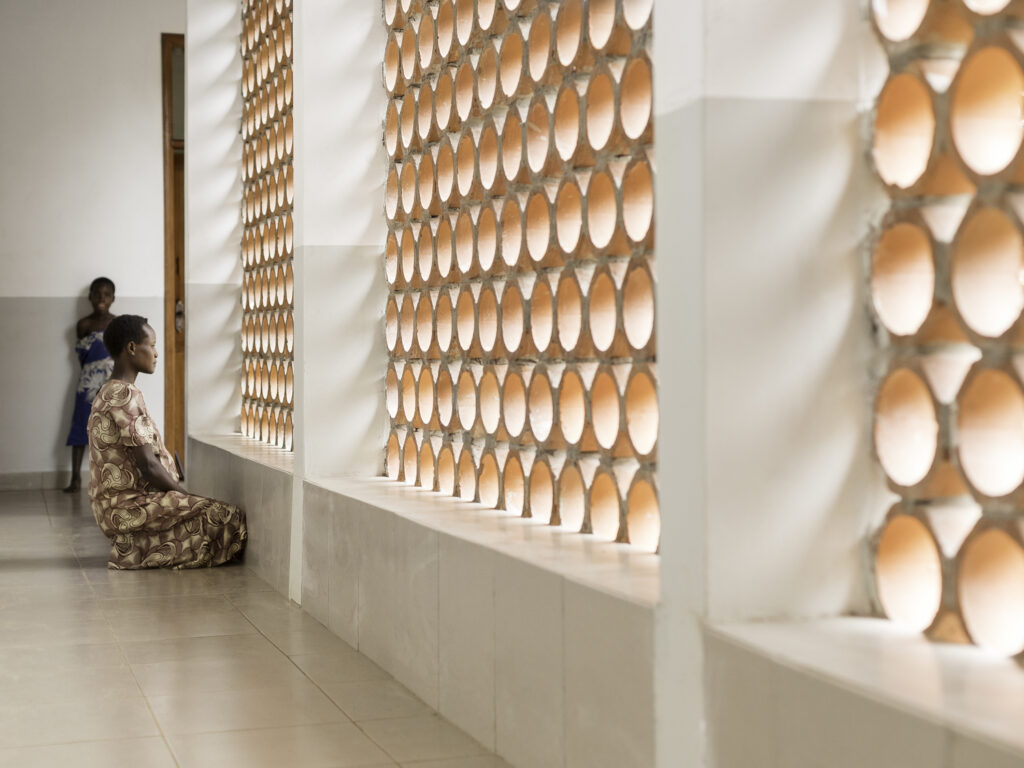
A key example is a pro bono maternity unit in Uganda, developed with Engineers for Overseas Development and local communities. Using passive design, local materials, natural ventilation, rainwater harvesting and solar power, the project improved access to maternal healthcare while supporting local skills and resilience. Since opening, the facility has seen increased admissions and deliveries and recorded zero maternal or infant deaths.
Our fundraisers regularly raise funds and provide support for nonprofit organisations and community initiatives aligned with our values and areas of expertise. We also support programmes including ACE Mentorship, Cristo Rey, TCV, NOMA and our Equitable Impact Fellowship.
4. Do you use an ethical framework to assess opportunities and/or supply chain partners and is them team consulted on these decisions?
We maintain anti-corruption procedures, whistleblowing mechanisms, a Supplier Non-Discrimination Standard Policy, and publicly available policies related to labor and human rights, environmental responsibility, social equity and sustainable development. Our London office additionally produces a Modern Slavery Statement in accordance with the UK Modern Slavery Act and is actively developing more robust sustainable procurement guidelines focused on responsible sourcing, vendor transparency and alignment with firm values.
Project
1. Does your work demonstrate deep engagement with local stakeholders and end users?
Meaningful engagement with local stakeholders and end users is a fundamental part of our design process. Across our projects, we facilitate workshops and charrettes that bring together clients, users, community representatives and project teams to understand priorities, challenges and aspirations from multiple perspectives.
This work is supported by specialized expertise within our Cities and Communities practice, which provides community engagement, facilitation and immersive visualization services to help stakeholders participate in shaping project outcomes. These sessions explore topics including health, accessibility, resilience, land use, mobility, environmental performance and community outcomes.
This approach has been successfully applied on a major healthcare project in Birmingham, where engagement with clinicians, patients, operational staff and community stakeholders directly informed planning and design decisions. By gathering diverse viewpoints early, we develop solutions that are more responsive to local needs, resulting in effective, user-centered environments that support operational performance, enhance the user experience and deliver long-term value.
2. Does your work create connected and resilient communities which positively contribute to neighbourhoods and allow equality of access?
Many of our projects are designed to strengthen social connections, improve access and create long-term value for the communities they serve. Through planning, urban design, architecture and public realm projects, we seek to remove barriers, support inclusion and enhance resilience at both the neighborhood and community scale.
Halperin Park in Dallas exemplifies this approach. Built above a major highway, the park reconnects a neighborhood that had been physically divided for more than 60 years, restoring pedestrian access and creating new opportunities for social interaction, recreation and community gathering. More than 500 residents helped shape the project through a community-led engagement process, ensuring the design reflected local needs and aspirations.
By prioritizing connectivity, accessibility and community participation, the project demonstrates how design can help address historic inequities while supporting more resilient and inclusive communities.
3. Does the majority of your work promote equity in society, and consider all people, not only building inhabitants
No.h