
Submission by dRMM.
Being a good ancestor
Practice
1. Do you have a clearly stated purpose aligned with the planetary emergency? We’re looking for a bold ambition here, and a culture which recognises the need for long-term thinking.
We are committed to generating lasting social and environmental value through our operations and design services. We prioritise people and planet in every decision, advocate for industry-wide adoption of biobased materials, and use evidence-based design to monitor and reduce our environmental impact.
We continuously improve our operational emissions across our value chain, recognising that our greatest impact lies in the projects we design. As founding signatories of Architects Declare and a certified B Corp, we rigorously enhance our design processes and decision-making.
We consider all direct and indirect impacts on stakeholders and natural systems. An example of this is our work at Tustin Estate in south London. Extensive stakeholder engagement including a co-design process with existing residents ensured emerging proposals directly addressed their needs. This won the 2026 Pineapples Community Engagement Award.
We proudly identify as radical makers of environmentally responsible, socially useful architecture.
2. Do you have a clearly stated purpose aligned with the planetary emergency? We’re looking for a bold ambition here, and a culture which recognises the need for long-term thinking.
We have a robust succession plan ensuring core values continue through the next generation of directors. Our B Corp certification provides a powerful framework for protecting our practice’s legacy and values.
The studio was founded in 1995 by Alex de Rijke, Sadie Morgan and Philip Marsh, and Philip is part of our current leadership team along with three long-term studio members who became Directors in 2020. In addition we have three Associate Directors, all part of the studio for many years, two of which were promoted to this role in 2025.
We have several working groups which nurture emerging leaders – sustainability, POE, social value, BCorp – who meet regularly to assess how sustainability goals are being implemented. In bi-annual staff appraisals, discussing individual’s contributions towards the practice’s sustainability goals is part of their performance review.
This structure creates a durable foundation that safeguards our mission through leadership transitions.
3. Do you share research and knowledge for the benefit of society and the wider world?
We actively share research and knowledge. Our published report ‘Measuring Mass Timber,’ developed with Edinburgh Napier University and the Quality of Life Foundation, established a methodology for assessing whole-life carbon and quality of life impacts in timber construction.
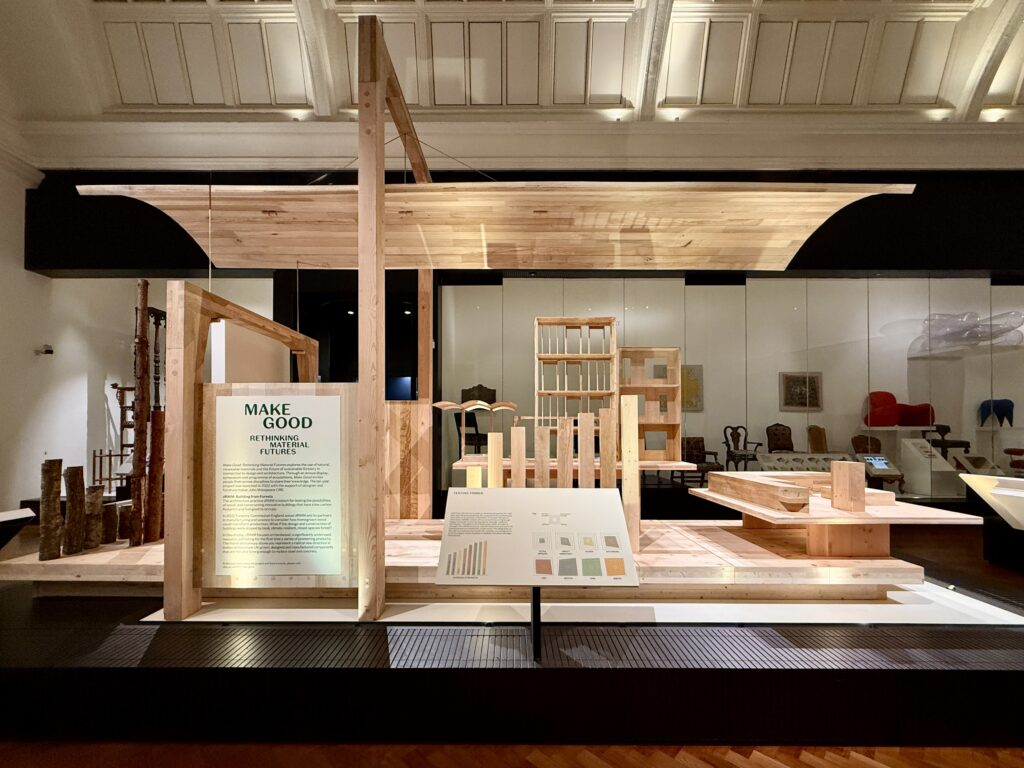
Our most recent research project, ‘Building from England’s Woodlands,’ on using home-grown hardwood in UK construction is on display at the V&A for a year. The connected Symposium, in front of a large live and online audience, took place in March 2026.
We conduct Post Occupancy Evaluations – our Workstack project features comprehensive assessment of in-use performance and occupant satisfaction which was presented at an NLA breakfast in 2025. Our Coate Street studio participated in the Net Zero Carbon Building Standard pilot, contributing performance data to help evolve guidance.
In addition, members of our senior design team frequently present at events and participate in discussion panels and working groups to disseminate knowledge.
Project
1. Do you advocate for long-term thinking at the outset of work? Do you initiate work with long-term thinking and challenge clients? Also, can the organisation demonstrate that this approach has worked?
We embed long-term thinking from project inception, aligning our designs with clients’ strategic objectives across short, medium, and long-term future. We prioritise longevity through adaptable designs that support future flexibility and resilience, enabling our projects to stand the test of time.
The studio invests in staff training e.g. an in-house Passivhaus Designer which demonstrates long-term commitment to embedding expert knowledge that results in regenerative outcomes for the studio.
We advocate for material reuse and selecting durable, low-carbon materials that minimise whole-life impacts. In the retrofit of our new studio, we dismantled much of our old workplace and repurposed, including plywood linings that were reworked into joinery and furniture.
WorkStack also exemplifies our approach through structurally efficient, low-carbon CLT with minimal finishes. The building is designed for disassembly with concealed mechanical connections, enabling future adaptability.
We conduct whole-life carbon assessments to inform decision-making, driving choices toward adaptable designs with longer lifespans.
2. Does your work take account of the future climate and the need for resilience?
We integrate climate resilience into all projects through evidence-based design strategies. Our in-house technical assessments – including daylighting, overheating, condensation, whole-life carbon, and adaptive comfort analyses – inform critical design decisions that enhance resilience to climate change.
On Farmer Norton Salford townhouses we analysed, with Max Fordham, the typologies performance against future climate files, particularly to combat overheating risks. This revealed opportunities to further improve solar shading, window sizes and orientation, roof eaves, etc.
We employ PHPP-based assessments to evaluate building performance under future climate scenarios, recommending adaptation-ready features.
Beyond adaptation, we minimise climate impact through mature tree retention and exceeding biodiversity net gain requirements. We prioritise mechanical fixings and ‘soft partitions’ over adhesives and composites to facilitate future disassembly.
Our sustainability team supports design teams through multiple reviews at each RIBA stage, ensuring resilience is considered throughout while empowering occupants to modulate their environment according to personal preferences.
3. Does the majority of your work go beyond mitigating negatives and towards optimising positives?
No.
Co-evolving with nature
Practice
1. Do you use biophilia within your premises and/or do you regularly gather in natural settings?
The studio celebrates natural materials, particularly timber, throughout our workspace. Natural wood flooring, CLT stairs, original timber rafters, and exposed clay bricks create meaningful visual and tactile connections to nature. This material-rich environment embodies our practice ethos and demonstrates our commitment to prioritising biobased materials in all our work.
Having recently relocated premises, our design for the space deliberately showcases exposed timber finishes, furniture, and art objects that reinforce our connection to natural systems.
We regularly organise team ‘pin ups’ based around nature: recent examples include a planting workshop enhancing our immediate surroundings and talks on local trees. These immersive experiences in and about nature strengthen our team bonds while reinforcing our collective appreciation for natural environments that inspire our design approach.
2. Can you share examples of where you have considered nature in decision making?
We integrate nature into decision-making through initiatives like our ‘Building from England’s Woodlands’ research project, which explores how diverse UK forests can sustainably supply materials for local timber construction. This promotes balanced ecosystems by utilising each timber species’ unique properties effectively, rather than imposing construction needs on forest composition.
We have organised guided tree walks with experts, including the author of ‘London is a Forest,’ helping our team develop deeper connections with natural systems. These experiences inform our design thinking, reinforcing that human creativity must work harmoniously with natural processes and seasonal cycles.
We have programmed a series of eight wellbeing events around the Regents Park Estate across Spring 2026. These include guided tree, nature and sensory walks, exploring and sharing knowledge with residents on their local environment.
This nature-focused approach has attracted clients who share our environmental ethos.
3. Are you supporting nature locally and nationally?
We actively support nature through local and national initiatives. Around our former studio, we collaborated with community groups to promote urban tree planting, enhancing biodiversity in our immediate surroundings. We’ve engaged both our team and clients in nature restoration by creating and distributing seed bombs to encourage wild planting across various locations.
In our new location we are in contact with Hackney City Farm about volunteering opportunities and ways in which we can help.
Through our research project ‘Building from England’s Woodlands,’ we advocate for sustainable forestry practices that support biodiverse ecosystems while providing materials for construction. This work demonstrates our commitment to influencing industry practices nationally, promoting forest management approaches that prioritise ecological health alongside timber production, ultimately supporting nature’s resilience across the UK.
Project
1. Can you demonstrate work that strives to match the performance of a mature ecosystem?
We consistently strive to enhance biodiversity across projects, recognising the challenge of matching mature ecosystem performance in urban contexts. At Maggie’s Oldham Cancer Care Centre, we created a symbiotic relationship between architecture and nature through tulipwood CLT construction elevated above a garden where trees grow through the building’s centre. This design places patients in direct connection with tree canopies, filtered sunlight, and distant landscape views.
Our Trafalgar Place residential project achieved 30% biodiversity net gain through extensive green roofs, courtyard gardens, and native planting schemes that support local wildlife corridors.
We’re committed to continuous improvement in this area, regularly exceeding the mandated 10% biodiversity net gain requirement while developing strategies that maximise ecological value within site constraints through species selection and habitat creation.
On a current project, the Regents Park Estate, a series of eight wellbeing events are programmed across Spring 2026. These include guided tree, nature and sensory walks.
2. Are you working on material stewardship?
We have pioneered material stewardship through our decades-long commitment to engineered timber construction. As ‘material innovators,’ we continuously research and develop sustainable materials that help reshape practice.
Our ‘Measuring Mass Timber’ research project, provides an open-source tool for measuring building performance and quality-of-life impacts of timber buildings. This research revealed mass timber buildings produce less than 50% of the carbon emissions of industry equivalents.
Since the 1990s, we’ve consistently innovated with sustainable materials through built projects. Our founding director Alex de Rijke, now Professor of Timber Architecture at TU Delft, has championed timber construction throughout his career, declaring “timber is the new concrete”. One of our architects is part of the ORMS Material Passports working group.
Our material stewardship extends to developing new products, including the world’s first hardwood cross-laminated timber with AHEC and Arup, which we implemented in Maggie’s Oldham, demonstrating our commitment to material innovation through practical application.
3. Does the majority of your work demonstrate the use of biologically-inspired approaches such as Bioregionalism, Biophilia or Biomimicry?
No.
Creating a just space for people
Practice
1. Do you have a progressive EDI policy and can you evidence many forms of diversity, which are welcomed and acknowledged, within your company/organisation?
We maintain a progressive EDI policy supported by a comprehensive Action Plan that drives our commitment to diversity and inclusion. Our dedicated internal EDI and Social Value groups meet regularly to evaluate performance and develop new initiatives.
To ensure accountability and continuous improvement, we conduct annual EDI monitoring and staff wellbeing surveys. These assessments capture demographic data while providing anonymous channels for team members to share experiences and suggestions.
By embedding EDI principles throughout our operations, we’ve created a studio where different backgrounds, experiences, and viewpoints are not only welcomed but actively sought out. For instance, weekly design crits are open to anyone to attend, learn, and contribute to design decision-making and ideas across all projects. Weekly studio updates are designed to share operational decisions more openly and provide a platform for individuals to ask questions. The studio is currently majority female in number (65%) and in management (55%).
2. Do you operate a no overtime culture, meet the living wage consistently, and stipulate a fair salary ratio between staff of all levels?
We actively promote a no-overtime culture, encouraging team members to manage their time and productivity flexibly. When tight deadlines occasionally necessitate additional hours, our formal Overtime Policy ensures fair compensation through Time off in Lieu (TOIL).
We’ve reduced core hours and implemented hybrid working arrangements (up to two days working from home) to support work-life balance and accommodate diverse personal circumstances.
Transparency in compensation is fundamental to our approach. Salary bands for each position level are openly shared with all team members, and the relevant band appears on every job advertisement, ensuring everyone understands our compensation structure. These bands undergo annual benchmarking against industry reports to maintain competitiveness and fairness.
All pay bands exceed the London Living Wage, reflecting our commitment to fair compensation across all levels of the practice and ensuring every team member receives remuneration that supports a good quality of life.
3. Do you support charities, community groups, social enterprises, action groups and others through pro-bono work, charitable giving or in-kind donations?
We actively support community organisations through strategic pro bono work and charitable partnerships. We’ve collaborated with Power Up North London (PUNL), providing technical expertise for a planning application to retrofit solar panels on a high school roof, and are now working with them on five further sites, directly supporting their mission to reduce energy costs through sustainable solutions.
We joined a local consortium to assist with a proposal for a Dalston school building, pro bono, and if they win, then our fees will be covered at cost only.
Our commitment extends to educational initiatives, partnering with Open Studio to host job skills training for recent architecture graduates, helping bridge the transition from education to professional practice.
Our social impact extends to offering work placements from local communities, most recently from Woolwich connected to an Urban Regeneration Framework, creating pathways to architectural careers for underrepresented groups.
4. Do you use an ethical framework to assess opportunities and/or supply chain partners and is them team consulted on these decisions?
We maintain a principled approach to client and supplier relationships, evaluating each opportunity against our ethical framework. Throughout our 30-year history, we have on occasion declined project opportunities on ethical grounds, including international projects where adequate safeguards against modern slavery were absent.
Our commitment extends to our operational decisions, selecting service providers such as banking and pension partners based on their ethical credentials and actively avoiding associations with environmentally questionable practices.
We prioritise engaging with local suppliers and specialist trades to support SME businesses in the communities where we build. Our procurement process includes a formal vetting procedure requiring potential suppliers to complete a questionnaire declaring any breaches of UK or international environmental and human rights laws.
This comprehensive approach ensures our practice maintains integrity across all business relationships, aligning our commercial activities with our core values of social responsibility and environmental stewardship.
Project
1. Does your work demonstrate deep engagement with local stakeholders and end users?
Our projects consistently demonstrate deep stakeholder engagement that transcends conventional consultation to embrace genuine co-design principles. We develop comprehensive engagement strategies with our clients, beginning with thorough stakeholder mapping to ensure inclusive representation.
Our co-design workshops address topics most relevant to communities, creating meaningful dialogue that directly influences design outcomes. We are also particularly committed to engaging hard-to-reach groups through innovative approaches.
At Tustin Estate, we organised a week-long creative workshop series specifically targeting younger community members. These sessions, led by our team alongside local artists, taught design skills while gathering authentic input. The initiative culminated in a design competition with the winner receiving prize money and a paid work experience placement in our studio. The work on this project recently won the 2026 Pineapples Community Engagement Award.
2. Does your work create connected and resilient communities which positively contribute to neighbourhoods and allow equality of access?
We consistently create connected, resilient places that enhance neighbourhood vitality while ensuring equitable access. Our community-driven, mixed-use developments support sustainable social and economic growth through integration with existing contexts.
Charlton WorkStack exemplifies this approach, transforming an underutilised small site into stacked, high-quality affordable workshops for small and micro entrepreneurs, retaining economic value locally while creating opportunities for business growth.
At Wick Lane, our mixed-use residential-industrial development preserves the area’s distinctive creative culture alongside high-quality homes, with 44% affordable housing supporting diverse community access.
The Tustin Estate regeneration demonstrates our commitment to social value, providing 167 high-quality 100% social rent homes in its first phase. The design prioritises landscaped spaces that enhance resident wellbeing while reconnecting surrounding neighbourhoods, creating a cohesive urban fabric that strengthens community bonds and improves accessibility throughout the area.
Current projects in both Woolwich and Camden are continuing this legacy of championing involved and extensive community work.
3. Does the majority of your work promote equity in society, and consider all people, not only building inhabitants
We select ethically aligned sub-consultants and prioritise diverse design teams on large-scale projects, recognising that representative decision-making directly influences how the built environment serves all communities.
We consistently consider impacts beyond immediate building occupants. At Tustin Estate, we’ve created inclusive public spaces accessible to the wider community, while WorkStack provides economic opportunities for local entrepreneurs from diverse backgrounds.
We’re committed to the principles of the Modern Slavery Act 2015 and are developing internal policies to prevent modern slavery throughout our supply chain. We also maintain confidential reporting channels for concerns about potential wrongdoing within our supply chains or internally.
Our material specification process increasingly considers ethical sourcing, with preference given to suppliers who demonstrate fair labour practices and transparency in their processes. This research is done in a variety of ways, for instance using One Click LCA to guarantee products with EPDs, and via CPDs with manufacturers.