
Submission by Donald Insall Associates.
Being a good ancestor
Practice
1. Do you have a clearly stated purpose aligned with the planetary emergency? We’re looking for a bold ambition here, and a culture which recognises the need for long-term thinking.
Our practice is aligned with science-based targets, aiming to limit global warming to 1.5°C and achieve net-zero by 2045 and receiving SBTi validation for this commitment in March 2025. This commitment shapes our approach across all projects — reducing embodied and operational carbon through material selection, passive design, and the integration of renewable energy and circular principles. We embed carbon accountability throughout the design process, using data-driven tools to measure and reduce impact at every stage. With less than 20% of architectural practices adopting science-based targets, we are leading the way for long-term, impactful change.
We train staff in energy efficiency for traditional buildings and embed carbon accountability into design, materials and stewardship, with 42 staff trained in total last year. we aim for year‑on‑year operational emissions reductions and expanded supply‑chain engagement. Social value is verified by independent experts HACT (£187,875 FY23/24), delivered through skills training, education outreach and pro-bono consultancy.
2. Do you have a clearly stated purpose aligned with the planetary emergency? We’re looking for a bold ambition here, and a culture which recognises the need for long-term thinking.
No subject in architecture is as business-critical and sensitive as succession. We underwent both a succession and a generation change in leadership with the appointment of a new Chief Executive in early 2025, having deputised for the outgoing Chairman during his sick leave for much of 2024. This coincides with thorough investment in leadership, including senior-level appointments in People, Sustainability and Business Development functions.
We were ahead of our time when we began our transition to employee ownership in 1991, when our founder stepped down from the role of Chairman. Decades later, we are now a 95% employee-owned practice. Our track record of social value-led initiatives through training and apprenticeships, and work with educators and local communities has gained us BCorp accreditation in 2024, with a score of 87.0 across five key pillars of Governance, Workers, Community, Environment and Customers, and will build from there.
3. Do you share research and knowledge for the benefit of society and the wider world?
In 2026, we contributed to Grosvenor’s ‘Retrofit or Ruin’ report calling for urgent reform in the heritage planning process. The report argues that inconsistent planning regulations are blocking essential energy upgrades to England’s 350,000 listed buildings – upgrades which could deliver around 30% annual carbon emissions reductions.
At Grade I-listed Blenheim Palace – where we are leading a £12m to restore its roof, facades and ceiling paintings – we have carried out extensive knowledge sharing. This includes knowledge exchange talks delivered to 400+ industry peers, four free public talks, panels, television interviews and numerous journal and technical articles. Our purpose-built fully accessible visitor platform has granted 100,000+ visitors unique views and project insight.
Our commitment to sharing our expertise is evidenced by the appointment of staff to panels and committees including: an associate director’s appointment as Mayor’s Design Advocate and a practice director’s appointment to the Historic England Advisory Committee.
Project
1. Do you advocate for long-term thinking at the outset of work? Do you initiate work with long-term thinking and challenge clients? Also, can the organisation demonstrate that this approach has worked?
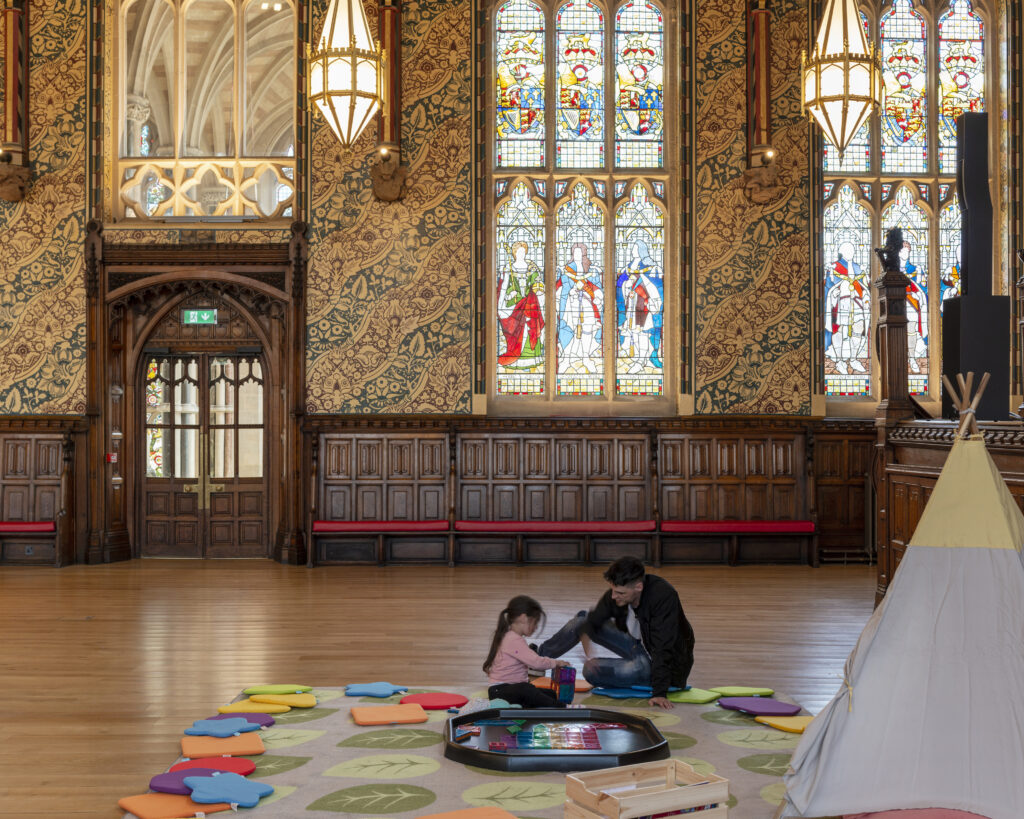
Good design enables the heritage environment to remain viable. Our projects support long-term stewardship of some of the most important heritage sites in the UK, including the Europa Nostra award-winning revitalisation of Rochdale Town Hall. The project involved the restoration of historic fabric alongside a series of contemporary upgrades design to improve accessibility and circulation while remaining reversible.
In Pendle, Lancashire, we developed a first-of-its-kind, typology-based design code to enable the redevelopment of its 93 vacant textile mills. The code encourages inward investment while preventing unnecessary demolition, aiming to inspire stakeholders to make the most of their assets.
Keeping a heritage asset viable requires creative thinking. Blencowe Hall, was transformed from an uninhabitable, roofless ruin into a successful hospitality venue as a single integrated building while boldly expressing its significance. Over 15 years later, Blencowe Hall generated material [an estimated £223,380 per year of] additional spending in the Cumbrian economy.
2. Does your work take account of the future climate and the need for resilience?
Much of our day-to-day work addresses our clients’ need to bolster climate resilience within their heritage sites.
We led the installation of 206 solar panels onto the roof of Grade I-listed Chester Cathedral, supporting the Church of England’s goal to be carbon neutral by 2030. In a year since installation, the solar panels have helped save an estimated 48 tonnes of carbon emissions by generating 31,432 MWh of power. It is understood that an estimated £300,000 of operational costs will be saved over the life of the panels.
A first-of-its-kind Listed Building Consent Order has been approved for Eaton Square, London’s largest residential square. Collaborating with Grosvenor, we supported as conservation architect and heritage consultant. The LBCO will make energy efficiency improvements significantly easier to implement for residents. Overall, these measures are estimated to cut carbon emissions by up to 19% and help reduce annual consumption by up to 13%.
3. Does the majority of your work go beyond mitigating negatives and towards optimising positives?
All of our projects aim to actively restore and enhance ecological and social systems. This requires a shift from minimising harm to creating net-positive outcomes—such as improving biodiversity, generating renewable energy, and strengthening community resilience. It starts with a clear, place-specific vision, developed collaboratively with stakeholders, and continues through design, construction, and post-occupancy.
Our Rochdale Town Hall project best exemplified a shared understanding of positive outcomes, which we progressed with delivery partners to empirically prove through post-occupancy evaluation that these had been met. We also use these principles to train all of our technical staff so they can embrace natural systems, use circular and low-carbon materials, and support long-term stewardship
Co-evolving with nature
Practice
1. Do you use biophilia within your premises and/or do you regularly gather in natural settings?
Our annual practice training day is often set within a country estate, with adjacent (usually listed) gardens where we undertake hands-on training with natural materials, such as stone carving, for all staff.
This year, this will take place at Avoncroft museum, England’s first open-air museum devoted to rescued buildings. Hands-on training will include traditional carpentry techniques and brick making.
Closer to home, our London studio recently underwent a refresh, where we have designed a workplace retrofit to enable contemporary amenities, such as a shower, in our Grade II-listed building. A part of this scheme is a biophilic strategy for both our indoor and outdoor spaces.
2. Can you share examples of where you have considered nature in decision making?
One philosophy in working with historic buildings is to interpret them as living objects with evolving needs – while they must be maintained and conserved to stay ‘healthy,’ they may need adaptation for a viable future.
This thinking can be applied to landscapes and plants in historic settings, and we are noticing that this is at the forefront of our clients’ approach to historic landscapes. We know that our buildings need to adapt to climate change in order to continue to function. In parallel, our landscapes are also under threat from the changing environment.
At the Grade II-listed Rivington Terraced Gardens in Bolton, the now ‘wild’ landscape was considered a part of the evolved character of the site. The design team only made essential interventions rather than attempting to restore the more open character of the original garden, which would have led to the loss of biodiversity.
3. Are you supporting nature locally and nationally?
One example of this is our pro bono work for the Canal and Rivers Trust. In 2024, we produced a feasibility study to explore how the CRT might adapt Earlswood Pumping Station, a Grade II-listed Engine House, to the Earlswood Lakes on the outskirts of Solihull.
The report provides an initial condition survey, an outline of relevant repair works and sketch plans of potential development options that would help generate further income for the CRT. It also highlights the variety of wildlife around the reservoirs and garden; the report pointed out that there is potential to support the biodiversity and habitats across the site with input from an ecologist, and create a key draw for visitors who wish to appreciate the woodpeckers, kestrels, owls and otters.
Project
1. Can you demonstrate work that strives to match the performance of a mature ecosystem?
Many of our projects involve conservation within buildings and places where the natural landscape contributes to the site’s historic significance.
Acting as heritage consultant, we are collaborating with Grosvenor and Tonkin Liu on the transformation of one of London’s most historic green spaces – Grosvenor Square in Mayfair. Only the fourth redesign in the sites 300-year history, the transformation will blend beauty and biodiversity to create a place for visitors and residents to reconnect with nature. The redesigns will feature c.70,000 new plants, 44 new trees, new wetlands and c.80,000 new bulbs, increasing planting from 140sqm to 8,000sqm, creating a haven for wildlife.
We are also collaborating with Howells on the £14m ‘Growing our Green Heritage’ project at the Birmingham Botanical Gardens. The 15-acre site, home to the Midland’s finest and largest collection of over 10,000 botanic species, will be conserved to serve contemporary horticultural needs whilst protecting valuable species.
2. Are you working on material stewardship?
As a conservation practice, minimising waste is embedded into our founding philosophy, exemplified by our ISO 14001 and BCorp certification. Our projects begin with research and analysis of a building’s materials, exploring the use of low-carbon materials or re-use where possible.
At St Oswalds in Askrigg, a Grade I-listed medieval parish church facing long-standing damp issues, we reinstated a traditional hot‑mixed lime coating to the tower. Although controversial, this intervention was backed by leading research, including Historic England’s “Damp Towers” project, and extensive investigations confirmed remnant coatings across the church, enabling the reinstatement to be both technically justified and historically authentic. Following the trials a design mix of 0.4 Calbux 90 lime (from lump) with 0.5 Nosterfield sharp sand and 0.2 stone dust (obtained from A D Calvert stone suppliers) was agreed upon. This was mixed “hot” on site and applied within 48-72 hours.
3. Does the majority of your work demonstrate the use of biologically-inspired approaches such as Bioregionalism, Biophilia or Biomimicry?
No.
Creating a just space for people
Practice
1. Do you have a progressive EDI policy and can you evidence many forms of diversity, which are welcomed and acknowledged, within your company/organisation?
EDI is embedded through policy and governance. We uphold equal opportunities and dignity at work policies. We support diverse career pathways—apprenticeships, study support, CPD, promotions via transparent criteria and board reviewed business cases and regular 1:1s.
58% of our senior leadership are women and 40% of our board directors are women. While we do not publish a statutory gender pay gap report (below the threshold), this is reviewed at board level annually; our engagement surveys track inclusion and recognition. We continue to grow representation across levels via mentoring, targeted recruitment and partnerships, and we publicly share progress via impact reporting.
We recognise this requires constant attention and vigilance, as well as an intersectional understanding of diversity. Our Chief Executive, who commenced his role in 2025, said: “For us to succeed, we must continue to embrace a more diverse workforce and ensure our colleagues feel well-equipped, supported, valued and rewarded.”
2. Do you operate a no overtime culture, meet the living wage consistently, and stipulate a fair salary ratio between staff of all levels?
We are a Living Wage-accredited employer, including paying the London Living Wage to all staff, and this is a primary consideration when checking our pay levels across the practice. The multiplier between the lowest-paid and highest-paid staff is kept intentionally low.
Salaries are reviewed through structured appraisals and promotion processes with board oversight. Benefits and policies are documented and accessible; transparency and fairness guide decisions, with employee ownership strengthening accountability. We complement salary with enhanced family leave, study support and professional fees.
We take a collegiate approach to overtime as an employee-owned trust. While there are times when overtime is necessary to meet client needs/project deadlines, we are mindful of this, and time spent working is monitored monthly at both SLT and board levels.
3. Do you support charities, community groups, social enterprises, action groups and others through pro-bono work, charitable giving or in-kind donations?
We have plenty of examples of this, one of which is the Angel Corbel Workshop with Latymer Primary School for pupils aged 8-9.
Over 60 children attended a workshop at All Saints Church, introducing the role of an architect, the church and its key architectural features. The children were invited to design a stone angel corbel to replace an existing corbel, which had fallen from the nave roof due to severe water damage in November 2022. We were introduced by the verger, Irene Mooney, who has been involved with the church for more than 50 years, and then talked through a variety of corbel examples that appear in churches across the country, inviting children to identify common features and take inspiration for their own designs. The children were exceptionally well behaved and receptive to the task; they were engaged throughout and inspired to pursue their love of drawing further.
4. Do you use an ethical framework to assess opportunities and/or supply chain partners and is them team consulted on these decisions?
We have an ethics policy which assesses and governs our decisions around working with certain client types or regions. These are considered on a project-by-project basis; our approach is to consider a detailed report by consulting subject matter specialists in order to establish whether or not we wish to pursue the opportunity. A final decision is taken at the highest level of the practice.
Project
1. Does your work demonstrate deep engagement with local stakeholders and end users?
Within heritage projects, deep engagement often goes hand in hand with skills training.
The NLHF recently granted £4.7m to renovate Kingsley Hall, which will create purpose-designed spaces for 1625 Independent People, a youth homelessness charity. When we were commissioned to write a Conservation Management Plan, our client asked us to involve young people at every stage of the project. We led three heritage skills sessions with young people exploring the history of the site as well as its national and local significance.
The revitalisation of Rochdale Town Hall involved over 1,086 volunteers from inception to completion, who assisted with conservation, research, cataloguing, archaeology and tour guides. The Bright Hall – once a cramped office space – has been transformed into a community events space featuring community co-created art. Over 280 local people were involved in the art, resulting in 10 pieces of artwork.
2. Does your work create connected and resilient communities which positively contribute to neighbourhoods and allow equality of access?
Our projects are at the heart of spaces that enhance quality of life, support community connections, and improve access to opportunity. In March 2025, we gained external verification from HACT that we have generated £187,875 of social value during FY23/24.
At Rochdale Town Hall, our work has reimagined the site as a symbol of civic pride, with improved access and community spaces established.
Throughout the project 1194 volunteer, job and training opportunities were created. This included a 12-week heritage skills training focusing on restoration of historic fabric, delivered to 18 participants.
When asked about the impact of the heritage skills training on their life, one participant who now volunteers at the Town Hall said: “I’d never thought of heritage or conservation before…and I do it every week now…You could say its life changing, but actually for me because I was in such a low place… I think its life saving”.
3. Does the majority of your work promote equity in society, and consider all people, not only building inhabitants
While historic buildings often pose accessibility challenges, we always strive for not only access but parity of esteem.
At the Camellia House, we achieved step-free access throughout, an accessible WC and five disabled parking bays. Significantly, a purpose-built Changing Places facility was installed in collaboration with Muscular Dystrophy UK, one of the first for a heritage site in the UK.
At Blenheim Palace, where we are leading a £12m roof restoration accessibility has been embedded throughout construction. A scaffold visitor platform was created, offering once-in-a-lifetime views over the palace, site grounds, and works. The 300-capacity platform was fully accessible, served by two staircases and two lifts, designed into our scaffold concept from day one.
We require all suppliers and consultants to confirm their adherence to the Modern Slavery Act 2015. Our impact on the wider community and regard for supply chain workers scored 21 points within our BCorp certification.