
Submission by BD Landscape Architects.
Being a good ancestor
Practice
1. Do you have a clearly stated purpose aligned with the planetary emergency? We’re looking for a bold ambition here, and a culture which recognises the need for long-term thinking.
BD landscape architects are an award-winning practice, committed to the integration of sustainable design in this Climate Emergency + Biodiversity crisis, to create amazing & resilient places for people.
Our approach combines contemporary sustainable design with creative ecology looking to glean the unique genius loci from each place – our designs draw inspiration from the history, ecology, environment, use & character of the site.
As early-stage signatories to Landscape Architects Declare our studio strives to connect people, place and nature and to do this through beautiful + biodiverse landscape.
As a forward-thinking practice we know the twin challenges of our time and across the board look to create beautiful, resilient landscape and public realm. Meeting our hero Sir David Attenborough in 2019 he gave us a strong mission statement “You have a great responsibility to bring the realities of the Natural World to the understanding and love of human beings worldwide”
2. Do you have a clearly stated purpose aligned with the planetary emergency? We’re looking for a bold ambition here, and a culture which recognises the need for long-term thinking.
Yes… but it’s a work in progress!
We are progressing on the first steps to Employee Ownership and thinking how best to grow the company in the most sustainable way.
With the challenges of running a profitable business in this economic climate we can see how tough it is with other practices making redundancies and closing up.
Being economically sustainable and resilient whilst offering the best working conditions, inspiring projects and a joyful studio is the toughest part of running a practice – but sharing the load through our brilliant group of senior associates who have been with the studio for over a decade certainly helps.
As we progress to an EOT and consider B Corp our real goal is stewarding our practice and our projects to have the most impact over time.
3. Do you share research and knowledge for the benefit of society and the wider world?
Self-reflection is crucial. At the end of 2025, we wrote and published our latest book ‘Landscape as a Catalyst for Change’. This has enabled us to collate and examine 35 projects through eight chapters across 10 years to inspire, and to create a benchmark for the future.
We have also recently undertaken a module for the Architecture Today ‘School of Specification’ on an introduction to the urban greening factor module.
We formed part of a round table discussion at UKREiif alongside current and future president of the Landscape Institute on ‘Embracing the Power of Landscape as an Enabler for Positive Economic, Social, and Environmental Change’ showcasing our innovative public realm regeneration at Cardinal Place in London.
We also took part recently in landscape tutorials for Sustainable Architecture Masters students at the Centre for Alternative Technology. Delving deeper into how to expand their regenerative approaches to the landscape design.
Project
1. Do you advocate for long-term thinking at the outset of work? Do you initiate work with long-term thinking and challenge clients? Also, can the organisation demonstrate that this approach has worked?
At BD we respond to the twin challenges of the climate emergency and biodiversity crisis with landscape designed to last. We ensure our projects are resilient and biodiverse so they can adapt to the changes that climate change will bring.
We have always actively encouraged the use of a long-term maintenance/management plans and ensure that we steward the landscape long after the defects period ends.
At Lovedon Fields the site was been planned to enhance the sense of home and encourage residents to participate in gardening with the inclusion of productive growing thresholds to the front boundary of each property planted with edible varieties.
These growing gardens aimed to create local pockets of useful and delightful landscape. Community allotments and orchard planting promoted healthy living in a social context relating back to the productive land use of the site whilst providing opportunities to develop community spirit further.
2. Does your work take account of the future climate and the need for resilience?
Yes, it’s what we do as Landscape Architects! Our work looks towards the future through the use of sustainable and durable materials, sensitive planting palettes, and adaptive designs sensitive to neighbouring communities. By working closely alongside neighbours and users, we are able to establish practical demands as a basis for resilient landscapes.
Though we cannot predict how a space may be used and reclaimed within the future, we can ensure that it is adaptable and is in better health than before, for the needs of the next generation. Improving biodiversity, soil health, and flood management strategies, are all positive steps that set an example for the generations to come. By continually raising this standard as a practice, and as collaborators, we can help to ensure an ever evolving and continually improving approach to landscape architecture.
3. Does the majority of your work go beyond mitigating negatives and towards optimising positives?
At BD, we go above and beyond to continually strive towards the emotional and physical effects landscapes can have on people and place. Our unwavering commitment to excellence through the lifespan of a project, ensures that we can first-hand deliver the original ambitions of projects that often get lost along the way. We employ a risk reduction + opportunity creation ethos towards our projects which enables us to adjust our mindsets to create meaningful spaces that maintains the heart and care we carry from day one.
Our projects push hard at the boundaries of urban greening and biodiversity net gain. We have developed some skill at locking in the benefits of systems like sustainable urban drainage, pollinator friendly planting and living roofs to mitigate the urban heat island effect, push for generous canopy cover and design elements into schemes so they avoid the inevitable value engineering cuts.
Co-evolving with nature
Practice
1. Do you use biophilia within your premises and/or do you regularly gather in natural settings?
As a practice of landscape architects, we are inherently and continuously connected to natural environments. We have a super biodiverse and biophilic workplace with over 100 plants improving air quality, providing views of green space and calming the studio. We have carefully fostered many of these plants for over a decade and we can see the benefit this biophilia has on a relaxed workplace where we retain staff for many years.
Our office is located in the heart of Tewkesbury, with many of the team regularly taking lunchtime walks along the River Severn, observing how its character shifts through the seasons.
We also regularly head en-masse to the regenerative farm in Gloucestershire for forest bathing and nature trails and plant identification sessions alongside restoring ancient orchards and planting giant redwood groves!
2. Can you share examples of where you have considered nature in decision making?
We are a practice of landscape architects inspired by nature. We understand the importance of aligning with natural systems and rhythms in our contemporary sustainable practice and in our company culture.
At a recent BD social we planted a grove of 20 sequoiadendron giganteum – giant redwood trees – to account for our staff present + legacy. On reaching maturity these trees will offset our of our lifetime carbon emissions whilst also creating a community grove on the Worcestershire Way trail as a resource for the wider public.
We think long and hard on each project for how we can improve the value and species diversity of our landscape design and aim to protect and conserve the environment in-line with our chartered practice and adopted Landscape Institute code of conduct.
3. Are you supporting nature locally and nationally?
We are deeply rooted in our local landscape with a number of links where we volunteer to improve our landscapes. Senior staff members volunteer at community gardens and we regularly work with local schools to enhance their playgrounds pro bono.
We managed to procure a number of play and social seating elements for our local primary school [from the enlightened and super sustainable Vestre Street furniture] to enhance the opportunities for learning outside the classroom and to create playful places.
The BD team recently planted a grove of 20 sequoiadendron giganteum – giant redwood trees – to offset our lifetime carbon emissions and create an accessible community grove on the Worcestershire Way.
“A society grows great when we plant trees in whose shade we shall never sit.” — Greek Proverb
Project
1. Can you demonstrate work that strives to match the performance of a mature ecosystem?
We have worked hard to push for Biodiversity Net Gain on projects before it became a mandatory requirement. We have also worked on a number of projects where we have pushed hard to double the required Biodiversity Net Gain on recent residential developments.
We also test for high urban greening factor scores on schemes across the country – not just in London boroughs or those where needed.
Recognising the ecological value and functional role of existing habitats within the wider landscape is a critical first step in the design process and fundamental to their long-term preservation. Where valuable ecosystems are present, they should shape and inform the development strategy from the outset, with the design evolving around them rather than attempting to retrofit ecological value into the scheme retrospectively – an inherently unsustainable approach. Our work aims to create regenerative landscapes that function as living infrastructure rather than static visual compositions.
2. Are you working on material stewardship?
We encourage reduction in use of concrete; specifying suppliers with known commitment to carbon reduction and ethical sourcing. Within the office we avoid single use plastics, we try to work as a paper free studio reducing printing; and recycling fully.
We have a series of standard clauses that ensures responsible sourcing of materials and push for local sourcing wherever possible. On the award winning Glassfields meanwhile landscape we set a requirement that all supplies and materials needed to be sourced within a 50-mile radius of the project site.
3. Does the majority of your work demonstrate the use of biologically-inspired approaches such as Bioregionalism, Biophilia or Biomimicry?
Biophilia – all of our projects seek to connect people with nature. Our award-winning project at Kingswood Fields for Fidelity international significantly enhances the workplace setting with a biodiversity rich landscape that encourages contact with nature and social seating spaces.
On all our projects we work with like-minded landscape led consultants including ecologists, hydrologists, arborists and look to include habitats for nature and nesting / roosting boxes for birds and bats.
On our Lovedon Fields project we designed for both bioregionalism and biophilia with a series of innovative swift boxes, bee bricks, bug hotels, and even a flyover gateway portal for Dormice that we integrated into the green corridors. Local brush seed harvesting was undertaken from neighbouring fields for reuse within the ecological grassland for local provenance. On all projects we aim to reuse felled timber for natural play formed part of the landscape legacy.
Creating a just space for people
Practice
1. Do you have a progressive EDI policy and can you evidence many forms of diversity, which are welcomed and acknowledged, within your company/organisation?
We strongly recognise the importance of inclusion, diversity, and equality within the workplace and are committed to fostering a genuine sense of belonging for all employees.
We have a progressive EDI policy in our company handbook which is issued to all team members prior to starting at our practice so they understand our commitment and requirements.
BD is 78% female in terms of team members and 75% in terms of senior leadership roles. We have a number of other policies including Menopause Policy which demonstrates our commitment to making our workplace as inclusive as possible.
We are actively involved in a number of initiatives to improve diversity within the landscape architecture including working on a number of youth streeting groups, holding a webinar with 2-3 degrees on youth engagement and being a trustee for the Cheltenham Design Academy that aims to inspire the next generation of landscape architects.
2. Do you operate a no overtime culture, meet the living wage consistently, and stipulate a fair salary ratio between staff of all levels?
As a practice, we discourage overtime working and offer a reduced working day every Friday to support a healthy work-life balance. On the rare occasions when overtime is needed, we ensure this is paid by as time off in lieu.
In the interest of transparency, our pay structure is regularly reviewed, and we aim to provide additional benefits where feasible to support employee wellbeing.
We also maintain a flexible working-from-home policy that allows employees to structure their working patterns in a way that supports focus, autonomy, and personal commitments, contributing to a more balanced and adaptable working environment.
This approach fosters a healthier, more sustainable workplace culture and supports long-term productivity and staff retention.
3. Do you support charities, community groups, social enterprises, action groups and others through pro-bono work, charitable giving or in-kind donations?
We contribute pro bono work throughout the practice with a number of live schemes where we work without payment.
This includes Hammersmith + Fulham Women’s Refuge and has in the past included the Milkshake Tree project for the London Centre for Children with Cerebral Palsy with pH+ architects where we co-funded an innovative installation and sensory garden. This acted as a platform to share, engage and educate the community on inclusive environments to stimulate and support growth.
Members of staff are also given one volunteer day every year to support a local community.
We recently co-funded a number of play and social seating elements for our local primary school to enhance learning outside the classroom, and to create playful places as a legacy for the school.
We are currently getting involved in Design for All – a platform in which we can share our expertise with small charities and community organisations.
4. Do you use an ethical framework to assess opportunities and/or supply chain partners and is them team consulted on these decisions?
As landscape architects, ethics are a part of our everyday work. Though we do not have a formal framework, decisions are informed by considerations such as environmental impact, labour practices, material sourcing, carbon performance, and alignment with our sustainability and social value objectives. Where possible, we prioritise suppliers and collaborators who demonstrate transparency in their operations, responsible sourcing, and measurable commitments to environmental and social responsibility.
The team is actively involved in these decisions through open internal discussion and collaborative review processes, ensuring that ethical considerations are shared and understood across the practice rather than held at a single decision-making level.
We aim to maintain consistency between our design values and delivery processes, ensuring that ethical considerations are reflected in the outcomes we deliver.
Project
1. Does your work demonstrate deep engagement with local stakeholders and end users?
We relish collaborating in multidisciplinary teams pushing the boundaries of contemporary design using technological innovation and sustainable materials. An example of this is Cardinal Place – public realm in the heart of bustling Victoria. Housing offices, restaurants, shops and homes, Cardinal Place plays a significant role in the area and community development.
We engaged and relied on input from a variety of groups and stakeholders who live, work and study in Victoria and currently use the space. The main focus of the engagement was a series of 5 workshops with 25+ young people from diverse backgrounds who went on a journey of learning about roles in the built environment, building new relationships with like-minded peers and feeding directly into the design process for Cardinal Place. The co-design scheme has given the proposals a level of depth, local expertise, and creative ideas from people whose design potential is otherwise often untapped.
2. Does your work create connected and resilient communities which positively contribute to neighbourhoods and allow equality of access?
We welcome input from local communities / stakeholders and believe this is the best and most satisfying means to deliver a successful and original scheme in which everyone can take pride and have a sense of ownership. Accessibility is at the heart of well-functioning landscapes and we take pride in creating spaces in which everyone can enjoy them.
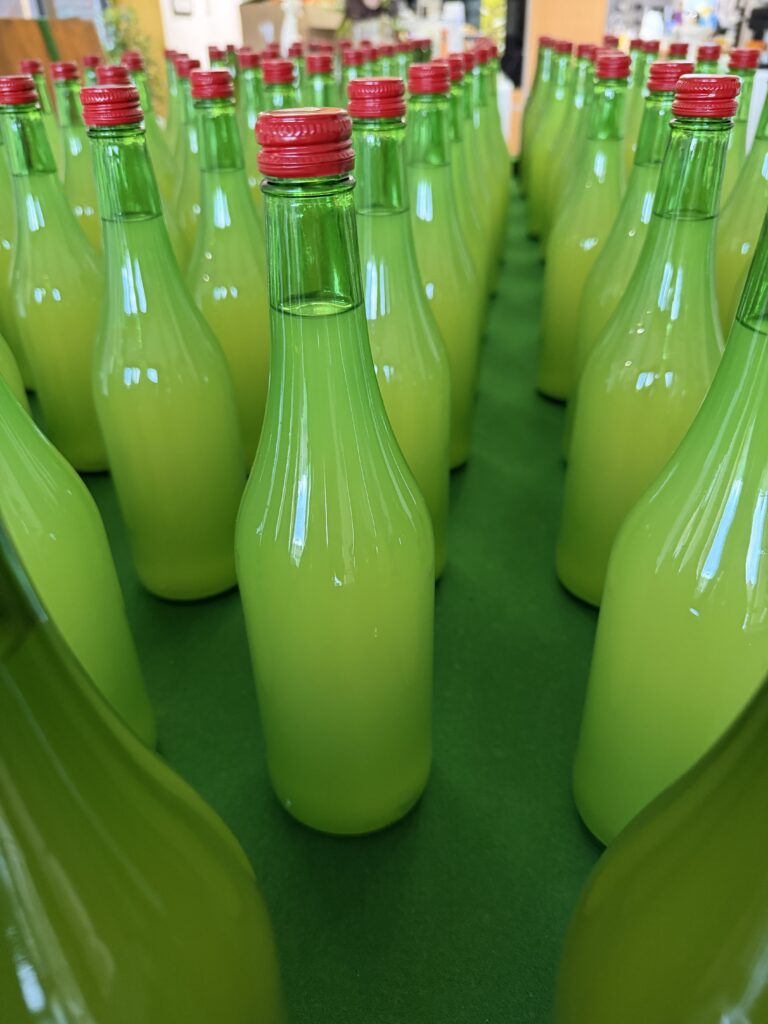
At our award-winning Lovedon Fields project, the integration of allotments, and orchard planting has enabled the community to have juicing days – a simple but delightful effect of landscape interventions.
A key aspect of our approach is embedding social value and community engagement from the earliest stages of design, enabling local voices to inform spatial decisions and programme development. This helps ensure that spaces reflect the needs, identities, and aspirations of the communities they serve, rather than imposing ‘top-down’ solutions.
3. Does the majority of your work promote equity in society, and consider all people, not only building inhabitants
Yes, the majority of our work is grounded in promoting equity in society and considers a broad spectrum of users beyond building occupants, including the wider public, local communities, and non-human stakeholders within the landscape. We design public realm and landscape systems that prioritise accessibility, inclusivity, and permeability, ensuring that spaces are welcoming and usable for people of all ages, abilities, and backgrounds.
We also consider equity in terms of environmental justice, recognising that access to high-quality green infrastructure, biodiversity, and climate-resilient public space is not distributed equally. As such, our work seeks to deliver landscapes that contribute positively to the wider urban fabric, supporting wellbeing, connectivity, and long-term social value beyond individual sites.