
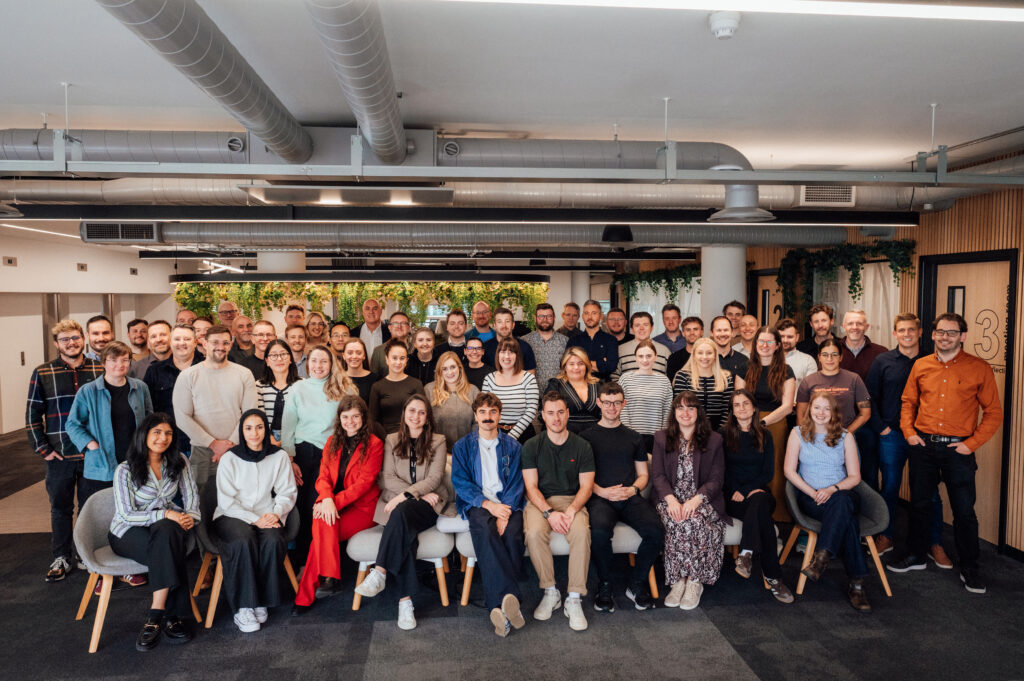
Submission by AEW Architects.
Being a good ancestor
Practice
1. Do you have a clearly stated purpose aligned with the planetary emergency? We’re looking for a bold ambition here, and a culture which recognises the need for long-term thinking.
Extract from our business plan and reinforced regularly with our team:
Offer:
We’re a collaborative placemaking practice with our people, communities, clients and the environment at the heart of our thinking.
Differences:
We bring diverse expertise and a broad perspective to all projects.
…
We’re focused on creating places for the future
To create sustainable, long-lasting places, we think about social value, ethics, the community and environment. Our progressive approach results in efficient, future-ready buildings and spaces.
We’re inspired by our people and our communities.
…
Behaviours:
Aspire
Adopt a growth mind-set and exceed expectations. Be ambitious and forward-thinking, always look for ways to improve, to make our work smarter and more sustainable.
Empathise
…Support each other and communities so that we can improve wellbeing and
work-life balance.
Welcome
Welcome collaboration, be curious to differing viewpoints… Welcome change and progress.
Purpose:
Architecture as a force for good.
2. Do you have a clearly stated purpose aligned with the planetary emergency? We’re looking for a bold ambition here, and a culture which recognises the need for long-term thinking.
AEW takes a ‘People First’ approach, recognised by our Investors in People and Investors in Wellbeing Gold accreditations. We support staff development, with many Senior Leadership Team members having joined as students. Development and succession planning are integral to our business, regularly discussed at monthly Director and quarterly Shareholder meetings.
Founded in 1992, AEW Architects & Designers remains privately owned by actively working Directors. Ownership is passed down to those who demonstrate strong contribution and cultural alignment, supported through Enterprise Management Incentive (EMI) schemes and Management Buyouts (MBOs), often funded by the business without external investment.
Our Articles of Association require consideration of all stakeholders in major decisions, not just shareholders, reinforcing a mission-led approach that is embedded in the company rather than dependent on any single individual.
3. Do you share research and knowledge for the benefit of society and the wider world?
Over the past year our team have actively contributed research, knowledge and time to the following initiatives, helping to drive change at an industry level:
UK Net Zero Carbon Building Standard working groups
CIAT Climate Committee
We are also active in local networks including Manchester Climate Ready (MCR) Partnership, helping to shape an inclusive, positive vision for a zero carbon, climate resilient Manchester, and
Manchester AECB (Association for Environment Conscious Building) Network.
This year we hosted a Place Based Decarbonisation presentation to AECB Manchester, this knowledge share presented a collaboration with BDP, combining our knowledge and experience into a shared vision of applying regenerative design principles to decarbonisation projects.
We also invest time and resources in the next generation, through the Design Engineer Construct programme, we have partnered with a local secondary school, providing funding, industry engagement, educational support, and career opportunities for students over a three-year period.
Project
1. Do you advocate for long-term thinking at the outset of work? Do you initiate work with long-term thinking and challenge clients? Also, can the organisation demonstrate that this approach has worked?
Our standard briefing template ensures that we deeply consider sustainability performance standards on every project, and that we challenge clients to align with the RIBA 2030 Climate Challenge.
On our more significant scale projects we offer a sustainability scoping service, providing more in-depth analysis of the local context, opportunities and constraints to connect to local green and blue infrastructure, active travel links and community facilities, it includes microclimate analysis and consideration of circular economy and local materials. The conclusion of this document is bringing all the opportunities and constraints into a regenerative design framework to influence the project at its earliest stages.
On our most significant projects, such as the regeneration of an old cement works and quarry near Shoreham-on-Sea, our Head of Sustainability is integrated into the design team ensuring that sustainable, restorative and regenerative design principles are embedded into the design process.
2. Does your work take account of the future climate and the need for resilience?
Looking at our projects which commenced over the last 2 years, over 60% by floor area had a systematic risk assessment carried out to identify the impact of expected extreme weather conditions arising from climate change on the building over its projected life cycle.
Recommendations and solutions are proposed at concept design stage to mitigate the impact of the risks identified. This approach is typical across our largest commercial schemes; however, our standard Environmental Management System process embeds climate resilience into our residential projects.
We have developed an in-house overheating risk assessment tool (based on Good Homes Alliance methodology), this helps to ensure we are designing in resilience to overheating in a warming climate from the outset, helping to encourage a holistic consideration of minimising risks through the earliest stages of design before any detailed thermal modelling is carried out.
3. Does the majority of your work go beyond mitigating negatives and towards optimising positives?
It is only a small number of our projects where we are able to successfully go beyond mitigating negatives towards optimising positives, based on our live standalone projects (excluding retail roll out).
Over the past two years, it is between 8 and 21% of all of our projects by number that are at this level of performance. The range considers our core sustainable outcomes, it was only 8% of our projects where we achieved a significant on-site net gain in biodiversity (over and above minimum planning requirements and without offsets), whereas 21% of projects have been focused on enhancing the performance of existing buildings in a retrofit first strategy. By collecting these metrics, we can benchmark and measure our performance as a practice moving forwards.
Co-evolving with nature
Practice
1. Do you use biophilia within your premises and/or do you regularly gather in natural settings?
Although our office is located within the city centre of Manchester, we still manage to connect nature where we can. Our office benefits from a 360-degree view of the city, and beyond to the peak district hills in the distance. Our roof terrace includes decorative planting as well as pots and grow bags for staff to use to grow herbs and salads. Internally, our Interior Design Team designed our office layout and palette, they incorporated biophilic elements and natural, warm materials to create an interior that represents us as a practice and our culture. A key feature of the breakout space is the central island that functions as a coffee station, hot desk and staff kitchenette – this features planting above this central focal point and indoor plants are dotted throughout the office space and on desks to bring greenery into the workplace.
2. Can you share examples of where you have considered nature in decision making?
Our sustainability upskilling, engagement and knowledge share strategy is inspired by mycelium networks. Our sustainability ambassadors group extends into each Associate Director team, connecting our inhouse sustainability consultants and project teams. Members of the group are also active in external networks including CIAT, RIBA and AECB. We meet on a monthly basis to share knowledge of industry best practice, sustainable principles and a regenerative future.
The aim is that connecting all the trees of knowledge to share information through our ambassadors’ network will help both the practice and wider industry to thrive in a similar way to the ecology of an ancient woodland.
3. Are you supporting nature locally and nationally?
We provide all staff with a volunteer day to support social value and charitable commitments. We always ensure to arrange a local nature-based option for volunteering on an annual basis; in recent years this has typically been through City of Trees, “a Community Forest charity for Greater Manchester, growing the urban forest across the region with and for our people”. These sessions have included maintenance, conservation and tree planting and are often in the direct locality of our staff who choose to volunteer.
At a national level we double up on our offsetting in order to be carbon neutral, alongside international offsets we invest the same amount in UK based nature conservation and restoration schemes which will not only sequester carbon but also provide resilience to flooding, biodiversity and amenity benefits.
Project
1. Can you demonstrate work that strives to match the performance of a mature ecosystem?
A significant live project where we are applying regenerative design principles is Shoreham Cement Works, the project is early in RIBA Stage 2 progressing towards an outline planning application. The site has been an active quarry and former cement works, with its industrialisation commencing in the late 19th century. With a location in the South Downs National Park and riverside location, there is a fantastic opportunity to be inspired by the surrounding landscape, ecological and natural cycles to restore and regenerate this site aiming to match the performance of a mature ecosystem whilst also respecting its recent industrial heritage.
2. Are you working on material stewardship?
Material stewardship is a key theme our Sustainability Manager and Ambassadors focus on to provide training, decision tools and case studies to help improve performance.
We hold regular office wide training and workshops to ensure that our architects and designers understand the whole life cycle of materials, how our decision making affects this life cycle and how we can promote a more circular economy.
Using Life Cycle Assessments, we can project the emissions for different design choices of a given scheme. We use upfront carbon as a KPI because this can be measured and verified at handover for efficient feedback loops.
We also look beyond carbon, with a recent internal research project and CPD looking at the global supply chain for construction materials with an in depth look at how our specification choices impact people and communities on a global scale.
3. Does the majority of your work demonstrate the use of biologically-inspired approaches such as Bioregionalism, Biophilia or Biomimicry?
Many of our projects do demonstrate the use of biologically inspired approaches, we do not have a standard approach to this but are led by the site and the brief.
Some notable examples include;
- Ronald McDonald House Alder Hey – The interiors concept drew on the “tree of life” – embedding nature-inspired forms and narratives within internal environments to support wellbeing.
- Moneypenny, Wrexham – This British Council for Offices (BCO) award winning project is surrounded by 10 acres of landscaped grounds including wetlands, orchards and woodland trails. This inspired our interior design which includes a tree and treehouse meeting space in the atrium and easy access out into the spaces.
- Co-op Steeple Claydon – This sustainable concept store for the retailer incorporates living walls using recycled materials and rainwater irrigation.
Collectively, these examples demonstrate a consistent, holistic application of nature-led design thinking.
Creating a just space for people
Practice
1. Do you have a progressive EDI policy and can you evidence many forms of diversity, which are welcomed and acknowledged, within your company/organisation?
We actively work to eliminate discrimination, harassment and victimisation; advance equality of opportunity; and foster positive relationships between people of all backgrounds. Our commitment is underpinned by our EDI Policy which is reviewed regularly, communicated at induction, and accessible via our intranet.
We promote diversity and inclusion throughout our business. This includes the recruitment and development of our employees and throughout our work with partners, clients and their customers. To this end, we work within the spirit and the practice of our Investors in People and Wellbeing Gold accreditations.
We aim to remove unnecessary barriers for our employees’ seeking opportunities through training, development and career planning. We support our leaders, managers and employees to demonstrate the principles of diversity and inclusion to achieve this.
We promote transparency and accountability through an annual EDI survey, with results shared across the practice; and salary benchmarking, published annually to support equal pay.
2. Do you operate a no overtime culture, meet the living wage consistently, and stipulate a fair salary ratio between staff of all levels?
In the first instance, we aim to avoid our team working overtime. We monitor and review timesheets monthly to identify those working overtime and speak with individuals to identify any issues and implement training, alter resourcing arrangements or organise recruitment as required.
We are a Living Wage Employer. We benchmark all salaries annually with the results presented to the staff and available at all times on the company intranet. We also offer bi-annual bonuses (dependent on company performance). Outside of remuneration, we offer regular social events, days off for volunteering, sabbaticals, a holiday purchase scheme and increased holiday days for length of service. We also provide Death in Service and Critical Illness cover for all. In 2025, we introduced enhanced maternity and paternity leave.
3. Do you support charities, community groups, social enterprises, action groups and others through pro-bono work, charitable giving or in-kind donations?
We deliver a wide-ranging programme of support for local and national charities through project work, volunteering and fundraising. Each team member receives one paid volunteering day annually to support a cause of their choice, and as a company we donate 2% of profits to charity.
Recent examples include Embassy Village in Manchester, where we supported the creation of 40 residences for people experiencing homelessness. Our role included design input, value engineering to manage costs, and securing material donations. The project won the Social Impact Award at the 2026 Insider NW Residential Property Awards.
In Sale West, Trafford, we support long-term regeneration by adopting a local school and regularly delivering Design Engineer Construct sessions. We have contributed to a local Climate Crisis Conference and March, hosted sustainability workshops, donated decommissioned laptops to Our Sale West to improve digital access, and carried out woodland management volunteering at Sale Water Park.
4. Do you use an ethical framework to assess opportunities and/or supply chain partners and is them team consulted on these decisions?
We apply a clear ethical framework, informed by our status as a B Corp and RIBA Chartered Practice. As required by B Corp, our Articles of Association embed a commitment to considering all stakeholder interests, including suppliers and partners, in decision-making, supplemented by the RIBA Code of Conduct to which we adhere.
We undertake a client due diligence process to ensure we work only with reputable organisations registered on Companies House with a strong financial standing.
All sub-consultants and suppliers are subject to our ISO 9001 and ISO 14001 accredited approval processes. These assess corporate and professional standing, environmental management, and commitments to fairness, inclusion and respect.
We prioritise working with local and ethical partners where possible. For example, Persona Studio and Studio91 are Manchester-based B Corps, and our coffee supplier is also a B Corp.
Our team is engaged in decisions, ensuring our values are applied in practice.
Project
1. Does your work demonstrate deep engagement with local stakeholders and end users?
Our projects are underpinned by meaningful engagement with a wide range of local stakeholders and end users to ensure outcomes reflect real needs and aspirations. We work collaboratively throughout, aligning design intent with community priorities while coordinating closely with clients and project teams.
At Sale West, Trafford, a large-scale estate regeneration, we tailored engagement to reach a diverse community. Alongside workshops and one-to-one interviews, we used virtual reality presentations and QR-coded signage linking to digital content. Working in 3D from the outset enabled stakeholders to clearly understand and influence the evolving masterplan in an accessible and interactive way.
Similarly, Stockroom in Stockport was shaped through extensive stakeholder involvement, including accessibility groups, carers, young people, educators and library staff. Using 3D models, visualisations and digital mock-ups, we ensured non-technical participants could actively contribute, resulting in a design genuinely informed by its future users.
2. Does your work create connected and resilient communities which positively contribute to neighbourhoods and allow equality of access?
Our projects actively create connected, resilient communities by embedding inclusive design and engagement throughout. We adapt consultation to diverse needs – using accessible materials and visual/ verbal tools – so all voices can shape outcomes.
Inclusive design is fundamental to our architecture, ensuring spaces are welcoming, accessible and usable for people of all ages and abilities. Our guidance embeds these principles consistently across projects.
Stockroom in Stockport exemplifies our approach; a community-led transformation of underused retail into an accessible cultural hub. Co-designed with accessibility groups, carers, young people and staff, it incorporates intuitive wayfinding, a Changing Places facility, refurbished WCs, a multi-faith room and intergenerational spaces.
By revitalising existing buildings and providing free, inclusive activities, Stockroom promotes equality of access and social connection. Its high visitor numbers, increased library membership and extensive community use demonstrate its success in strengthening neighbourhood cohesion and participation.
3. Does the majority of your work promote equity in society, and consider all people, not only building inhabitants
An internal EDI Committee, representing all levels of the business, drives engagement and continuous improvement. The group delivers CPDs, promotes cultural awareness, and has developed an “EDI Design Prompts” guide to support inclusive design.
We embed EDI in the way we engage with clients and communities by adapting our consultation approaches to meet diverse needs. This includes providing accessible materials and using visual and verbal tools and techniques where appropriate to support understanding.
Inclusive design is integral to our architectural approach. We design buildings that are accessible, welcoming and usable by all, incorporating features that respond to a wide range of physical, sensory and cultural needs. Our internal guidance ensures these principles are consistently applied across all projects.
We value difference and recognise that people from different backgrounds can bring valuable insights to projects. To further our understanding and drive improvement, we are a signatory of the RIBA Inclusion Charter.