
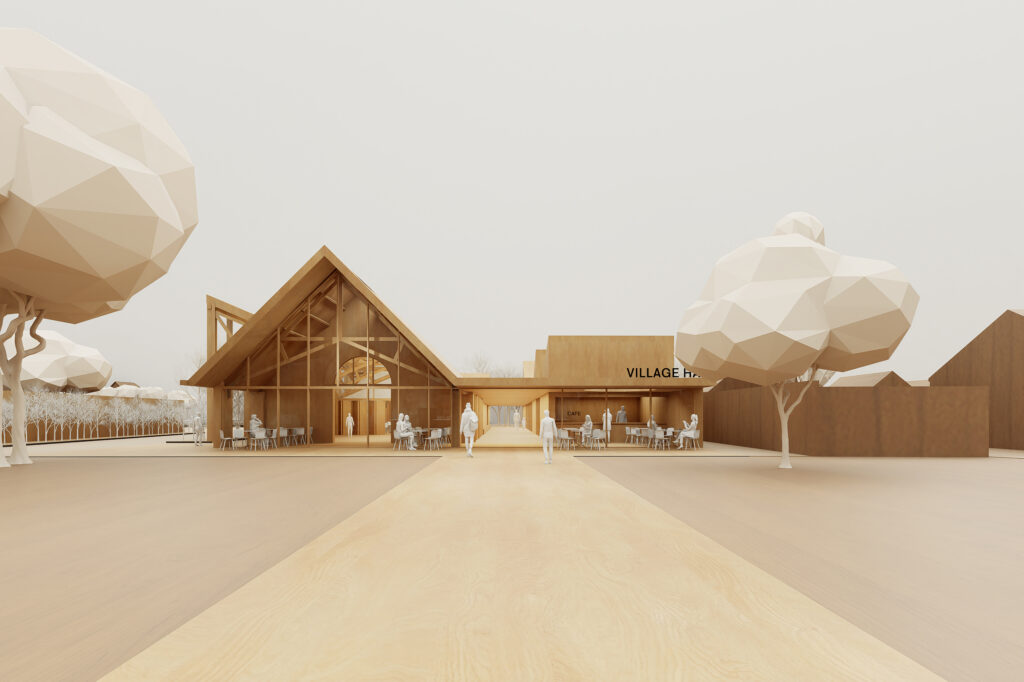
Submission by Able Partners.
Being a good ancestor
Practice
1. Do you have a clearly stated purpose aligned with the planetary emergency? We’re looking for a bold ambition here, and a culture which recognises the need for long-term thinking.
We are committed to shaping a regenerative built environment that responds meaningfully to the planetary emergency. We believe architecture must move beyond minimising harm towards actively restoring ecological health, strengthening communities, and supporting long-term resilience.
Our practice culture is rooted in collaboration, co-creation and systems thinking. We embed sustainability, social value and inclusivity into every stage of the design process, recognising the interconnected challenges of climate change, biodiversity loss, resource scarcity and social inequality. We champion low-carbon, circular and adaptable design approaches that prioritise reuse, longevity and wellbeing.
Our emerging sustainability roadmap aligns with net zero ambitions, circular economy principles and regenerative design methodologies. Through education, community engagement and environmentally responsible placemaking, we aim to help create places that reconnect people with nature, support thriving local communities and contribute positively to future generations.
2. Do you have a clearly stated purpose aligned with the planetary emergency? We’re looking for a bold ambition here, and a culture which recognises the need for long-term thinking.
As a young and evolving practice, we are actively developing a long-term approach to succession, stewardship and shared leadership. While we are not currently an employee-owned trust, we are committed to building a practice model that protects the values, culture and social purpose established by its founders and contributors.
We believe the future resilience of the practice depends on empowering people through mentorship, transparency and collective responsibility. Our ambition is to create a structure that supports distributed leadership, nurtures emerging talent and enables future generations to play a meaningful role in shaping the direction of the practice.
This approach reflects our wider commitment to social value, inclusivity and long-term thinking. By embedding collaboration, knowledge-sharing and professional development into our culture, we aim to ensure that the legacy of the practice is not defined by individuals alone, but by a shared commitment to regenerative, community-focused and environmentally responsible design.
3. Do you share research and knowledge for the benefit of society and the wider world?
The majority of our projects are designed to move beyond mitigating environmental harm towards creating measurable positive outcomes for people, place and ecology. We prioritise low-carbon, adaptable and socially responsive design approaches that support long-term resilience, wellbeing and community value, aligning with the ambitions of the RIBA 2030 Climate Challenge wherever possible.
This ethos is reflected in previous award-winning education projects recognised for their integration of passive environmental design, natural ventilation, adaptable learning environments and low embodied carbon construction strategies, including the use of locally sourced bio-based materials. These projects demonstrate how architecture can actively improve environmental performance, reduce operational energy demand and support healthier, more flexible and socially valuable environments.
Our approach applies regenerative and systems-based design principles to support biodiversity enhancement, resource efficiency and meaningful community engagement, ensuring projects contribute positively to ecological resilience, environmental performance and human wellbeing over the long term.
Project
1. Do you advocate for long-term thinking at the outset of work? Do you initiate work with long-term thinking and challenge clients? Also, can the organisation demonstrate that this approach has worked?
Long-term thinking is fundamental to our approach. We encourage clients at the earliest stages of projects to consider whole-life value, future adaptability, operational performance and the long-term environmental and social impact of their decisions. We regularly challenge assumptions around design life, material use and procurement to support more resilient and regenerative outcomes.
This approach is demonstrated through previous work on an award-winning low-carbon education building that adopted a future-focused design strategy using locally sourced bio-based materials grown on site, significantly reducing embodied carbon while supporting circular economy principles. Passive environmental design, modular construction and adaptable spaces helped minimise operational costs and extend the building’s long-term usefulness.
More than a decade after completion, the building continues to perform efficiently and effectively, demonstrating how early investment in sustainable thinking can deliver enduring environmental, social and economic value.
2. Does your work take account of the future climate and the need for resilience?
We embed climate resilience, adaptability and long-term flexibility into projects from the earliest design stages. Our approach recognises that buildings must be capable of responding to changing environmental conditions, evolving patterns of use and future resource constraints.
This is demonstrated through previous work on an award-winning higher education building designed as a long-life, loose-fit learning environment capable of adapting to future educational needs. A clear structural strategy and rational floorplate enable internal reconfiguration without significant structural intervention, supporting long-term flexibility and reducing the need for future demolition or reconstruction.
Passive environmental strategies, including natural ventilation, thermal mass and solar control, were integrated to improve resilience to future climate conditions while reducing operational energy demand. Durable, low-maintenance materials and simple construction principles were prioritised to support longevity, efficient management and potential future disassembly. These principles continue to inform our approach to regenerative, resilient and adaptable design.
3. Does the majority of your work go beyond mitigating negatives and towards optimising positives?
The majority of our work is designed to move beyond mitigating environmental harm towards creating measurable positive outcomes for people, place and ecology. We prioritise low-carbon, adaptable and socially responsive design approaches that support long-term resilience, wellbeing and community value, aligning with the ambitions of the RIBA 2030 Climate Challenge wherever possible.
This ethos is reflected in previous award-winning education projects recognised for their integration of passive environmental design, natural ventilation, adaptable learning environments and low embodied carbon construction strategies, including the use of locally sourced bio-based materials. These projects demonstrate how architecture can actively improve environmental performance, reduce operational energy demand and support healthier, more flexible and socially valuable environments.
Our work applies regenerative and systems-based design principles to support biodiversity enhancement, resource efficiency and meaningful community engagement, ensuring projects contribute positively to ecological resilience, environmental performance and the long-term wellbeing of the communities they serve.
Co-evolving with nature
Practice
1. Do you use biophilia within your premises and/or do you regularly gather in natural settings?
We recognise the importance of biophilic principles in supporting wellbeing, creativity and reflective working practices. Our studio environment incorporates natural light, planting and a variety of spaces for focused work, collaboration and informal discussion, helping create a calm and supportive workplace culture.
Beyond the office, we value engagement with landscape and natural settings as part of our design and consultation processes. This includes experience leading projects involving extensive outdoor stakeholder engagement, environmental workshops and site-based collaboration within sensitive ecological and rural contexts. These experiences have reinforced the value of natural environments in supporting open dialogue, wellbeing and long-term thinking.
Our design approach also seeks to integrate natural materials, biodiversity, views, daylight and connections to landscape wherever possible. We see biophilic design not as an aesthetic layer, but as an essential part of creating healthy, restorative and resilient environments for both people and communities.
2. Can you share examples of where you have considered nature in decision making?
We increasingly consider nature and ecological systems as part of both our design thinking and the way we organise and support our practice culture. Our approach is informed by regenerative principles, recognising that natural systems offer valuable models for resilience, adaptation, collaboration and long-term stewardship.
We draw inspiration from ecological cycles and seasonal rhythms when considering workload, wellbeing and the pace of project delivery, encouraging flexibility, reflection and sustainable working practices. We are also exploring how more formal eco-centric decision-making tools, including the introduction of a nature proxy within project reviews, can strengthen environmental accountability across our work.
Our projects regularly seek to integrate biodiversity, landscape, natural materials and passive environmental strategies in ways that reconnect people with nature and place. As the practice develops, we aim to continue embedding these principles more deeply into both our organisational culture and our design methodologies.
3. Are you supporting nature locally and nationally?
We are committed to supporting nature through both our projects and the wider values that inform our practice culture. Our work advocates for biodiversity enhancement, green infrastructure, climate resilience and the integration of landscape as essential components of healthy and socially sustainable places.
Across projects, we promote nature-positive design approaches including biodiversity net gain, sustainable planting strategies, habitat creation and the enhancement of outdoor environments that support wellbeing and community use. We are particularly interested in the role of meanwhile uses, urban greening and landscape-led regeneration in reconnecting people with nature within towns and cities.
Our team brings experience in community-focused regeneration, environmentally responsive masterplanning and collaborative engagement within sensitive ecological contexts. As the practice develops, we aim to strengthen partnerships with organisations involved in rewilding, environmental education and local growing initiatives, helping expand the positive ecological and social impact of our work at both local and wider scales.
Project
1. Can you demonstrate work that strives to match the performance of a mature ecosystem?
We place biodiversity, ecological resilience and long-term environmental performance at the centre of our design approach, recognising the richness and interdependence found within mature ecosystems as an important benchmark for future development.
This approach is demonstrated through previous experience leading the Bushfield Camp masterplan near Winchester, an ambitious landscape-led regeneration project located within ecologically sensitive chalk grassland. The project achieved more than 10% biodiversity net gain through habitat creation, enhancement of existing grasslands and the introduction of connected green corridors designed to strengthen ecological networks and support wildlife over time.
We believe biodiversity should be considered as a fundamental design driver rather than an add-on requirement. Our projects seek opportunities to restore habitats, integrate nature-based solutions and reconnect communities with landscape and ecology. We work collaboratively with ecologists, landscape designers and stakeholders to support regenerative outcomes that contribute positively to both environmental health and human wellbeing.
2. Are you working on material stewardship?
We are committed to developing a robust and transparent approach to material stewardship, recognising the critical role that responsible specification plays in reducing embodied carbon, supporting circular economy principles and minimising waste.
Our projects prioritise low-carbon, durable and adaptable materials, with opportunities for reuse and material efficiency considered from the earliest design stages. We advocate for simple, long-lasting construction approaches that reduce unnecessary complexity and support future adaptation, repair and potential disassembly.
Our approach is informed by recognised industry guidance, including the LETI Embodied Carbon Primer and the RIBA Sustainable Outcomes framework, alongside ongoing research into regenerative and bio-based materials. Previous project experience includes the use of locally sourced natural materials, passive environmental design and low embodied carbon construction strategies.
As the practice develops, we are continuing to build internal material libraries, research resources and knowledge-sharing initiatives to support informed, environmentally responsible decision-making across all projects.
3. Does the majority of your work demonstrate the use of biologically-inspired approaches such as Bioregionalism, Biophilia or Biomimicry?
We believe regenerative design should learn from the intelligence, resilience and interconnectedness of natural systems. Principles associated with bioregionalism, biophilia, ecosystem thinking and ecological regeneration increasingly inform both our design methodology and our wider approach to placemaking.
This is reflected in previous landscape-led regeneration work where biodiversity, ecological networks and the character of local landscapes were treated as fundamental drivers of design. Our projects seek to strengthen relationships between people, nature and place through the integration of green infrastructure, biodiversity enhancement, passive environmental strategies and sensitive reuse of existing buildings and materials.
We are particularly interested in how ecological systems thinking can support adaptable, resilient and socially inclusive environments. As the practice evolves, we aim to deepen our understanding of biomimicry, industrial ecology and regenerative methodologies, embedding nature-based innovation and circular thinking more systematically within our projects, collaborations and organisational culture.
Creating a just space for people
Practice
1. Do you have a progressive EDI policy and can you evidence many forms of diversity, which are welcomed and acknowledged, within your company/organisation?
We are committed to fostering an inclusive, equitable and supportive practice culture, underpinned by a formal Equality, Diversity and Inclusion policy and a belief that diverse perspectives strengthen both our workplace and our design outcomes.
As a growing practice, we actively seek to create an environment where people from different backgrounds, identities and lived experiences feel welcomed, respected and able to contribute meaningfully. We recognise diversity in its broadest sense, including race, ethnicity, gender identity, sexuality, socio-economic background, disability, neurodiversity and age.
Our approach to inclusion informs recruitment, mentoring, collaboration and project engagement, with an emphasis on openness, respect and continuous learning. Leadership experience within the practice also brings a strong understanding of inclusive and community-focused design, helping shape a culture grounded in empathy, representation and social value.
We view inclusion not as a standalone policy, but as an essential part of how we work, learn and grow together.
2. Do you operate a no overtime culture, meet the living wage consistently, and stipulate a fair salary ratio between staff of all levels?
We are committed to creating a fair, supportive and sustainable working culture that prioritises wellbeing, respect and long-term professional development. We consistently meet or exceed the London Living Wage for all employees and do not promote a culture of expected or unpaid overtime.
Where additional hours are occasionally required to meet project deadlines, this is discussed openly in advance and balanced through flexible working arrangements or time off in lieu. We believe healthy working practices are essential to maintaining creativity, collaboration and staff wellbeing.
As a small and evolving practice, we do not currently operate a formal salary ratio policy between the highest and lowest-paid team members. However, remuneration is considered transparently and proportionately, based on role, experience and responsibility, with fairness and equity guiding decision-making.
We regularly review our employment practices to ensure they continue to support an inclusive, respectful and people-centred workplace culture.
3. Do you support charities, community groups, social enterprises, action groups and others through pro-bono work, charitable giving or in-kind donations?
We actively support charities, community groups, social enterprises and cultural organisations through pro bono work, mentoring, volunteering and design advocacy. Our leadership team contributes to a range of initiatives focused on social value, inclusion, education and community engagement.
This includes mentoring young people and supporting emerging talent through outreach, education and professional development initiatives. Members of the practice also contribute through voluntary leadership and advisory roles connected to design quality, public engagement and the built environment, including participation in design review panels, cultural initiatives and professional networks that support inclusive and community-focused placemaking.
Our wider involvement includes supporting cultural and community organisations, contributing design expertise to public programmes and serving as a non-executive director of an organisation focused on the design of inclusive playspaces for children.
These activities reflect our belief in sharing knowledge, broadening access to the profession and supporting projects that create meaningful social impact.
4. Do you use an ethical framework to assess opportunities and/or supply chain partners and is them team consulted on these decisions?
We are committed to working in ways that align with our ethical, social and environmental values. While we do not maintain a public list of excluded clients or organisations, we reserve the right to decline work or partnerships where activities conflict with our principles and professional responsibilities.
This includes concerns relating to environmental harm, modern slavery, discriminatory practices, unsafe working conditions or behaviour that conflicts with our commitments to equality, inclusion and social value. These expectations are reinforced through our internal policies, consultant appointments and supplier engagement processes.
We believe ethical decision-making is an important part of responsible practice and long-term stewardship within the built environment. Where necessary, we are prepared to refuse or withdraw from relationships that do not align with these standards.
Our approach reflects a wider commitment to transparency, accountability and ensuring that the projects and partnerships we support contribute positively to people, communities and the environment.
Project
1. Does your work demonstrate deep engagement with local stakeholders and end users?
Our projects prioritise meaningful engagement with stakeholders, end users and local communities from the earliest stages of design development. We believe successful placemaking emerges through collaboration, shared ownership and a deep understanding of the social, cultural and environmental context of each project.
Our engagement processes regularly move beyond consultation towards collaborative co-design, involving community representatives, cultural stakeholders, users and local organisations in shaping project outcomes. Workshops, discussions and feedback sessions inform key decisions relating to accessibility, public use, learning opportunities and the wider role of projects within their communities.
We seek to create inclusive environments that respond to the lived experiences and aspirations of the people who will use them. This collaborative approach supports stronger social value outcomes, more resilient design solutions and places that foster long-term community connection, participation and stewardship.
2. Does your work create connected and resilient communities which positively contribute to neighbourhoods and allow equality of access?
We are committed to creating connected, resilient and inclusive places that contribute positively to their neighbourhoods and support long-term social, cultural and economic value. Our projects prioritise accessibility, community participation and the creation of welcoming environments that can be used and enjoyed by diverse groups of people.
Our work includes experience in cultural, educational and regeneration projects that seek to strengthen local identity, support community activity and reconnect people with place. Through adaptive reuse, landscape-led design and community-focused engagement, we aim to create environments that encourage collaboration, wellbeing and long-term stewardship.
We believe architecture can play an important role in supporting local economies, retaining social value within communities and creating opportunities for learning, culture and social connection. Our approach focuses on designing places that are adaptable, accessible and capable of supporting resilient and thriving communities over time.
3. Does the majority of your work promote equity in society, and consider all people, not only building inhabitants
We are committed to promoting fairness, inclusion and social responsibility throughout our projects, recognising that the impact of architecture extends beyond building users to include communities, workers and supply chains.
Our approach considers social value, accessibility and ethical procurement as integral parts of the design and delivery process. We work with consultants, contractors and suppliers who share our commitment to fair labour practices, human rights and responsible business conduct, with requirements aligned to the Modern Slavery Act 2015 embedded within our policies and contractual processes.
We seek transparency and accountability across our supply chains, encouraging responsible sourcing and dialogue around ethical practice and worker wellbeing. Through collaborative engagement, inclusive design and socially responsible decision-making, we aim to create projects that contribute positively to society while supporting dignity, equality and community benefit.
We continue to review and strengthen our practices as part of our commitment to equitable and socially conscious design.