
Submission by PAD Studio.
Being a good ancestor
Practice
1. Does the practice have a clearly stated purpose aligned with the planetary emergency? We are looking for a bold ambition here, and a practice culture which recognises the need for long-term thinking. For example, a strong mission, a theory of change, or a sustainability roadmap.
We are a certified B Corp and committed to Architects Declare and the RIBA 2030 Challenge. We create sustainable spaces and places that offer the chance to be, pause, reflect and grow. Places to retreat to, to be sheltered by. Places that nurture the soul. Places to commune with others. Beautiful places that offer a sense of wonder to all those who encounter and experience them. Places that give back and speak of the people and setting that they belong to – back in time and looking forward to the future.
2. Does the practice have a clear succession plan, which passes on ownership and protects the values and legacy of those who built and contributed to the practice? For example is the practice an employee owned trust.
No.
3. Does the practice share research and knowledge for the benefit of society and the wider world? For example, you regularly carry out post occupancy evaluation and share information with others.
We carry out RIBA Stage 6, and carry our PoE in conjunction with Purmetrix and publish this date regularly.
Project
1. Does the practice advocate for long-term thinking at the outset of projects? Do you initiate projects with long-term thinking and challenge the client on design life? Also, can the practice demonstrate that this approach has worked – with a shorter or longer design life, or an innovative approach to financing or payback period?
We always work with environmental consultants at the outset to consider WLC, and we calculate embodied carbon of different construction options. We summarise options and payback periods and look at the pro’s and cons. We have two in house certified PassivHaus designers and we have been practicing this approach for the past 15 years.
2. Do your projects take account of the future climate and the need for resilience? For example, do the projects demonstrate flexibility, design for adaptation, design for disassembly, non-deterministic solutions, or demountable structures.
We do need to improve the way that we analyse and discuss (and specify) for circularity to ensure measurability, but this is very much at the forefront of the way that we design and specify products. Chain of custody certification is inbuilt into our specifications and where we can, we always specify materials which are natural, local and low in EC.
3. Do the majority of your projects go beyond mitigating negatives and towards optimising positives? For example, are they meeting or exceeding the RIBA 2030 Challenge.
We work closely with our engineers and environmental engineers to carry out Passivhaus or IES dynamic thermal modelling at the pre-planning stage and update this in Stage 4. We aim to meet or exceed RIBA 2030 targets.
Co-evolving with nature
Practice
1. Does the practice use biophilia within the office or regularly host meetings and retreats in natural settings? For example do you have extensive planting within the office or rely on natural patterns and imagery for stress relief or quiet areas.
Our office is full of plants as we believe in practicing what we preach! This improves both the air quality and well being, which has been proven to improve productivity and have sleep benefits. We are based in the New Forest National Park and we also carry out the landscape design on many projects as our clients can se the visible evidence that we love nature.
2. Can the practice share examples where it has considered nature in decision making? For example by having a nature proxy to encourage eco-centric decision making, using natural systems as inspiration for the company structure, recognising the seasonal nature of people’s capacity and workload or celebrating equinoxes and solstices together.
Lots of examples. We have carried out a paid study for Goldman Sachs regarding internal planting for Plumtree Court and the impact of biophilic design on well-being and productivity – we installed a test bed for them in 2021. This can be shared if requested, however we are under an NDA so cannot be reproduced.
3. Is the practice supporting nature locally and nationally? For example, does the practice support local gardens, gardeners, planting programmes, rewilding programmes or advocate for changes in legislation to protect nature.
We are working with several local charities on schemes which include landscape elements for improved wellbeing, including Winchester Science Centre (we are designing an outdoor children’s nature hub) and are working pro-bono for a home education charity called Broadleaf for a new community school with outdoor learning area. We also completed a garden design (pro-bono) for the local Montessori school and are working on a re-wilding project for a private landowner in the South Downs.
Project
1. Can the practice demonstrate projects which strive to match the performance of a mature ecosystem? As a minimum this would mean achieving biodiversity net gain.
We work regularly with Seed (Landscape architects) and have a project submitted for planning in a greenbelt area which we have closely collaborated on the BNG scheme. Many of our projects are in National Parks and Greenbelts, so enhancing BNG is pretty standard for us.
2. Is the practice working on material stewardship? For example, evidence could be shown through repeated use of low carbon materials, extensive material libraries and research or publications supporting responsible use of materials and elimination of waste.
Our library is extensive and growing. It is currently difficult to get products from smaller producers that whilst wonderful and low embodied carbon, haven’t been tested and recognised with an official chain of custody recognised mark – hopefully you can help with this! e.g https://www.margentfarm.com/fibre
3. Do the majority of projects demonstrate the use of biologically-inspired approaches such as Bioregionalism, Biophilia, Biomimicry, Ecomimicry (also referred to as Ecosystems Thinking, Industrial Ecology or Industrial Symbiosis) or BioTRIZ?
Yes. Already answered I hope.
Creating a just space for people
Practice
1. Does the practice have a progressive EDI policy and can you evidence many forms of diversity, which are welcomed and acknowledged, within the practice?
We have an EDI policy (require by B Corp): PAD studio is committed to encouraging equality, diversity and respect for all amongst our workforce and eliminating unlawful discrimination. We commit to creating a working environment where no staff member is unlawfully discriminated against because of age, disability, gender reassignment, marriage and civil partnership, pregnancy and maternity, race (including colour, nationality, and ethnic or national origin), religion or belief, sex (gender) and sexual orientation.
2. Does the practice operate a no overtime culture, meet the living wage consistently, and stipulate a fair salary ratio between staff of all levels?
We are 100% female owned and led practice. We practice a no-overtime culture and as a chartered practice commit to pay (well above) the living wage. We review salaries annually and are in line withe the upper levels of RIBA benchmarking across the board at all levels.
3. Does the practice support charities, community groups, social enterprises, action groups and others through pro-bono work, charitable giving or in-kind donations?
As outlined previously. We commit to giving 10% of our profits to charities in the form of pro-bono time. We encourage our staff to take an active role in supporting charities and causes that are important to them, while at the same time developing their skills and adding value to the many voluntary and community organisations who rely on volunteers to achieve their objectives.
4. Does the practice publicly refuse to work with certain clients, suppliers or organisations on ethical grounds?
We screen all our suppliers and ask them to complete a screening survey (this is a B Corp requirement). PAD studio’s aim is to encourage suppliers to strive for greater positive social and environmental impact. The aim of our survey is to elicit further information about the supplier and enable PAD studio to make a more informed decision about whether to appoint or buy from them. We ask for information around location, business ownership, environmental credentials, their sustainable programmes, use of chemicals and harmful materials, socially sustainable programmes, sustainable impact, living wage, community impact, and positive environmental contribution.
Project
1. Do the projects demonstrate deep engagement with local stakeholders and end users? For example, is there evidence that your project engagement goes beyond consultation towards co-design?
We regularly work with stakeholders, communities and charities running collaborative workshops and incorporate the results into our ongoing design work.
2. Do your projects create connected and resilient places which positively contribute to their neighbourhoods and allow equality of access? For example, do your projects create economic opportunity, retain value locally and generate social value?
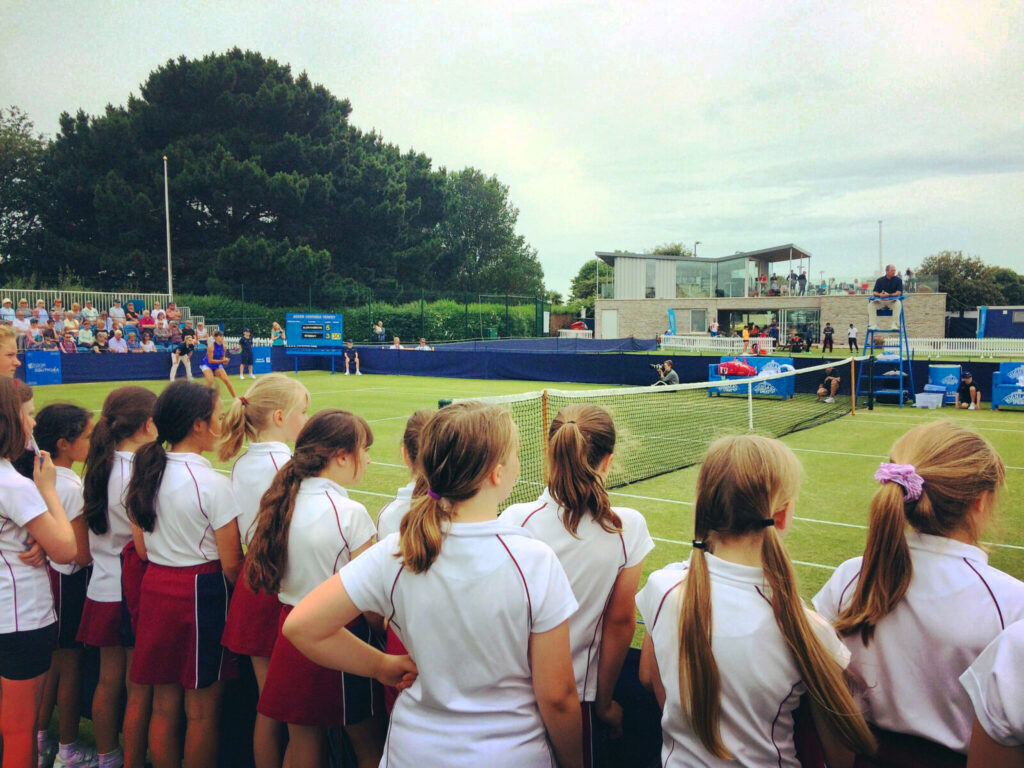
Yes! More difficult with private housing, but definitely on community and public buildings. please see our design for Southsea tennis Pavilion for CourtX: https://www.courtx.co.uk/
3. Do the majority of your projects promote equity in society, and consider all people, not only the building inhabitants? For example, do your projects show due regard for workers within the supply chain and take active steps to avoid modern slavery?
Yes. See screening question above.