
Submission by Jamie Fobert Architects.
Being a good ancestor
Practice
1. Does the practice have a clearly stated purpose aligned with the planetary emergency? We are looking for a bold ambition here, and a practice culture which recognises the need for long-term thinking. For example, a strong mission, a theory of change, or a sustainability roadmap.
Since becoming signatories of Architects Declare in 2019, Jamie Fobert Architects have embedded sustainability at the core of our practice. We strengthened our environmental policy, which all team members commit to at induction and renew annually.
An internal Sustainability Group, representing all levels of the practice, meets bi-monthly to review measures, track progress, and promote learning. We conduct detailed material studies and invite specialists into the studio to present to the team. The group ensures our projects align with environmental objectives.
In 2022, we published our first annual Sustainability Report, featuring a carbon footprint analysis and offering deeper insight into our established goals. It reflects our belief that sustainability is integral to our work, not a separate initiative.
With clients and consultants, we champion shared responsibility and prioritise environmental considerations from the outset. Our purpose is to address the climate emergency with measurable, long-term actions, underpinned by transparency and commitment.
2. Does the practice have a clear succession plan, which passes on ownership and protects the values and legacy of those who built and contributed to the practice? For example is the practice an employee owned trust.
As a collaborative team, we have always given careful consideration to futureproofing our company, while taking steps to protect the values, culture, and integrity that have shaped the practice over the years.
We maintain a manageable team of 20, which allows us to adapt quickly to the company’s needs. While we are not an employee-owned trust, we work collectively to promote transparent decision-making, shared stewardship, and mentorship opportunities across all levels of the team. We are actively refining our succession plans to align with the regenerative principles we aim to embody in both our practice and our projects. In 2024, four employees were promoted to Associate Director, with these values and goals as a guiding priority.
3. Does the practice share research and knowledge for the benefit of society and the wider world? For example, you regularly carry out post occupancy evaluation and share information with others.
We recognise the importance of sharing research and knowledge to benefit society and the architectural profession. We have carried out post-occupancy analysis on all major projects, collaborating with sub-consultants and sharing data with the RIBA and press. Our analysis has supported continuous design improvement and enabled us to quantify the positive benefits delivered to clients and society. This knowledge is shared internally, with feedback discussed at our bi-monthly sustainability meetings, and we acknowledge there is more to do.
We are working to overcome resourcing challenges to make post-occupancy evaluation standard practice, investing in learning and development to support this. With help from Structure Workshop and their carbon calculator, we are implementing a more systematic approach to impact assessment. Our current focus, using environmental product declarations, enables earlier, meaningful comparisons at the design stage. With this foundational work in place, our goal is to contribute more consistently to shared industry knowledge.
Project
1. Does the practice advocate for long-term thinking at the outset of projects? Do you initiate projects with long-term thinking and challenge the client on design life? Also, can the practice demonstrate that this approach has worked – with a shorter or longer design life, or an innovative approach to financing or payback period?
Yes, long-term thinking is embedded in our design approach from the earliest stages. Many of our projects are public buildings, where it is essential to take the long view in terms of building performance and social, financial, and environmental sustainability. As part of our sustainability strategy, we produce a dedicated sustainability report at the concept stage for each project. This report, an in-house sustainability checklist, provides an initial assessment of sustainability opportunities and considers aspects such as client ambitions, re-use, adaptability, disassembly, and the overall design life of the building. These reports are reviewed by our in-house Sustainability Group, which meets bi-monthly to ensure consistency, transparency, and continuous improvement.
We also champion the adaptive reuse of historic buildings as a sustainable approach to architecture. By integrating life cycle thinking from the outset, we support clients in making informed, future-proof decisions with lasting environmental and social benefits.
2. Do your projects take account of the future climate and the need for resilience? For example, do the projects demonstrate flexibility, design for adaptation, design for disassembly, non-deterministic solutions, or demountable structures.
As part of our latest design strategy, we have been evaluating adaptability and opportunities for flexibility from the outset of each project. From major cultural redevelopments to retail interiors, there are always decisions we can make at concept stage that have a positive environmental impact. We work closely with environmental engineers to consider adaptability to future climate change. We are encouraging our architects to find ways to reuse materials from site excavation, re-purpose elements from stonework to doors, and identify design opportunities that support adaptability or disassembly.
3. Do the majority of your projects go beyond mitigating negatives and towards optimising positives? For example, are they meeting or exceeding the RIBA 2030 Challenge.
No.
Co-evolving with nature
Practice
1. Does the practice use biophilia within the office or regularly host meetings and retreats in natural settings? For example do you have extensive planting within the office or rely on natural patterns and imagery for stress relief or quiet areas.
Our studio is located within the grounds of Rochelle, a creative hub in the heart of Shoreditch, and offers access to three distinct outdoor spaces. These include a rear passage and morning suntrap off the kitchen, with planting that provides quick access to a quiet spot; a long, narrow garden with picnic benches for private meetings of up to six people; and a large communal garden, surrounded by planting, which we share with our Rochelle neighbours. All three spaces are used throughout the year. We often socialise in the garden, sharing lunches or evening drinks in finer weather, and sometimes host design team meetings on picnic benches beneath trees.
Inside, large, high arched windows offer views of mature street trees. Ferns and other plants are dotted around desks, bringing natural elements into the workspace. Together, these features support calm and provide informal ways to engage with nature during the day.
2. Can the practice share examples where it has considered nature in decision making? For example by having a nature proxy to encourage eco-centric decision making, using natural systems as inspiration for the company structure, recognising the seasonal nature of people’s capacity and workload or celebrating equinoxes and solstices together.
We have formally recognised nature and the environment as an Interested Party within the organisation. This means we are required to identify the needs and expectations of the natural world in relation to the company and to regularly evaluate whether we are meeting these requirements. We take seriously the responsibility this places on us and aim to uphold our commitments with integrity and care.
We also support our employees and their individual circumstances through flexible working arrangements, including work-from-home allowances and reduced hours for those with childcare responsibilities. In this way, we aim to recognise and accommodate the changing capacities of our team. Socially, we like to mark the changing seasons with summer garden parties and cosy winter feasts.
3. Is the practice supporting nature locally and nationally? For example, does the practice support local gardens, gardeners, planting programmes, rewilding programmes or advocate for changes in legislation to protect nature.
We are in the process of finalising ongoing support for the Durrell Trust, contributing to its Rewild Carbon Atlantic Forest project. This initiative will allow us to offset our operational emissions while supporting the vital conservation work the Trust is undertaking.
We also carefully select our office suppliers, prioritising those who place sustainability at the forefront. We ensure their values align with our own and actively support their environmental initiatives. For example, through our stationery supplier Eco-Tender, we’ve donated to the Sussex Seabed Restoration Project, which aims to revitalise biodiversity along the Sussex coastline. Similarly, our coffee supplier’s Sombra – Agroforestry project is reforesting 60,000 coffee and non-coffee trees in Brazil, promoting sustainable agriculture and habitat restoration.
Project
1. Can the practice demonstrate projects which strive to match the performance of a mature ecosystem? As a minimum this would mean achieving biodiversity net gain.
We are placing increasing emphasis on creating biodiversity uplift and habitat opportunities within our projects, ensuring our designs have a positive impact on both biodiversity and the wider environment. Close collaboration with landscape designers and ecological consultants, where relevant, has enabled us to maximise each site’s ecological potential.
Alongside supporting biodiversity net gain, these design strategies have delivered added benefits for clients–including improved air quality, climate regulation, noise reduction, and rainwater management.
2. Is the practice working on material stewardship? For example, evidence could be shown through repeated use of low carbon materials, extensive material libraries and research or publications supporting responsible use of materials and elimination of waste.
We are actively developing our approach to material stewardship. We’ve recently begun collating Environmental Product Declarations and continue to undertake in-depth studies into sustainable materials. To support this, we’ve built an online sustainability library accessible to the whole team. It includes guidance documents, reference materials, CPD presentation slides, a materials database, and links to external resources such as the LETI Embodied Carbon Primer.
Our sustainability group has also introduced a sustainable materials log for each project, with references drawn from the AD Sustainable & Healthy Materials guide. The aim is to encourage early assessment of materials, promote informed material choices across our projects, and facilitate wider knowledge-sharing within the team.
3. Do the majority of projects demonstrate the use of biologically-inspired approaches such as Bioregionalism, Biophilia, Biomimicry, Ecomimicry (also referred to as Ecosystems Thinking, Industrial Ecology or Industrial Symbiosis) or BioTRIZ?
More advanced biologically inspired design approaches are increasingly informing our work. Maximising natural light and responding to natural daylight patterns has long been central to our work. We regularly draw on natural elements to support human wellbeing–integrating planting, using natural materials, and responding to the ecological and cultural character of each site, sourcing local materials and using local fabricators, where possible
For the design of a new Maggie’s Centre–a cancer care facility at the University Hospital of Coventry and Warwickshire–we prioritised health, comfort, sustainability, and accessibility through the development of a vapour-open form of construction using low embodied carbon, locally sourced materials. Our ‘rubble wall’ solution is made from stone quarry by-product combined with locally sourced lime and hempcrete, designed to perform well in Coventry’s climate. This approach demonstrates both a place-based and climate-responsive strategy, aligning with principles of bioregionalism and Ecomimicry.
Creating a just space for people
Practice
1. Does the practice have a progressive EDI policy and can you evidence many forms of diversity, which are welcomed and acknowledged, within the practice?
Yes, our practice is committed to fostering a diverse, inclusive, and equitable workplace. Our Equality, Diversity, and Inclusion (EDI) policy is reviewed annually and underpins all aspects of our culture and operations. We take a proactive approach to inclusive recruitment and ensure that all senior management have completed training in unconscious bias, equality, and diversity.
Cultural events such as Iranian and Chinese New Year are celebrated in the studio, encouraging shared learning and cultural awareness. We also support work-life balance through flexible working arrangements, including remote working, adaptable hours, and paid parental leave. LGBTQ+ inclusion is actively promoted, and we support underrepresented groups through initiatives such as our mentorship programme with Accelerate. Our progress is tracked and reported annually in our Sustainability Report, reinforcing our commitment to transparency and continuous improvement in EDI.
2. Does the practice operate a no overtime culture, meet the living wage consistently, and stipulate a fair salary ratio between staff of all levels?
We are proud to have been a London Living Wage employer since our inception, consistently exceeding this benchmark. The practice conducts annual salary benchmarking against industry standards and carries out a gender pay gap analysis to ensure fairness and transparency in pay. We extend this further by only working with subconsultants willing to do the same. To pass our subconsultant approval process, each company must be willing to commit to paying all employees the living wage.
We’re committed to shifting the culture around overtime and fostering a healthier work-life balance. While deadlines can require some overtime, we are working to minimise this. Timesheets are undergoing regular review, and any additional hours worked are recognised through time off in lieu.
3. Does the practice support charities, community groups, social enterprises, action groups and others through pro-bono work, charitable giving or in-kind donations?
We are proud sponsors of ARCHITECTURE LGBT+, a not-for-profit organisation providing a safe, inclusive, and prejudice-free environment for LGBT+ architects, students, and professionals through networking, mentoring, learning opportunities and role models.
We are long-term supporters of Open City’s ‘Accelerate’ programme–a pioneering mentoring and education scheme for 16-18-year-olds, designed to widen access and increase diversity in the built environment professions. We make annual donations, provide mentors, and have taken part in Accelerate or its sister scheme Young City Makers every year since 2020.
Jamie has been an adjudicator for the ARTiculation Prize, where over 1,000 young people deliver illustrated talks to build confidence and critical thinking around art and architecture. We also support the Architecture Foundation, which runs a public programme championing emerging architects, underrepresented groups, and voices from across the wider design and cultural landscape. Jamie has been a Trustee since 2019, actively championing the foundations mission and values.
4. Does the practice publicly refuse to work with certain clients, suppliers or organisations on ethical grounds?
Yes, the practice has chosen not to pursue certain opportunities where we believe there is a conflict with our ethical values. In such cases, we carefully consider factors such as funding sources, inclusivity, and alignment with our core principles. Every project is evaluated at the initial enquiry or concept stage to assess sustainability potential and identify any misalignment in values. Understanding a client’s sustainability policy, ambitions, and approach is a key part of this assessment, ensuring that our collaborations reflect our commitment to responsible and ethical practice.
Project
1. Do the projects demonstrate deep engagement with local stakeholders and end users? For example, is there evidence that your project engagement goes beyond consultation towards co-design?
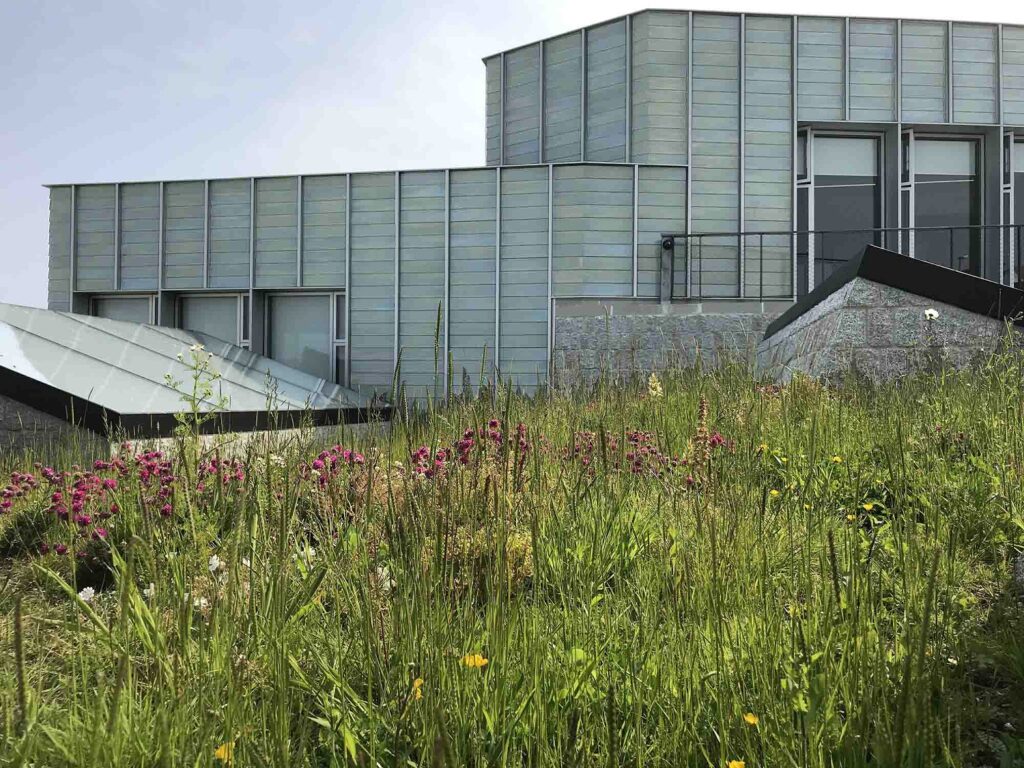
Our practice was honoured with the BD Architect of the Year Gold Award in 2019, recognising our contribution to British public buildings and commitment to collaboration with local communities. A key example is the redevelopment of Tate St Ives, where we undertook extensive engagement over nine years.
Early consultations revealed concerns about access, parking, and the gallery’s growing presence. In response, we worked closely with a Community Liaison Group and other stakeholders to ensure the design addressed these issues. This dialogue kept the local community central to the design process. The resulting extension is modest, discreetly embedded into the cliffside, doubling gallery space while improving pedestrian routes and providing parking for residents.
By prioritising open, honest communication, the project balanced Tate’s ambitions with the needs of the St Ives community–resulting in a sensitive intervention that supports cultural and local interests, with minimal impact on the town’s landscape and daily life.
2. Do your projects create connected and resilient places which positively contribute to their neighbourhoods and allow equality of access? For example, do your projects create economic opportunity, retain value locally and generate social value?
Yes – our work is rooted in creating places that are inclusive, locally grounded, and socially and economically resilient. Tate St Ives exemplifies this approach. Since reopening in 2017 with double the gallery space, it has become a year-round cultural destination, attracting over 300,000 visitors annually and contributing ££11 million to the Cornish economy. Nearly a quarter of visitors are local, with over 10,000 people registered for a Locals Pass. School partnerships, art groups, apprenticeships, and training ensure long-term benefits and equitable access.
Our work at the National Portrait Gallery has been recognised for its accessible design, sustainability, and civic impact. Receiving Highly Commended in this year’s Selwyn Goldsmith Award, the judges said: “This redesign is a triumph. It has not only revitalised a historic building but made it more accessible and inclusive for all, creating a cultural hub that truly belongs to the people.”
3. Do the majority of your projects promote equity in society, and consider all people, not only the building inhabitants? For example, do your projects show due regard for workers within the supply chain and take active steps to avoid modern slavery?
Ethical responsibility is a core value of our practice. Our designs prioritise inclusivity, with careful consideration given to accessibility and the broader needs of the public. We take particular pride in our work with cultural institutions and the public realm–for example, our project at the National Portrait Gallery included the creation of a new forecourt designed to enhance public access and civic presence.
As part of our quality management systems, we maintain a supply chain database detailing suppliers who have demonstrated values aligned with our own, including high standards of ethical compliance. We are also developing a sustainable materials database, which tracks the origin of products, certifications, and environmental performance to reduce emissions and promote ethical sourcing. We actively seek opportunities to use locally sourced materials, supporting both low-carbon design and local economies. More broadly, our projects aim to deliver long-term social value through inclusive design and meaningful community engagement.