
Submission by Studio Knight Stokoe.
Being a good ancestor
Practice
1. Does the practice have a clearly stated purpose aligned with the planetary emergency? We are looking for a bold ambition here, and a practice culture which recognises the need for long-term thinking. For example, a strong mission, a theory of change, or a sustainability roadmap.
Our practice has established a clear mission aligned with addressing the planetary emergency through a framework of regeneration and ecological resilience. We’ve legally embedded our environmental commitment by amending our Articles of Association to recognise the environment and society as key stakeholders. Our B Corp™ certification validates our high standards of environmental performance and accountability.
Three design drivers guide our approach: resilient, regenerative, and empathic design. Collectively, these ensure our work withstands environmental stresses, restores ecological systems, and considers social equity. To operationalise these principles, we’ve developed an internal Regenerative Design Framework aligned with the RIBA/LI work stages, ensuring consideration for climate and biodiversity emergencies are integrated into every project phase.
Currently, we’re finalising our Regenerative Practice Roadmap, which outlines our short and long-term approaches to resilient, regenerative, and empathic design and practice management, demonstrating our commitment to long-term thinking and transformative action.
2. Does the practice have a clear succession plan, which passes on ownership and protects the values and legacy of those who built and contributed to the practice? For example is the practice an employee owned trust.
No.
3. Does the practice share research and knowledge for the benefit of society and the wider world? For example, you regularly carry out post occupancy evaluation and share information with others.
The studio actively contributes to industry advancement and societal benefit through robust knowledge-sharing practices. As a certified B-Corp, we demonstrate transparency by publishing comprehensive annual impact reports containing project metrics, carbon sequestration data, and biodiversity enhancement measures.
Our commitment extends to conducting post-occupancy evaluations that assess landscape performance, functionality, and user satisfaction. These findings inform future design approaches and are shared with the wider industry. Knowledge-sharing sessions educate clients and collaborators from project inception, while our participation in design review panels allows us to both learn from and contribute expertise to the profession.
We continuously expand our outreach through active involvement in industry events like Footprint+ and SoilsCon, engaging diverse stakeholder groups. This collaborative approach fosters innovation, promotes sustainability practices, and develops more efficient environments. Client and stakeholder satisfaction surveys further refine our understanding of project effectiveness and impact.
Project
1. Does the practice advocate for long-term thinking at the outset of projects? Do you initiate projects with long-term thinking and challenge the client on design life? Also, can the practice demonstrate that this approach has worked – with a shorter or longer design life, or an innovative approach to financing or payback period?
Our practice champions long-term thinking through knowledge-sharing sessions at project inception, educating clients on management and maintenance considerations over a minimum 30-year period. We actively challenge conventional approaches by advocating for demountable, reusable and recyclable design elements that enhance sustainability and flexibility.
We utilise the Climate Positive Design Pathfinder Calculator across all projects to calculate predicted carbon impact and sequestration, both as a design development tool and for measuring completed schemes. This calculator models the years required to reach a net positive project impact.
Additionally, we prioritise the selection of climate-resilient and regenerative plant species while assessing the climate and carbon costs of materials throughout the project lifecycle.
As a recently established practice of just over one year, we’re still developing our understanding of the full impact of our decisions, whilst continuously aligning with sustainable principles and seeking feedback to evolve responsibly.
2. Do your projects take account of the future climate and the need for resilience? For example, do the projects demonstrate flexibility, design for adaptation, design for disassembly, non-deterministic solutions, or demountable structures.
Our projects fully integrate future climate resilience through several key strategies. We implement climate-adaptive planting schemes capable of withstanding extreme weather events whilst supporting local biodiversity. Sustainability is ensured through careful consideration of material and plant resource availability.
Adaptability is prioritised through modular, recyclable, and demountable landscape elements that can be modified as climate challenges evolve. Our non-deterministic solutions, including green infrastructure and natural drainage systems, respond dynamically to fluctuating weather patterns.
Design for disassembly is incorporated through demountable structures that enable component reuse or relocation. We employ systems-based approaches to create resilience throughout project lifespans.
Our process includes microclimate modelling with present and predicted climate data to inform design decisions for future scenarios. Practical applications include modular furniture elements at Plant in Basingstoke and advocating for sustainable on-site material harvesting and composting at a London school, reducing external dependencies and waste.
3. Do the majority of your projects go beyond mitigating negatives and towards optimising positives? For example, are they meeting or exceeding the RIBA 2030 Challenge.
Our projects actively optimise positive outcomes rather than simply mitigating negatives. We prioritise regenerative design principles that exceed standard requirements, targeting BREEAM Outstanding ratings, such as at Plant in Basingstoke, and achieving Biodiversity Net Gain of at least 20% across all projects.
We utilise the Climate Positive Design Pathfinder Calculator to measure carbon impact and sequestration, guiding design development and tracking completed schemes’ progress toward a net positive impact.
Our holistic approach encompasses passive design strategies, renewable energy integration, water conservation measures, and low-embodied carbon materials. We create healthy outdoor environments through careful material and plant selection while considering Urban Greening Factor and tree replacement standards.
Beyond environmental considerations, our projects enhance well-being, promote community engagement, and support local economies. By aligning with the UN Sustainable Development Goals, we deliver lasting positive impacts that comprehensively address environmental, social, and economic factors.
Co-evolving with nature
Practice
1. Does the practice use biophilia within the office or regularly host meetings and retreats in natural settings? For example do you have extensive planting within the office or rely on natural patterns and imagery for stress relief or quiet areas.
Our practice embraces biophilia, integrating nature seamlessly into the studio workspace. Situated amidst mature gardens, with windows providing views of greenery and natural light, the studio is constructed from natural materials, creating a harmonious connection with the outdoors. Low-water requiring evergreen plants fill the interior, adding refreshing greenery, immediate connections with nature, and contributing to improving indoor air quality.
Our covered garden terrace is an inviting outdoor workspace and staff break area, enabling our team to work or unwind surrounded by nature throughout the year. Our external space allows testing design elements and exploring horticultural techniques, including our recently installed hugelkultur growing area and herb garden.
We hold walking meetings and design workshops in the local countryside and woodlands, immersing our team in rejuvenating natural surroundings.
We organise studio visits to inspiring gardens and landscapes, and encourage staff engagement with nature through CPD allowance towards outdoor courses and volunteering opportunities.
2. Can the practice share examples where it has considered nature in decision making? For example by having a nature proxy to encourage eco-centric decision making, using natural systems as inspiration for the company structure, recognising the seasonal nature of people’s capacity and workload or celebrating equinoxes and solstices together.
Our practice demonstrates nature-centred decision-making in several ways. As a Certified B Corporation, we’ve amended our Articles of Association to include society and nature as essential stakeholders in all operations and decisions. This commitment to eco-centric values is deeply ingrained in our practices.
We recognise the importance of aligning with natural rhythms in both our design work and studio culture. Our flexible working policy accommodates employees’ individual life rhythms through a 4-day workweek, remote working options, and consideration for circadian rhythms and seasonal variations. We create a more sustainable and harmonious environment by respecting personal needs and fostering optimal work-life balance.
In our projects, we advocate for a ‘Nature Champion’ who functions at a higher project level as a key stakeholder, questioning and considering the potential positive and negative implications of various design decisions. We believe protecting the environment begins with practicing what we preach.
3. Is the practice supporting nature locally and nationally? For example, does the practice support local gardens, gardeners, planting programmes, rewilding programmes or advocate for changes in legislation to protect nature.
Our practice actively supports nature locally and nationally through various initiatives. By participating in regional and national design review panels, we promote and advocate for incorporating nature and high environmental considerations and standards into projects, influencing decision-making processes that encourage the integration of green spaces and sustainable practices.
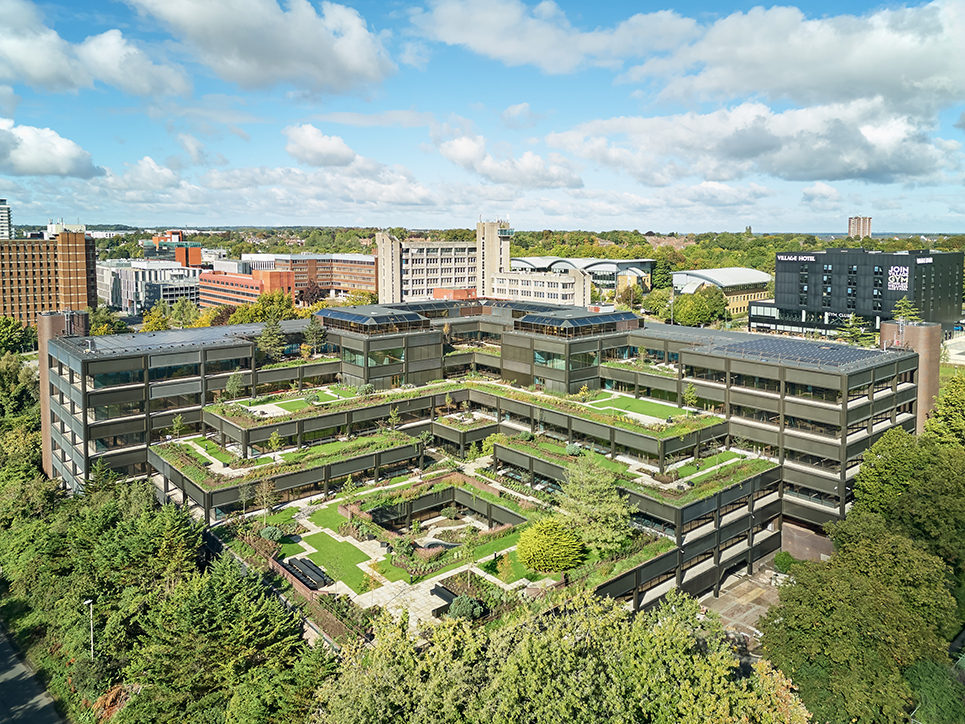
We’re engaging with a local charity rooted in the use and healing benefits of the outdoors, offering volunteering time and pro-bono design services. Our project, Plant in Basingstoke, completed in September 2024, included 86 new trees, over 22,500 new plants, habitat initiatives, and achieved BREEAM Outstanding.
We provide staff with paid annual memberships to regional private gardens and Woodland Trust properties, fostering a deeper appreciation for nature. Additionally, we’re increasing our presence at industry events such as Footprint+ and SoilsCon to disseminate knowledge across stakeholder groups, contributing to environmental conservation while promoting nature-friendly and aware built environments.
Project
1. Can the practice demonstrate projects which strive to match the performance of a mature ecosystem? As a minimum this would mean achieving biodiversity net gain.
The practice demonstrates projects that strive to match the performance of mature ecosystems through Biodiversity Net Gain initiatives. Our project, Plant in Basingstoke, exceeds the minimum 10% Biodiversity Net Gain requirement, achieving a 19% gain. This increase in biodiversity aims to foster a thriving ecosystem connecting to well-established natural habitats. Furthermore, our project, Canons House in Bristol, targets a minimum 37% gain, reflecting our commitment to creating environments that complement mature ecosystems.
We prioritise retaining, protecting and enhancing existing natural assets and established eco-systems, as exemplified in our micro-urban forest school for a private school in London.
We target a minimum of 20% BNG across all projects, above regulations. We also monitor projects for their Urban Greening Factor and are working towards a team member becoming a certified SITES Accredited Professional. This credential demonstrates our commitment to sustainable land development and nature-based solutions.
2. Is the practice working on material stewardship? For example, evidence could be shown through repeated use of low carbon materials, extensive material libraries and research or publications supporting responsible use of materials and elimination of waste.
Evidence of our practice’s commitment to material stewardship is demonstrated through several established processes. We systematically utilise the BRE Green Guide and Climate Positive Design Pathfinder Calculator to evaluate materials based on environmental impact and long-term carbon footprint over a 50-year period. This enables informed decision-making when considering specification alternatives.
Our approach prioritises sustainable resources, including the reuse of site-won materials, locally sourced options, and materials with recycling potential. For example, our Basingstoke project retained and repurposed all existing hard landscape materials, either in their original form or as crushed aggregate for sub-bases.
Ongoing research includes exploring innovative applications, such as cork as an outdoor finish for a micro-urban forest school in London – selected for its sustainability and repairability.
Our extensive in-house material libraries and systematic ongoing research support our education and responsible material selection, minimising waste throughout the construction process, while maintaining design quality and innovation.
3. Do the majority of projects demonstrate the use of biologically-inspired approaches such as Bioregionalism, Biophilia, Biomimicry, Ecomimicry (also referred to as Ecosystems Thinking, Industrial Ecology or Industrial Symbiosis) or BioTRIZ?
Our portfolio consistently applies bioregionalism through local material mapping and sourcing across all projects. A regenerative systems-based approach underpins our work, whilst biophilic design principles are considered and applied throughout our projects.
Canons House exemplifies this commitment through its overarching design concept, which extrapolates key characteristics from historic marshland and grassland ecosystems. The design incorporates ecomimicry and biophilia by drawing on natural resilience, adaptability and self-sustaining principles.
Similarly, Plant in Basingstoke showcases our biophilic approach by placing nature at its heart with multilayered garden spaces that foster connection between the built environment and natural world, promoting wellbeing and productivity. Additional examples include three unique school projects in London where we’re bringing the outdoors, in.
These diverse applications demonstrate our versatile implementation of nature-inspired methodologies. Through these works, we actively implement ecomimetic and biophilic design strategies that respect, learn from and celebrate nature’s time-tested wisdom in varied contexts and scales.
Creating a just space for people
Practice
1. Does the practice have a progressive EDI policy and can you evidence many forms of diversity, which are welcomed and acknowledged, within the practice?
Our practice has a thorough and progressive Equality, Diversity, and Inclusion policy in place, ensuring equal opportunities for all. Though currently a small studio, our commitment to diversity is evident in our company structure, which has two founding directors, one male and one female, with equal shares and voting rights.
We embrace diverse perspectives, backgrounds, and experiences, enriching our creative process and decision-making. When hiring, we practice blind interviews and adopt an inclusive approach to advertising positions, avoiding potential biases.
We provide educational opportunities, work placements, pro-bono consultancy services to third-sector organisations, mentoring, and financial contributions. We are committed to diversity at all levels, believing that diversity attracts diversity, to ensure that the profession reflects the society we serve.
While our current practice size may limit our diversity quota, we remain dedicated to fostering an inclusive workplace that welcomes all people.
2. Does the practice operate a no overtime culture, meet the living wage consistently, and stipulate a fair salary ratio between staff of all levels?
Our practice has established a firm no-overtime culture, embedded within our Studio Handbook and reinforced through weekly team meetings where tasks are fairly allocated. Our offer of a 4-day working week and strictly maintained boundaries demonstrates this commitment, with no work-related communication occurring outside business hours.
We are currently pursuing accreditation as a Living Wage Employer, ensuring our compensation consistently exceeds living wage standards. This commitment allows our staff to maintain a good standard of living whilst promoting financial wellbeing.
Our organisation maintains a fair and transparent approach to remuneration with a reasonable ratio between staff at all levels. Salary information is included in job advertisements, promoting transparency from the recruitment stage. Our compensation structure is based on objective criteria, including experience, qualifications and performance, ensuring equitable pay across all positions.
These practices foster an environment where our team feel valued and fairly compensated for their contributions.
3. Does the practice support charities, community groups, social enterprises, action groups and others through pro-bono work, charitable giving or in-kind donations?
Our practice demonstrates a robust commitment to charitable and community support through multiple channels. As part of 1% for the Planet, we donate a minimum of 1% of our annual turnover to environmental organisations. Our Charity and Pro-bono Services policy provides our team with up to 40 hours of paid time annually for volunteering or pro-bono work with non-profit organisations.
We’re currently developing a relationship with a local charity focused on outdoor healing benefits, to which we’ll contribute volunteer time and pro-bono design services. This organisation transforms lives through a residential programme built around Farming, Family, Therapy and Legacy.
Additionally, our co-founding director, Martin, serves as an expert panellist for Design West, which the practice also supports through registered membership. We prioritise supporting independent local businesses within a 10-mile radius of our studio, further strengthening our community involvement and the local economy.
4. Does the practice publicly refuse to work with certain clients, suppliers or organisations on ethical grounds?
As a Certified B Corp™, we maintain rigorous ethical standards in our business relationships. We have declined project opportunities on ethical grounds, particularly those involving or related to gambling, alcohol, and animal rights concerns.
Our practice has adopted a principled position regarding work in countries where governments suppress free speech or engage in political oppression. This ethical stance is fundamental to our business operations and underpins our commitment to social and environmental performance.
We transparently document our client and collaborator relationships in our Annual Impact Report, published online and shared via our website, social media channels, and the B Corp community directory. This accountability process helps us maintain integrity in our partnerships and ensures alignment with our values.
Our ethical screening process is integral to our B Corp certification, which requires assessment of potential involvement with controversial industries and practices. We prioritise these ethical considerations alongside, and often above, profit.
Project
1. Do the projects demonstrate deep engagement with local stakeholders and end users? For example, is there evidence that your project engagement goes beyond consultation towards co-design?
Our stakeholder engagement extends beyond consultation towards co-design through structured workshop sessions. For Canons House in Bristol, we engaged local authorities, independent design reviewers, and community stakeholders, implementing actionable feedback that directly influenced design outcomes.
Our comprehensive Stakeholder Engagement Policy aligns with industry best practices, including the RIBA Plan of Work Engagement Overlay and QOLF Inclusive Engagement Toolkit, ensuring thorough, inclusive co-design methods throughout project lifecycles.
We actively collaborate with diverse stakeholder groups, including EDI professionals, to ensure truly inclusive engagement. Our approach also involves identifying underrepresented demographics within project teams and prioritising their inclusion in engagement processes.
While our business is relatively new with limited completed projects, we have established robust guidelines including Ethical Marketing, Advertising and Customer Engagement Policy, Feedback and Complaints Policy, and Stakeholder Engagement Policy, which we assess bi-annually to ensure our projects genuinely reflect the needs and perspectives of all impacted parties.
2. Do your projects create connected and resilient places which positively contribute to their neighbourhoods and allow equality of access? For example, do your projects create economic opportunity, retain value locally and generate social value?
Our projects intentionally create connected, resilient places that contribute positively to neighbourhoods through holistic development approaches. We integrate ecological systems, public amenities including retail and dining, and programming that activates spaces, as exemplified at Canons House in Bristol.
We generate economic opportunities and retain value locally while fostering inclusive environments designed for everyone’s enjoyment. Our human-centred approach considers diverse needs to create equitable places through universal design principles, multi-modal transportation options, and mixed-use programming.
At Plant in Basingstoke, we’ve created welcoming spaces enjoyed by the neighbouring community. Similarly, the New Theatre in Andover provides vital community and doorstep arts outreach in the historic town centre, with design development incorporating engagement with local inclusive design user groups and theatre groups, alongside the local community.
Our projects generate enduring value and local stewardship that strengthens surrounding neighbourhoods, ensuring our projects create meaningful social impact beyond their immediate boundaries.
3. Do the majority of your projects promote equity in society, and consider all people, not only the building inhabitants? For example, do your projects show due regard for workers within the supply chain and take active steps to avoid modern slavery?
Our projects prioritise equity beyond building inhabitants, considering all people involved throughout the supply chain. As a Certified B Corporation, we have implemented a comprehensive Modern Slavery and Human Trafficking Policy demonstrating our commitment to treating society and the environment as vital stakeholders.
We actively advocate for workers’ rights through our company documents and specifications, taking proactive measures to ensure fair labour practices and eliminate modern slavery risks.
Our approach includes evaluating each project against the 17 UN Sustainable Development Goals and conducting wide-ranging stakeholder engagement that considers impacts on neighbouring and wider communities.
We maintain an Environmental Stewardship database featuring preferred suppliers and vendors who demonstrate ethical and environmental practices, including fair treatment of workers and active avoidance of modern slavery.
This holistic approach ensures our projects create positive impacts beyond their immediate scope, fostering a more equitable and ethical business ecosystem.