
Submission by Grants Group.
Being a good ancestor
Practice
1. Do you have a clearly stated purpose aligned with the planetary emergency? We’re looking for a bold ambition here, and a culture which recognises the need for long-term thinking.
We believe construction should create enduring value while reducing environmental impact. Natural stone is one of the world’s oldest and most durable building materials, capable of supporting low-carbon, long-life construction when responsibly sourced and intelligently applied. We advocate for longevity over short-term replacement and support regenerative principles through adaptive reuse, restoration, material stewardship and precision manufacturing. By combining traditional craftsmanship with modern engineering and fabrication technologies, we aim to reduce waste, preserve embodied carbon and create buildings and spaces designed to last for generations. Our ambition is to help position stone construction as part of a more resilient and responsible built environment.
2. Do you have a clearly stated purpose aligned with the planetary emergency? We’re looking for a bold ambition here, and a culture which recognises the need for long-term thinking.
Our organisation has been built on long-term relationships, specialist knowledge and a commitment to craftsmanship. We actively invest in training and knowledge-sharing to ensure technical expertise and traditional skills are transferred across generations. Our collaborative structure allows expertise to be embedded throughout the organisation rather than held by individuals alone. We recognise that the future resilience of the construction industry depends on preserving specialist trades and supporting new talent entering the sector.
3. Do you share research and knowledge for the benefit of society and the wider world?
We regularly collaborate with architects, contractors, consultants and industry bodies to advance understanding of natural stone construction, restoration and low-carbon material use. We contribute technical expertise throughout the design process, helping project teams make informed decisions around durability, sourcing, detailing and lifecycle performance. We provide CPDs for members of the project team, such as architects, façade consultants. We are asked early on in a project to be active in Pre-construction Service Agreements and we share our knowledge for this since we are aware that everyone benefits.
Project
1. Do you advocate for long-term thinking at the outset of work? Do you initiate work with long-term thinking and challenge clients? Also, can the organisation demonstrate that this approach has worked?
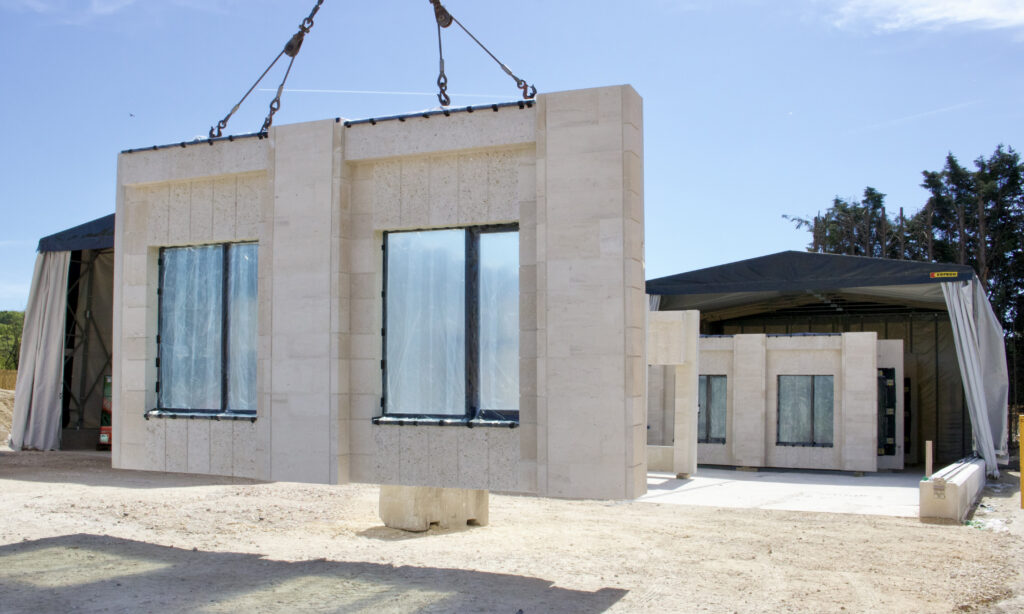
We encourage clients and design teams to consider whole-life value, durability and material longevity from the earliest stages of projects. Natural stone offers exceptional lifespan and low maintenance requirements compared with many short-life alternatives, and we actively advocate for solutions that reduce future replacement cycles and embodied carbon. We can build facades which are able to be removed and reused at a later date. We store a library of materials for reuse on future projects.
2. Does your work take account of the future climate and the need for resilience?
Stone is naturally durable and resilient, this together with our construction knowledge and manufacturing methods contributes to the longevity of a building. Natural stone performs exceptionally well over long periods and can withstand changing environmental conditions with minimal degradation.
By utilising modern CNC manufacturing techniques integrated directly with CAD design systems for both stone manufacturing and precast mould production, material usage is optimised with exceptional precision. This advanced approach significantly reduces waste generation, improves production efficiency, and minimises the need for reworking materials.
The increased accuracy and automation of the manufacturing process also lowers overall energy consumption and reduces reliance on fossil fuels, supporting a more sustainable and environmentally responsible production operation.
3. Does the majority of your work go beyond mitigating negatives and towards optimising positives?
We seek to create positive long-term outcomes through material stewardship, craft, durability and responsible construction. We work with natural materials that can last for centuries, support local economies and retain cultural significance over time. Building with stone ensures longevity whilst not compromising the aesthetic.
Co-evolving with nature
Practice
1. Do you use biophilia within your premises and/or do you regularly gather in natural settings?
As an organisation intrinsically connected to natural materials and landscapes, we maintain a strong awareness of the relationship between people, place and nature.
2. Can you share examples of where you have considered nature in decision making?
Environmental impact, material longevity and responsible sourcing are key considerations throughout our decision-making processes.
All masonry saws, from primary saws through to advanced 5-axis CNC machines, together with the automated polishing lines, operate using a closed-loop recycled water system. Process water is collected in settlement tanks where slurry and stone particulates are separated and removed, allowing clean water to be continuously recirculated back into production.
To further enhance environmental performance, rainwater harvesting systems collect and store water from the factory roof areas, supplementing the recycled water supply and removes reliance on mains fresh water. This sustainable approach minimises water consumption, reduces waste discharge, and supports responsible resource management throughout the manufacturing process.
3. Are you supporting nature locally and nationally?
We support responsible sourcing practices and work with suppliers and partners who recognise the importance of environmental stewardship.
Environmental stewardship and biodiversity are also central to our operations. We support the rehoming of orphaned Peregrine Falcons into nesting sites naturally formed within our quarry faces, helping to protect and encourage local wildlife populations. In addition, several of our facilities host beehives, supporting pollinator habitats and contributing to the long-term health and biodiversity of the surrounding environment.
Once a quarry is at the end of it’s quarrying life, we return it back to nature, complete with fawn and flora.
Project
1. Can you demonstrate work that strives to match the performance of a mature ecosystem?
Many of the projects we have been involved with are designed around principles of longevity, adaptability and material efficiency. Natural stone performs exceptionally over extended periods with minimal maintenance and can often be repaired, repurposed or reused rather than discarded. We have been the contractor on projects which involve ‘urban quarrying’ – removing the stone and repurposing for a new design. We also support precision manufacturing techniques that minimise waste and improve material optimisation. Through closed-loop water recycling systems, rainwater harvesting and material reuse strategies, we aim to reduce environmental impact across the full production cycle. While construction cannot fully replicate natural ecosystems, we believe durable, repairable and circular material systems are essential steps towards a more regenerative built environment.
2. Are you working on material stewardship?
Material stewardship is central to our approach. We believe stone specification should be responsible, based on durability, performance and long-term value rather than short-term cost alone. Sourcing, fabrication efficiency, transport and installation are carefully considered to reduce unnecessary waste throughout the supply chain. We support restoration, reclamation and reuse wherever possible, recognising the significant embodied carbon already held within existing materials and buildings. We can construct facades that are designed for future disassembly and reuse, and we maintain a library of reclaimed materials for incorporation into future projects. By combining traditional craftsmanship with advanced manufacturing technologies, we maximise material yield, improve precision and extend the lifespan of every project.
3. Does the majority of your work demonstrate the use of biologically-inspired approaches such as Bioregionalism, Biophilia or Biomimicry?
Our work strongly aligns with bioregional and biophilic principles through the use of local, natural materials connected to place, geology and landscape. Natural stone creates tactile, sensory connections between people and the built environment while supporting durability and timelessness. Our quarry restoration strategies also return quarries no longer being worked back to nature, encouraging biodiversity and habitat regeneration. While our work is not explicitly biomimetic, it reflects an understanding that construction should work with natural systems and material cycles rather than against them. We believe architecture should be grounded in permanence using local natural materials and stewardship is essential to regenerative practice.
Creating a just space for people
Practice
1. Do you have a progressive EDI policy and can you evidence many forms of diversity, which are welcomed and acknowledged, within your company/organisation?
Yes we have an EDI policy, we value diversity of experience, background and expertise across teams and collaborators.
2. Do you operate a no overtime culture, meet the living wage consistently, and stipulate a fair salary ratio between staff of all levels?
Our employees are valued members of staff and all remuneration and pay is significantly above the living wage. We recognise that the long-term health of the construction industry depends on supporting the wellbeing, stability and professional development of its workforce. We do allow overtime since our employees often request this.
3. Do you support charities, community groups, social enterprises, action groups and others through pro-bono work, charitable giving or in-kind donations?
We actively engage with and support local communities in a variety of meaningful ways. Our quarry environments provide valuable training locations for local Mountain Rescue teams, offering realistic and challenging conditions to help prepare emergency responders. We have also contributed stone to gardens showcased at the Chelsea Flower Show, which are later relocated to children’s hospices, extending their benefit well beyond the exhibition itself.
4. Do you use an ethical framework to assess opportunities and/or supply chain partners and is them team consulted on these decisions?
Responsible sourcing, quality and long-term value are important considerations within our decision-making processes. We visit overseas suppliers to check their ethical working environments.
Project
1. Does your work demonstrate deep engagement with local stakeholders and end users?
While we are not the designers for a project our work is highly collaborative and relies on early engagement with architects, consultants, contractors, local stakeholders and end users throughout the design and delivery process. We are often involved during pre-construction stages, where technical knowledge is shared openly to help shape long-term, sustainable outcomes. Many projects involve restoration, civic buildings, heritage assets and public spaces where sensitivity to place and community value is essential. By contributing specialist expertise early in the process, we help project teams balance aesthetics, durability, environmental responsibility. This collaborative approach ensures projects are built to endure for future generations.
2. Does your work create connected and resilient communities which positively contribute to neighbourhoods and allow equality of access?
We don’t design projects but our work contributes to the renewal and long-term preservation of civic, cultural and public spaces that support community life. Through restoration, adaptive reuse and high-quality public realm work, we help extend the lifespan of buildings and environments that form part of collective social infrastructure. Durable materials, careful detailing and long-term thinking all contribute to spaces that remain functional and resilient over time. Our work also supports regional industries, traditional skills and local supply chains, helping strengthen social and economic resilience beyond the buildings themselves.
3. Does the majority of your work promote equity in society, and consider all people, not only building inhabitants
We recognise that construction decisions affect communities, supply chains, future generations and the wider environment. Our emphasis on long-life materials, responsible sourcing and adaptive reuse supports a more equitable approach to resource use and environmental impact. By designing for longevity and future reuse, we aim to reduce wasteful replacement cycles and preserve embodied carbon for future generations. We also believe protecting traditional craftsmanship, supporting skilled employment and investing in knowledge-sharing contributes to broader social resilience. Through durability and responsible construction, we seek to create lasting value beyond the immediate building users.