
Submission by Cura Design.
Being a good ancestor
Practice
1. Does the practice have a clearly stated purpose aligned with the planetary emergency? We are looking for a bold ambition here, and a practice culture which recognises the need for long-term thinking. For example, a strong mission, a theory of change, or a sustainability roadmap.
Cura Design are one of the first architectural practices in the UK to offer biophilic design services. Cura Design are optimistic about the future and believe in solutions born of the heart and implemented through the latest technologies. We endeavour to best serve the natural world not by retreating from it and minimising our footprint, but by participating more fully as a new regenerative extension of ecology, protecting and enhancing biodiversity through integrating design and architectural technology with nature for our well-being.
2. Does the practice have a clear succession plan, which passes on ownership and protects the values and legacy of those who built and contributed to the practice? For example is the practice an employee owned trust.
No.
3. Does the practice share research and knowledge for the benefit of society and the wider world? For example, you regularly carry out post occupancy evaluation and share information with others.
Writing:
2023 Journal of Biophilic Design Issue 5 Creativity “Architects, image makers and storytellers, and the ongoing violence against nature and biodiversity and a small children’s theatre” pp 135-138
2023 Journal of Biophilic Design Issue 3 Healthcare “Union Corner Plymouth- A community centre with a reverence for life” pp126-129
2022 Journal of Biophilic Design Issue 2 Home “Landfall – Two extensions and a house” pp174-177
Speaking and podcasts:
2024 First Inaugural Biophilic Design Conference Barbican, London – Bridging the gap between research and practice “The architecture of Life – A journey, two community projects and three things learned” (Speaking)
2024 Home Building and Renovating Show London Excel Centre “Designing and building homes in AONBs and National Parks” (Speaking)
2022 Journal of Biophilic Design “Biophilic Cities and how Architectural Technologists can use Biophilic Design to support people and planet (Podcast)
2022 Home building and Renovating Show London Excel Centre “Biophilic Design “A master class on designing houses that can help to heal the natural world and heal and enhance the built environment and our well-being” (Speaking)
2021 Future Plymouth 2030 “Nature based solutions and Integrating nature into our buildings” (Podcast)
2021 Grey to Green Conference hosted by Plymouth University (Speaking)
2019 13th Biennial European Town and Town Planners Conference 2019 hosted by Plymouth University (Speaking)
Project
1. Does the practice advocate for long-term thinking at the outset of projects? Do you initiate projects with long-term thinking and challenge the client on design life? Also, can the practice demonstrate that this approach has worked – with a shorter or longer design life, or an innovative approach to financing or payback period?
My practice has received awards for its community projects in Plymouth (Best Community Project and People of Plymouth Award) where I have gained valuable experience and insights both into the planning process and in working with stakeholders in Plymouth such as Nudge Community Builders on groundbreaking ways to work with local communities including funding structures that have been replicated across the UK.
2. Do your projects take account of the future climate and the need for resilience? For example, do the projects demonstrate flexibility, design for adaptation, design for disassembly, non-deterministic solutions, or demountable structures.
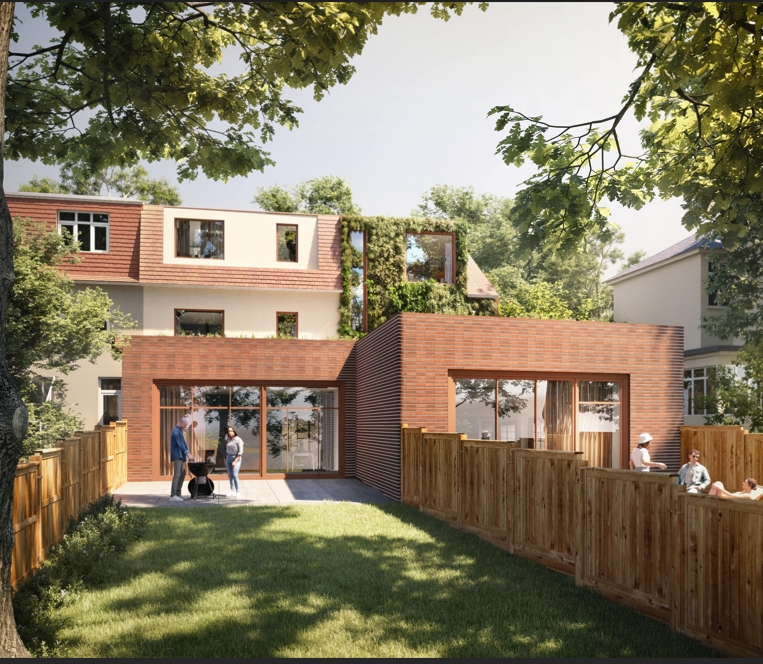
Particular projects demonstrate fundamental design knowledge gained early in my career from working for Sverre Fehn to experience designing large residential developments (both in the UK and abroad) and private residences in the UK to a current residential project just completed that includes cutting edge technologies including detailed working knowledge on ground source heating, pv panels and storage batteries, rainwater harvesting, fabric first building, and biodiversity enhancement measures all completed in a sensitive conservation area.
3. Do the majority of your projects go beyond mitigating negatives and towards optimising positives? For example, are they meeting or exceeding the RIBA 2030 Challenge.
Residential project in Topsham exceeds A-rating on the EPC. With the average rating in the UK currently sitting at D level, with a score of 60, we’re really proud to be achieving an A-grade and score of 110.
This property is also carbon negative, and rather than adding to the CO2 in our atmosphere, it’s actually removing 1.6tonnes per year. The project includes measures to increase biodiversity with bee bricks and bird boxes and garden landscaping.
Co-evolving with nature
Practice
1. Does the practice use biophilia within the office or regularly host meetings and retreats in natural settings? For example do you have extensive planting within the office or rely on natural patterns and imagery for stress relief or quiet areas.
My practice was one of the first practices to offer biophili design in the UK. The office is based in a shared community space in Plymouth though does include plants and imagery. The office encourages outdoor activities and forms of meditation and devotional singing.
2. Can the practice share examples where it has considered nature in decision making? For example by having a nature proxy to encourage eco-centric decision making, using natural systems as inspiration for the company structure, recognising the seasonal nature of people’s capacity and workload or celebrating equinoxes and solstices together.
Generally equinoxes and solstices are celebrated with devotional singing and ceremonies at these times.
3. Is the practice supporting nature locally and nationally? For example, does the practice support local gardens, gardeners, planting programmes, rewilding programmes or advocate for changes in legislation to protect nature.
I have a certificate in permaculture and support the local permaculture community both in Plymouth and Totnes. As a practice I have spoken about re wilding advocated for changes in legislation to protect nature.
Project
1. Can the practice demonstrate projects which strive to match the performance of a mature ecosystem? As a minimum this would mean achieving biodiversity net gain.
Biodiversity net gain has been achieved on 5 projects so far.
2. Is the practice working on material stewardship? For example, evidence could be shown through repeated use of low carbon materials, extensive material libraries and research or publications supporting responsible use of materials and elimination of waste.
No.
3. Do the majority of projects demonstrate the use of biologically-inspired approaches such as Bioregionalism, Biophilia, Biomimicry, Ecomimicry (also referred to as Ecosystems Thinking, Industrial Ecology or Industrial Symbiosis) or BioTRIZ?
See answers above. The office specialises in biophilic design. Robert Bedner was a speaker at London’s first Biophilic Design Conference held in the Barbican Centre in 2024 and has an in depth working knowledge and understanding of architectural design and the planning system. As a member of the Southwest Design Review Panel since 2014 Cura Design has completed over 175 projects and has a working area that extends from London to the southwest of the UK and further afield.
Cura Design has presented on podcasts and other events including Future Plymouth 2030 “Nature based Solutions and integrating Nature into our buildings”; Homebuilding and Renovating Show London 2021 through 2024; Plymouth Universities “Grey to Green” conference in 2021; The 13th Biennial European Town and Town Planners Conference 2019.
Creating a just space for people
Practice
1. Does the practice have a progressive EDI policy and can you evidence many forms of diversity, which are welcomed and acknowledged, within the practice?
I am a sole practioneer that employs consultants and students as required. I have employed both with backgrounds including China, France, Italy and Eastern Europe. My wife is of Japanese heritage.
2. Does the practice operate a no overtime culture, meet the living wage consistently, and stipulate a fair salary ratio between staff of all levels?
No.
3. Does the practice support charities, community groups, social enterprises, action groups and others through pro-bono work, charitable giving or in-kind donations?
The practice has completed the first dedicated children’s theatre in the Southwest West – Stiltskin Theatre as well as Union Corner Community Centre in Plymouth and has a continuing relationship with both community groups as well our office is based in a shared community space Leadworks in Plymouth city centre.
4. Does the practice publicly refuse to work with certain clients, suppliers or organisations on ethical grounds?
No.
Project
1. Do the projects demonstrate deep engagement with local stakeholders and end users? For example, is there evidence that your project engagement goes beyond consultation towards co-design?
Union Corner is a grass roots based community project. Similar to Stiltskin, the project is characterised by a high level of local participation of area residents and local businesses. The project was initially “crowd funded” financially and has also gained massive support in terms of time and materials and knowledge from local building construction businesses.
2. Do your projects create connected and resilient places which positively contribute to their neighbourhoods and allow equality of access? For example, do your projects create economic opportunity, retain value locally and generate social value?
The community projects for Stiltskin childrens theatre and Union Corner achieve this.
3. Do the majority of your projects promote equity in society, and consider all people, not only the building inhabitants? For example, do your projects show due regard for workers within the supply chain and take active steps to avoid modern slavery?
No.