
Submission by Civic.
Being a good ancestor
Practice
1. Does the practice have a clearly stated purpose aligned with the planetary emergency? We are looking for a bold ambition here, and a practice culture which recognises the need for long-term thinking. For example, a strong mission, a theory of change, or a sustainability roadmap.
New Practice is a recognised leader in architecture and built environment for social value and working on projects which are aligned to exploring, not exploiting; building, not destroying; re-using, listening and learning as we act urgently to tackle the climate emergency. Our response continues to evolve and grow.
Given the climate and societal change we must respond to and recognising that the environment functions as a single system, we’ve carefully curated a team centred around built environment engineering, alongside transport, heritage, archaeology, sustainability, and place-based consultancy. As part of Civic, we are passionate about our responsibility to leave a positive legacy through our work, for neighbourhoods now and the next generation. This is reflected in the vision we have set ourselves of having a positive impact on the environment and enabling people to lead healthier and happier lives.
2. Does the practice have a clear succession plan, which passes on ownership and protects the values and legacy of those who built and contributed to the practice? For example is the practice an employee owned trust.
New Practice is part of Civic. We recognise the significant role we have to play in creating thriving communities and a better future. Good and ethical governance is at the heart of our practice. We pursue transparent, resilient, and ethical decision-making and actions, ensuring our operations, policies, projects and supply network are fair, inclusive and planet positive. We make design choices on our projects, and actively collaborate with ethical partners and organisations to bring about positive change.
Being part of Civic, a system thinking team across built environment professions makes us resilient to the changing market and embeds values into the legacy of our practice.
3. Does the practice share research and knowledge for the benefit of society and the wider world? For example, you regularly carry out post occupancy evaluation and share information with others.
Yes.
Project
1. Does the practice advocate for long-term thinking at the outset of projects? Do you initiate projects with long-term thinking and challenge the client on design life? Also, can the practice demonstrate that this approach has worked with a shorter or longer design life, or an innovative approach to financing or payback period?
Yes.
2. Do your projects take account of the future climate and the need for resilience? For example, do the projects demonstrate flexibility, design for adaptation, design for disassembly, non-deterministic solutions, or demountable structures.
Climate sensitivity and its protection have been a founding feature of our practice, and we are industry leaders in the global effort to tackle the climate crisis. As signatories of ‘Architects Declare’ and ‘Engineers Declare’, we recognise the climate and biodiversity emergency, with a commitment to positive action.
Net Zero Carbon innovation is at the heart of our designs and operations. We are advocate change and transform the built environment through design and advice, and are committed to achieving the UN’s Race to Zero target of ‘Net Zero’ by 2050.
We champion sustainable and low carbon design, active travel and nature-based solutions. This includes prioritising the re-use and re-purposing of materials, buildings and infrastructure wherever possible, and the sharing of knowledge and carbon data with our clients, collaborators and peers across the communities that we work.
3. Do the majority of your projects go beyond mitigating negatives and towards optimising positives? For example, are they meeting or exceeding the RIBA 2030 Challenge.
Yes.
Co-evolving with nature
Practice
1. Does the practice use biophilia within the office or regularly host meetings and retreats in natural settings? For example do you have extensive planting within the office or rely on natural patterns and imagery for stress relief or quiet areas.
Our Glasgow base is testing a number of different green interiors in both permanent and temporary solutions.
2. Can the practice share examples where it has considered nature in decision making? For example by having a nature proxy to encourage eco-centric decision making, using natural systems as inspiration for the company structure, recognising the seasonal nature of people’s capacity and workload or celebrating equinoxes and solstices together.
Nature based Solutions.
3. Is the practice supporting nature locally and nationally? For example, does the practice support local gardens, gardeners, planting programmes, rewilding programmes or advocate for changes in legislation to protect nature.
No.
Project
1. Can the practice demonstrate projects which strive to match the performance of a mature ecosystem? As a minimum this would mean achieving biodiversity net gain.
Yes.
2. Is the practice working on material stewardship? For example, evidence could be shown through repeated use of low carbon materials, extensive material libraries and research or publications supporting responsible use of materials and elimination of waste.
Yes.
3. Do the majority of projects demonstrate the use of biologically-inspired approaches such as Bioregionalism, Biophilia, Biomimicry, Ecomimicry (also referred to as Ecosystems Thinking, Industrial Ecology or Industrial Symbiosis) or BioTRIZ?
No.
Creating a just space for people
Practice
1. Does the practice have a progressive EDI policy and can you evidence many forms of diversity, which are welcomed and acknowledged, within the practice?
Yes.
2. Does the practice operate a no overtime culture, meet the living wage consistently, and stipulate a fair salary ratio between staff of all levels?
Yes.
3. Does the practice support charities, community groups, social enterprises, action groups and others through pro-bono work, charitable giving or in-kind donations?
Yes.
4. Does the practice publicly refuse to work with certain clients, suppliers or organisations on ethical grounds?
No work in Saudi.
Project
1. Do the projects demonstrate deep engagement with local stakeholders and end users? For example, is there evidence that your project engagement goes beyond consultation towards co-design?
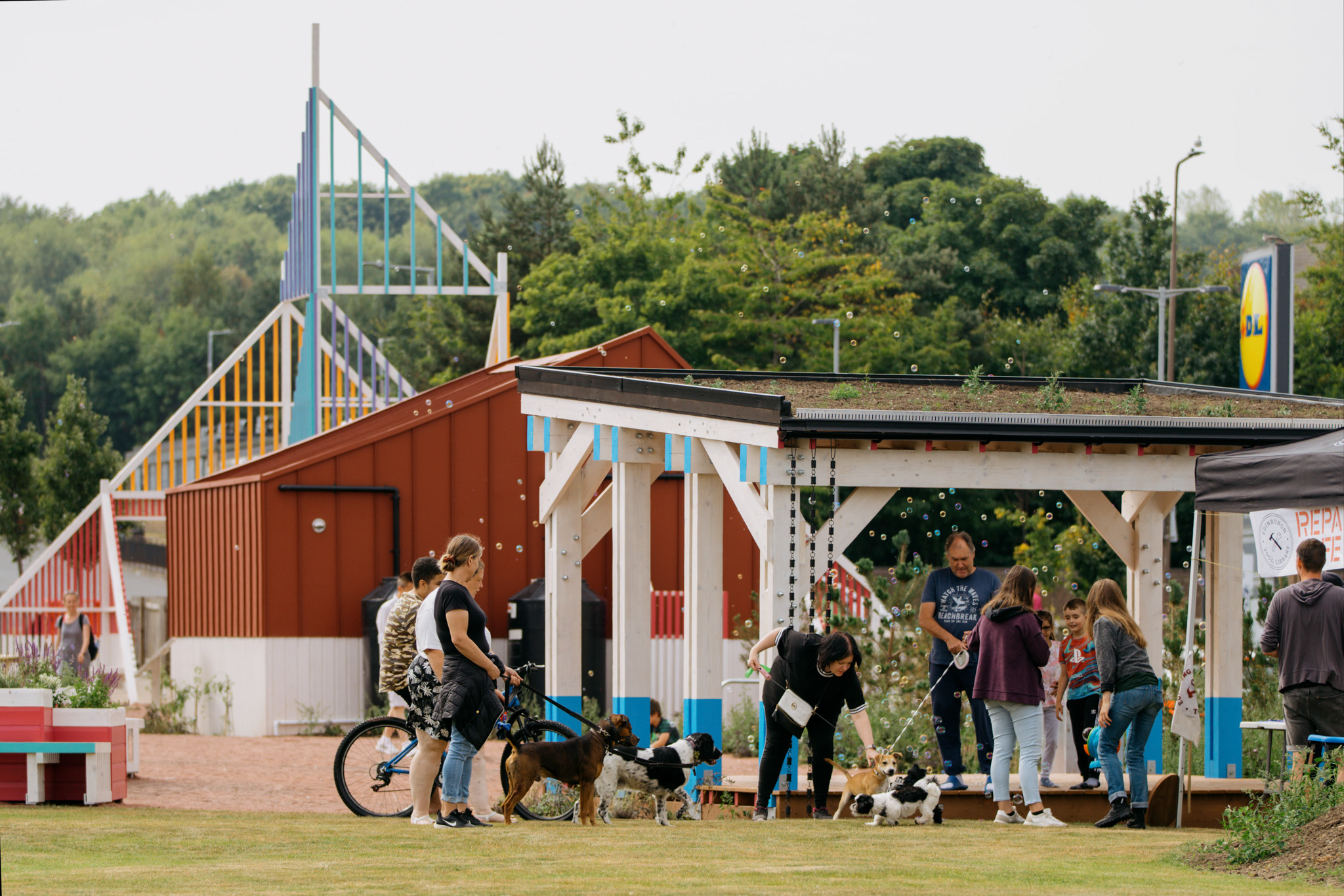
We help our clients build honest relationships with communities through inclusive, creative community engagement and codesign programmes. Our experts are committed to delivering inclusive community engagement to create projects that are both reflective of, and show respect for, the neighbourhoods they will become a part of.
Our team works with people across diverse and under-represented communities to ensure projects are accessible and relevant for and to as many people as possible.
We work directly with communities to encourage and support individual, social, civic and inter-cultural participation with the built environment. We do this through positive stewardship, active collaboration, digital and in-person conversations. Our team works with every part of the community to draw out local knowledge, strengthen networks, create new links and enhance those that already exist.
2. Do your projects create connected and resilient places which positively contribute to their neighbourhoods and allow equality of access? For example, do your projects create economic opportunity, retain value locally and generate social value?
We are placemaking experts passionate about developing the community, creative and cultural capacity of places and connecting the people who live and work in them with the decision-making processes that impact their localities.
Our team believes in the creation of people-focused, community-centred briefs that bring forward the principle of shared decision making, to inclusively shape the future of the built environment that makes up our neighbourhoods, towns and cities. The importance of social value underpins our practice. This ensures we actively enable and deliver projects that place people first, fundamentally build communities and protect our planet’s resources. Design has the power to create lasting, positive change and create places that are environmentally responsible, socially just and economically resilient, so people can lead healthier, happier lives. We foster intergenerational belonging, support local capacity building and cultivate shared ownership, places and policy to create equitable, connected and thriving places.
We centre sustainability, community-led impact and shared learning in our placemaking, embedding knowledge exchange and skills transfer at every stage, a reflection of Civic’s ethos.
3. Do the majority of your projects promote equity in society, and consider all people, not only the building inhabitants? For example, do your projects show due regard for workers within the supply chain and take active steps to avoid modern slavery?
We are committed to building honest relationships with communities of all shapes and sizes. We do this through the design and delivery of creative engagement and codesign programmes. Our team use strategic devices including public facing activities, temporary events and built interventions to support the creation of compelling and realistic recommendations for our clients.
The process of designing and making a place for us is in the journey we take with the community, who best understand their spaces, places and needs.
We believe we have a responsibility to create places where people can be themselves in comfort, and places that allow people to shape it as they grow and change, a reflection of Civic’s system thinking ethos.