
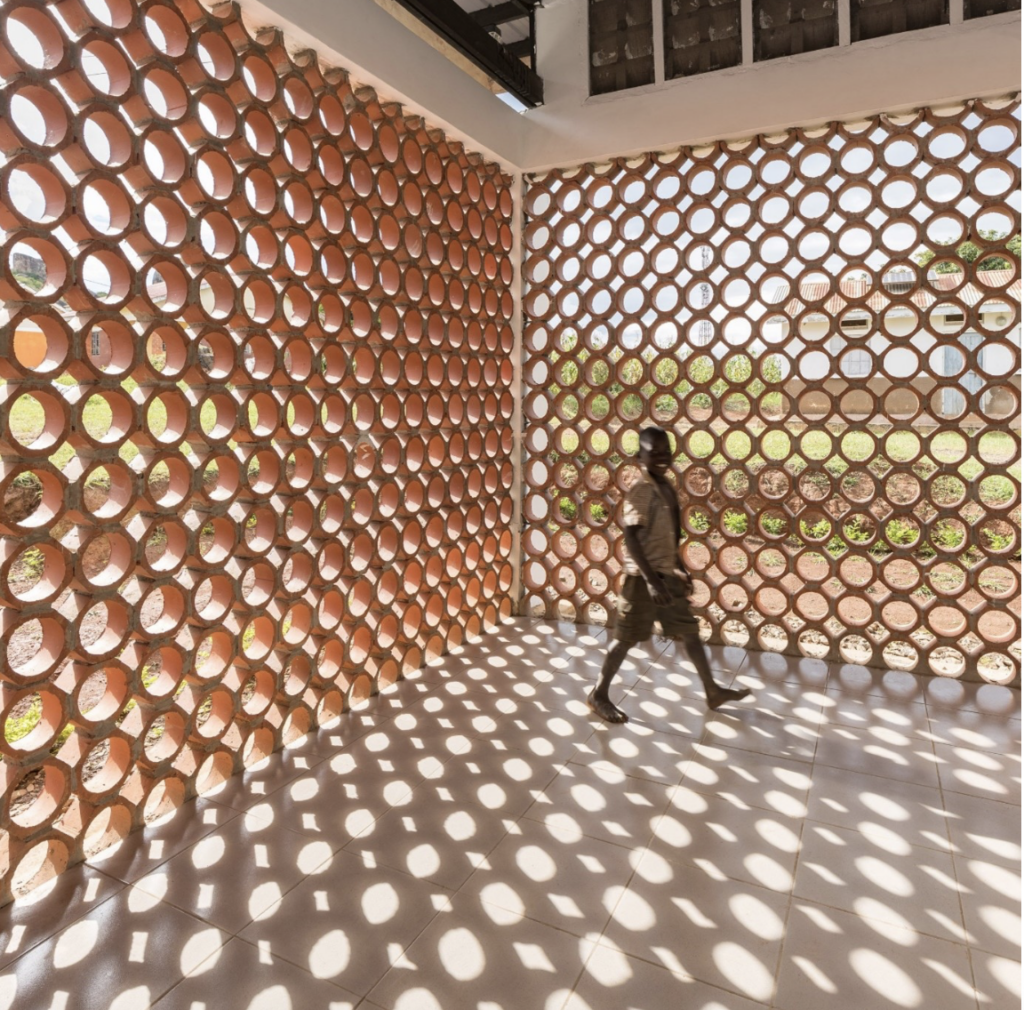
Submission by HKS Inc.
Being a good ancestor
Practice
1. Does the practice have a clearly stated purpose aligned with the planetary emergency? We are looking for a bold ambition here, and a practice culture which recognises the need for long-term thinking. For example, a strong mission, a theory of change, or a sustainability roadmap.
We are an architecture, design and advisory and planning practice built around a suite of dynamic professional services that support our clients’ business objectives. Environmental, Social and Governance (ESG), is an evolved and holistic business model that allows HKS to operate in a way for the common good leading to increased sustainability, social equity, prosperity, and resilience for all people, the planet and economy.
HKS has achieved carbon neutrality by measuring and reducing our greenhouse gas emissions, and by investing in a curated portfolio of high-quality carbon offset projects that not only mitigate our environmental impact but also align with our commitment to social equity and the United Nations Sustainable Development Goals.
2. Does the practice have a clear succession plan, which passes on ownership and protects the values and legacy of those who built and contributed to the practice? For example is the practice an employee owned trust.
Our firm operates with a defined partnership structure, where partners serve as shareholders. This model reinforces a long-term commitment to the health and stability of the practice. A transparent hierarchy and leadership development pathway are shared openly with all staff, providing clarity on how leadership is cultivated and transitioned
This structure supports thoughtful succession planning and ensures that the values driving HKS’s design excellence, collaboration, and social impact that remain central as the firm evolves. By planning intentionally for the future, we create a resilient foundation for the next generation of leaders.
3. Does the practice share research and knowledge for the benefit of society and the wider world? For example, you regularly carry out post occupancy evaluation and share information with others.
Yes, at HKS we have an incredible research department which has a team dedicated only to research and a broader, practice-embedded network of designers who contribute across the firm. The centralized research engine fuels our limitless thinking, dedicated to both speculative and applied research, within a dual pronged model of Applied Design Research (practice assimilation) and Enterprise Research (foundational research). This work is guided by our ABCDE research engine, which prioritizes advancements in AI, Brain Health, Carbon, Data, and Equity to drive meaningful design outcomes. We also conduct post occupancy evaluations to look at how we can improve our designs. We regularly share our R&D work openly with the architecture and construction industry.
Project
1. Does the practice advocate for long-term thinking at the outset of projects? Do you initiate projects with long-term thinking and challenge the client on design life? Also, can the practice demonstrate that this approach has worked – with a shorter or longer design life, or an innovative approach to financing or payback period?
We incorporate Life Cycle Cost Estimation (LCCE) to evaluate and communicate the financial and operational implications of design decisions over a building’s 60-year life span. This process allows us to guide clients toward solutions that may have higher upfront costs but deliver significantly greater value over time–through energy savings, reduced maintenance, adaptability, and resilience.
By presenting tangible payback timelines and long-term benefits, we help shift project conversations beyond initial budgets to focus on sustained performance, flexibility, and environmental stewardship.
2. Do your projects take account of the future climate and the need for resilience? For example, do the projects demonstrate flexibility, design for adaptation, design for disassembly, non-deterministic solutions, or demountable structures.
HKS projects actively account for future climate realities and prioritise resilience through forward-thinking, adaptable design strategies.
Our Resilience Design Toolkit is a key resource developed to help design teams integrate climate-responsive thinking early in the project lifecycle. It emphasizes flexibility, design for adaptation, and long-term performance ensuring that buildings are prepared for a range of future conditions, not just current risks.
HKS also champions non-deterministic and demountable design solutions where appropriate, enabling spaces to evolve as community needs and environmental pressures change. Through scenario planning and site-specific analysis, our teams identify ways to reduce vulnerability while enhancing performance, functionality, and social value.
This proactive approach supports communities in adapting to future uncertainties creating durable, responsive, and high-performing environments that are both sustainable and regenerative.
3. Do the majority of your projects go beyond mitigating negatives and towards optimising positives? For example, are they meeting or exceeding the RIBA 2030 Challenge.
No.
Co-evolving with nature
Practice
1. Does the practice use biophilia within the office or regularly host meetings and retreats in natural settings? For example do you have extensive planting within the office or rely on natural patterns and imagery for stress relief or quiet areas.
Our offices feature extensive indoor planting and green elements that foster a natural, calming atmosphere. Beyond physical greenery, we incorporate natural patterns, textures, and dedicated quiet zones inspired by biophilic design.
Our internal research team studies the impact of biophilia on occupant health and performance. This includes ongoing research into daylight access and circadian rhythm alignment, ensuring that our spaces support both physical and mental well-being throughout the day. We are founding members of the Building Brains Coalition , a cross-disciplinary partnership focused on improving cognitive performance and mental well-being through the built environment, where biophilic design plays a central role.
By combining lived experience with scientific analysis, HKS not only applies biophilia in our spaces but also advances industry understanding of its measurable benefits of creating healthier, more restorative environments for our team and clients alike.
2. Can the practice share examples where it has considered nature in decision making? For example by having a nature proxy to encourage eco-centric decision making, using natural systems as inspiration for the company structure, recognising the seasonal nature of people’s capacity and workload or celebrating equinoxes and solstices together.
No.
3. Is the practice supporting nature locally and nationally? For example, does the practice support local gardens, gardeners, planting programmes, rewilding programmes or advocate for changes in legislation to protect nature.
As part of our ESG in Design celebrations this year, HKS partnered with The Conservation Volunteers (TCV) to help rewild a previously neglected park–transforming it into a vibrant, usable green space for the local community and children. This initiative reflects our ongoing commitment to urban ecology and community well-being.
Through Citizen HKS, our public interest design and volunteer initiative, we lead long-standing efforts around the world to support planting programs, garden builds, and the stewardship of public spaces in partnership with local communities. Additionally, members of our team contribute their expertise to support government agencies and urban programs focused on sustainable development and ecological resilience.
These efforts underscore our belief that design should not only serve people, but also regenerate the natural environments that support them.
Project
1. Can the practice demonstrate projects which strive to match the performance of a mature ecosystem? As a minimum this would mean achieving biodiversity net gain.
No.
2. Is the practice working on material stewardship? For example, evidence could be shown through repeated use of low carbon materials, extensive material libraries and research or publications supporting responsible use of materials and elimination of waste.
Recognising the need for accessible material impact data, HKS launched the MINDFUL MATERIALS initiative in 2014. A pioneering effort to provide clear, standardized information on chemical content and environmental performance. The initiative began with a simple yet powerful labelling system, which quickly gained traction and is now widely used by designers and manufacturers across the industry.
In practice, we routinely conduct Life Cycle Assessments (LCAs) and explore multiple material iterations to ensure our clients understand the environmental impact of their choices. Our material libraries emphasise low-carbon, high-performance products that support circular design strategies.
Our material subject matter experts contribute to national efforts, including the Metropolis Sustainability Lab, the Healthy Materials Lab at Parsons, and industry collaborations on material transparency and regenerative design. HKS also developed a Chemicals of Concern Awareness Assessment and Guidance Tool to help project teams make healthier, more informed material choices across all building types. We also maintain a formal review and audit process for manufacturers who present materials in our studios and libraries, ensuring alignment with our environmental and health criteria. These combined efforts reflect our evolving commitment to material innovation and the elimination of waste in service of both planetary and human health.
3. Do the majority of projects demonstrate the use of biologically-inspired approaches such as Bioregionalism, Biophilia, Biomimicry, Ecomimicry (also referred to as Ecosystems Thinking, Industrial Ecology or Industrial Symbiosis) or BioTRIZ?
No.
Creating a just space for people
Practice
1. Does the practice have a progressive EDI policy and can you evidence many forms of diversity, which are welcomed and acknowledged, within the practice?
We are committed to a workplace where all individuals are treated with dignity and respect. HKS strictly prohibits discrimination based on age, disability, ethnicity, gender, gender identity, marital status, national origin, political affiliation, race, religion, sexual orientation, or any other protected status. Our policies also ensure a harassment-free environment and uphold the highest standards of human rights, including protections against forced labour, trafficking, and underage employment. In practice, HKS maintains a global social equity strategy focused on career development, leadership representation, and a sense of belonging. We publish workforce demographic metrics, support employee resource groups, and provide training on unconscious bias and inclusive leadership. We have also appointed a Director of Social Equity to embed this work across our projects and operations, ensuring that our culture of inclusion informs both internal decision-making and the spaces we design. HKS actively safeguarded through clear, enforceable policies and inclusive practices, as evidenced in our organization-wide commitment.
2. Does the practice operate a no overtime culture, meet the living wage consistently, and stipulate a fair salary ratio between staff of all levels?
We uphold a strong internal culture of equity and well-being, where fair compensation practices are a cornerstone. Our promotion process is designed to ensure inclusive, structured decision-making and transparency. This helps safeguard against discrimination in professional advancement. HKS has also established internal guides to support and promote career growth from within. We support work-life balance through flexible work policies and sustainable project planning, aligning our commitments with industry benchmarks and our core values.
3. Does the practice support charities, community groups, social enterprises, action groups and others through pro-bono work, charitable giving or in-kind donations?
Yes, HKS supports a wide range of organizations through pro bono work, charitable giving, and in-kind donations via its public-interest design initiative, Citizen HKS. Since 2014, Citizen HKS has led nearly 50 pro bono design projects globally, contributed over 33,000 volunteer hours, and raised $570,000 to support communities in need. These efforts have aided more than 870 community organizations, including social service nonprofits, health clinics, educational and recreational centers, and food banks. Citizen HKS has engaged in initiatives supporting inclusion and neurodiversity, including the creation of sensory well-being hubs for neurodiverse youth and sensory rooms for dementia care at senior living communities. Through these diverse efforts, HKS demonstrates a strong commitment to leveraging its resources and expertise to support and uplift communities in need.
4. Does the practice publicly refuse to work with certain clients, suppliers or organisations on ethical grounds?
We take care to assess potential clients, suppliers, and collaborators to ensure alignment with our practice’s ethos and long-term vision. Our internal review processes allow us to make informed decisions that reflect our commitment to responsible design, community impact, and environmental stewardship.
When necessary, we reserve the right to decline opportunities that may not align with our standards or project principles. This helps us maintain the integrity of our work and ensures we contribute meaningfully to the built environment.
Project
1. Do the projects demonstrate deep engagement with local stakeholders and end users? For example, is there evidence that your project engagement goes beyond consultation towards co-design?
HKS projects demonstrate deep, multi-layered engagement with local stakeholders and end users moving beyond consultation into meaningful co-design.
Our Nature of Place (NoP) framework is central to this approach. It guides design teams in uncovering the unique character, challenges, and opportunities of each location ranging from the hyperlocal neighbourhood to the regional scale. This process integrates insights from five key stakeholder groups: the earth, clients and users, investors, the broader community, and the design team itself.
The NoP is more than a checklist; it’s a collaborative discovery tool used before design begins. It fosters informed, inclusive decision-making through Eco-Charrettes and High-Performance Design workshops, where local voices help shape the vision, goals, and strategies for each project.
By using NoP, HKS ensures that every project is rooted in place, purpose, and shared understanding–delivering lasting social and environmental value through truly co-created design.
2. Do your projects create connected and resilient places which positively contribute to their neighbourhoods and allow equality of access? For example, do your projects create economic opportunity, retain value locally and generate social value?
HKS projects are designed to create connected, resilient places that positively contribute to their communities, promote equity, and generate lasting social and economic value.
Central to this is our Resilience Design Toolkit, a flexible 5-step process developed through internal research and inspired by leading industry tools. It guides project teams in embedding resilience thinking early in the design process, ensuring environments can withstand hazards and recover quickly while supporting inclusive access and long-term community value.
This approach fosters economic opportunity, sustains local value, and enhances social infrastructure. In 2022, the AIA Resilience & Adaptation Advisory Group recognized the toolkit’s impact, forming a partnership with HKS to share it nationally amplifying our commitment to resilient and equitable design on a broader scale.
3. Do the majority of your projects promote equity in society, and consider all people, not only the building inhabitants? For example, do your projects show due regard for workers within the supply chain and take active steps to avoid modern slavery?
We have clear, enforceable guidelines to ensure ethical labour practices and social responsibility, including strict standards for avoiding modern slavery and human trafficking. Our Labor and Human Rights Policy upholds fair treatment, prohibits forced or underage labour, ensures dignity and respect for all workers involved in our projects. HKS London also maintains a dedicated Modern Slavery Policy.
We are proud sponsors of the Design for Freedom initiative by Grace Farms Foundation, which eliminates forced labour from the building materials supply chain. As part of this commitment, we launched Hunger Busters in Dallas, researching methods of integrating ethical material procurement as part of the design process.
This commitment influences how we select partners and suppliers, prioritizing transparency, responsible sourcing, and adherence to international labour standards. By embedding equity and ethical awareness into every stage from material procurement to design we help create environments that support justice, inclusivity, human dignity on a systemic level.