
Digg & Co, Feilden Fowles, Stride Treglown and Charlie Luxton Design are among the practices discussing how they use biophilia within their offices, and/or regularly host meetings and retreats in natural settings.
Co-evolving with nature
Responses to the practice questions were assessed by Architects Declare members Carrie Behar, Laura Baron, Tom Gibson, Kevin Logan, Anna Pamphilon, Kat Scott, and Jacqueline Wheeler, with expert input from RAI ambassador Phoebe Tickell – renegade scientist, systems thinker and social entrepreneur.
Practice Question 1
Does the practice use biophilia within the office or regularly host meetings and retreats in natural settings? For example do you have extensive planting within the office or rely on natural patterns and imagery for stress relief or quiet areas?
Front-runners
Digg & Co
Biophilia is deeply embedded in our studio culture – not just as a design principle, but as a way of life. We consciously cultivate a rhythm of work and rest in our daily practice, recognising that time spent in nature fosters creativity, resilience and well-being.
We’re fortunate to be based at Mill Barton Farm, where we’re immersed in a living landscape, surrounded by fields, trees and animals. Our team regularly takes part in Farm Gym Days, which might involve moving the herd of Red Devon cows, tending to the vegetable patch, planting around the studio, laying hedgerows, or tree-planting across the farm. These hands-on, seasonal tasks ground us in the cycles of the land and reinforce our connection to place.
We also encourage each team member to take a ‘Session Day’ whenever needed – a dedicated day outdoors, spent doing something they love, completely offline and restorative.
Feilden Fowles
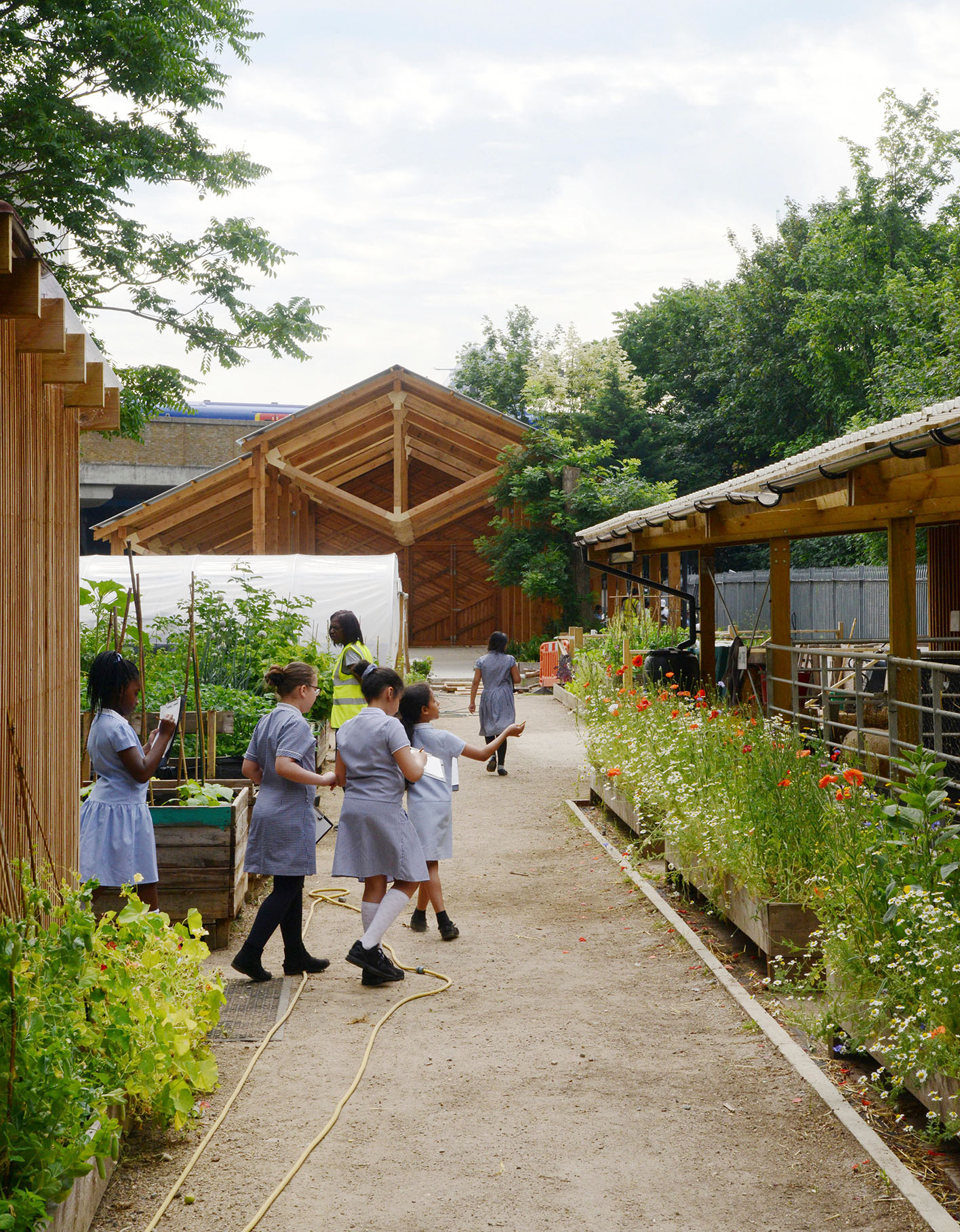
Yes, our self-built studio is conceived as part of a wider walled-garden in Waterloo, where we have equal indoor and outdoor space. The garden provides a visual connection to nature throughout the days and seasons, and we use it for meetings, lunches and celebrations. Our work is often landscape-led, and we believe it’s important our studio reflects our values and interests. We have fruit trees, seasonal planting, and celebrate and use the run-off from the studio.
The studio is designed around natural and low-tech principles, optimised to harness direct light and warmth from the south, with an asymmetric pitched roof generating a clerestory window offering diffuse north light deep into the plan. The beams cantilever outdoors, forming a covered walkway, doubling to shade the south-facing glazing in the summer months. A slight angling of the northlights creates a small zone between the glass and north wall, stimulating passive and cooling cross-ventilation.
Runner-up
Stride Treglown
Several years ago, recognising the value of biophilic design, we set aside a budget for all our offices to introduce planting. Our Bath office has been transformed with large plants dotted throughout the space. All our visitors comment on the attractive atmosphere and employees have said that they can’t imagine the space without them any more. In Bath we also drew some wall art – a mural of a large, silhouetted tree branch in our main meeting room – which as much as providing a calming biophilic backdrop to the meeting space, also represents ‘nature at the board room table’, a reminder for everyone in meetings that nature is also a stakeholder.
Many of our offices have outside meeting spaces and outdoor meetings are encouraged. Our company-wide get together this year will be a festival type event with lots of activities planned in a field and woodland setting north of Bristol.
Ones to watch
Charlie Luxton Design
The studio is located in rural north Oxfordshire within 1.2 hectares of ‘wilding’ landscape. We have planted more than 700 trees and 2,500-square-metres of wildflowers to offset the carbon emitted by the office construction and operation. The team use the surroundings daily for walks and breaks, which we encourage.
We have a varied collection of indoor plants and an office dog called Brandi who always requires walking at lunchtimes and eats the wild strawberries that grow outside on the terrace.
A sustainable ‘no dig’ flower farm is also being established on the land, which will further enrich the biodiversity and natural surroundings of the practice’s home.
JTP
During design and construction of our studio, a biophilia plan was considered and implemented. Plants and even trees are placed throughout the studio in key locations to enhance the well-being of employees and visitors alike.
We try to host meetings and retreats in locations connected to nature, and recognise the health and wellbeing benefits of doing so. As a group of partners, we recently had an away day to the rewilding project in Knepp, where we went on a guided walking safari, learning about rewilding projects and how to allow nature and biodiversity to flourish. Liz, our Sustainability Lead, helped arrange the Architecture Heads of Sustainability camping weekend in Somerset (June 2024), providing a forum for likeminded sustainably-oriented practitioners to connect and share knowledge, with a series of workshops and talks embedded within nature.
Cullinan Studio
This is a huge part of our Design with Nature purpose and mission, and we aspire to practice what we preach:
- Recent practice Visioning Days have taken place in natural settings, such as the RHS Garden Hyde Hall, and the Bankside Open Spaces Trust
community gardens. - Our most recent practice team building trip was to the Cairngorms in the Scottish Highlands.
- We use our self-planted canalside guerilla garden at our London studio and the Regents Canal for walking meetings, as part of our mentoring programme for newer team members.
- We have grade II* listed timber roof trusses in our naturally-ventilated studio space.
- We have more than 40 potted plants in our studio and meeting spaces, mostly selected from the NASA list of air purifying plants, and we propagate these to extend our collection.
CSK Architects
A couple of years ago we introduced two large indoor trees and a collection of plants into the office, which are supervised by a ‘Director-in-Charge of Watering’! Most of this greenery is placed around a new quiet area focussed on a large bespoke sofa made with natural cattleloft and wool upholstery, and designed for disassembly.
Communal activities range from sound bath guided meditation to making clay bells of intention for our local trader’s association. Some of our outdoor events include dragon boat racing to highlight rising sea levels, and last year’s inaugural ‘CSK Olympics’, which was creatively led by our own real-life ‘strongman.’
Otherwise, office outings tend to focus on expanding our knowledge of natural materials, such as a hemp cladding factory, a rammed earth site visit, Grymsdyke Farm, and an earth block workshop. But a collective activity in the wider landscape is relatively easy in our location and we will put this to the office.
Project Orange
We believe our connection with nature has been damaged, and we have a duty to repair and enhance where we can.
Our studio is set into a small garden with an olive tree where we grow fruit and herbs. We have a table and chairs on our terrace where we regularly have meetings in summer. We are able to compost our waste. An outside kitchen area allows us to prepare food. Inside, we’ve clad the interior with reclaimed timber, and our desks are bamboo with natural linoleum surfaces. Our meeting room is clad in natural felt to give better acoustics, as well as provide comfort. It is a gentle space to work from where we can witness the seasons.
We also run our village Hidden Gardens (last year we raised £10k for local charities), and open our own garden, located across the road from the studio (so zero commute).