
Practices, including Exploration Architecture, Feilden Clegg Bradley Studios, Donald Insall Associates, and Greengage Environmental, explain how the majority of their projects go beyond mitigating negatives and towards optimising positives.
Being a good ancestor
Responses in this section were assessed by Architects Declare’s Alasdair Ben Dixon, Tom Gibson, Deepthi Ravi, Zoe Watson and Jacqueline Wheeler, with expert insight from Regenerative Architecture Index ambassador, social philosopher and author Roman Krznaric.
Projects Question 3
Do the majority of your projects go beyond mitigating negatives and towards optimising positives? For example, are they meeting or exceeding the RIBA 2030 Challenge?
Front-runner
Exploration Architecture
Since 2018, mitigating negatives and optimising positives has been the aim on all our projects. For the CTB Garden City project (in partnership with another practice) we developed an ambitious brief based on four headings: being a good ancestor, let nature lead, promote circular resource use, and a place for everyone (some of the content was later incorporated into the Architects Declare Regenerative Design Primer).
The project was won in competition by making regenerative design a prominent part of the pitch, including ideas such as interbeing (seeing all life as connected), symbiogenesis (the idea that social infrastructure can lead to a self-reinforcing cycle of improvements), and Dunbar clusters of homes that enhance social interaction.
Our proudest achievement is the Sahara Forest Project Pilot Facility in Qatar, which proved that it is possible to restore deserts to a level of biodiversity that, according to historical records, was common in many arid regions.
Runner-up
Feilden Clegg Bradley Studios
Through our work with LETI, we supported the RIBA developing the RIBA 2030 Climate Challenge embodied carbon targets. We have also worked to our own ambitious timeline to reach net zero across our projects by 2030.
Our work on Eden Project Dundee (RIBA stage 4 in 2025) has followed a Regenerative Design approach that is biobased, aiming to use existing materials from waste streams, and supporting local economic development.
We use a number of tools to measure and assess impacts throughout design, keeping a positive dialogue going with our clients and consultants. We were founding partners of One Planet Living, using its framework to monitor all aspects of a project’s holistic sustainability – from potable water use to education to community and social justice. The One Planet Living framework echoes the UN SDGs and taken as a whole is a regenerative framework. We pioneered this approach at One Brighton in 2009.
Ones to watch
Donald Insall Associates
All of our projects aim to actively restore and enhance ecological and social systems. This requires a shift from minimising harm to creating net-positive outcomes, such as improving biodiversity, generating renewable energy, and strengthening community resilience. It starts with a clear, place-specific vision – developed collaboratively with stakeholders – and continues through design, construction, and post occupancy.
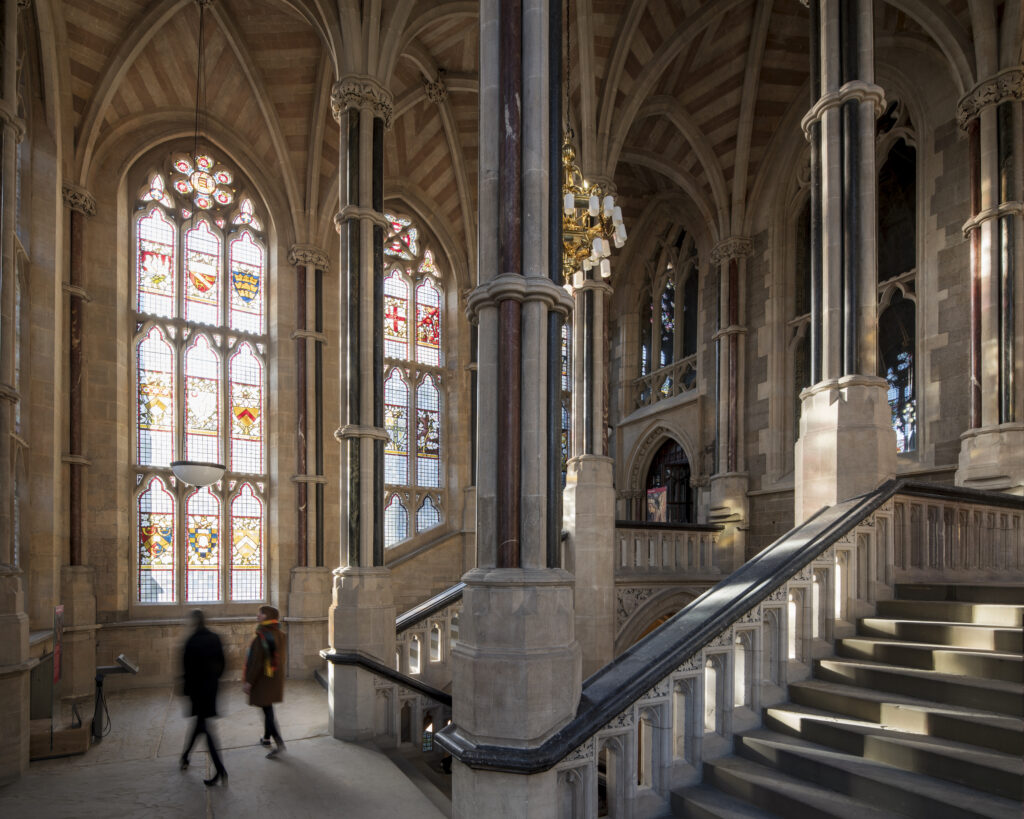
Our Rochdale Town Hall project best exemplified a shared understanding of positive outcomes, which we progressed with delivery partners to empirically prove through post-occupancy evaluation that these had been met. We also use these principles to train all of our technical staff so they can embrace natural systems, use circular and low-carbon materials, and support long-term stewardship. We do not currently adopt the RIBA 2030 Challenge due to client restrictions in historic and secure buildings for post-occupancy evaluation, which we are trying to influence and advocate for.
Greengage Environmental
Our projects go beyond mitigating negative effects and towards optimising positives. On the Exchange Square project in the City of London, our advice ensured a 61 per cent reduction in embodied carbon. Our Biodiversity projects deliver net gains on all of the sites we work on, with an emphasis of onsite net gain as the priority. We are also leading the way in terms of environmental net gain and using ecosystem services valuation tools to demonstrate net gain.
We have prepared multiple corporate strategies for biodiversity and social impact, which commit major private sector organisations to go beyond mitigating negative impacts and legal/policy compliance. A good example is Grosvenor Property UK’s Biodiversity Framework, an innovative strategy Greengage prepared for the delivery of improved biodiversity-linked environmental performance across its standing portfolio and future developments. We have prepared similar strategies for British Land, Canary Wharf, Landsec, Hibernia and many more.
Howells
Some small projects have long optimised the positives. Championing biodiversity while also minimising embodied carbon, the Savill Building – located in Windsor Great Park and completed in 2006 – includes a timber engineered structure, with rainscreen cladding and floor finishes made from timber grown within the park in which it sits. All mature trees were retained and the arboretum was expanded with native species.
Currently most projects, including masterplans, commit to be planet- and people-friendly, with holistic KPIs from energy and embodied carbon to nature improvement and social value. Today, our retrofit projects are driven by a design intent to preserve valuable historical assets, as well as a collective awareness of the urgency to minimise our carbon footprint.
The net zero design strategy for Birmingham’s Typhoo Tea Building entails the reuse of 70-80 per cent of existing structural elements, daylight brought to a deep plan, and an intelligent roof that manages heat build-up, harvests rainwater and generates solar power.
Maccreanor Lavington
We have adopted a regenerative design approach in our masterplanning, moving beyond traditional metrics to create genuine positive impact. While we track the RIBA 2030 metrics, we also design within environmental budgets for water, energy, food, and waste.
At London’s Bow Goods Yard – one of the first masterplans submitted for planning to integrate a regenerative strategy – we focused on making the most of onsite resources and challenging conventional approaches to resource use, including energy-positive buildings and greywater reuse.
Our MNEX project for East Belfast envisions a resilient, self-sufficient city by integrating food, water, and energy systems. It promotes local food production, enhances nutrition, and supports sustainable consumption and equality. At Heathrow, we proposed bioremediation of contaminated land and large-scale tree planting. This restores ecosystems, improves biodiversity, and creates local green jobs through coppicing. These projects reflect our commitment to delivering long-term environmental and social value beyond red line boundaries.
Positive Collective
The central theme of positive outcomes for all our work is the reason for the Positive Collective name. Our approach to regenerative design includes the shift in mindset towards a ‘seva’ approach. This includes social and nature benefits, not only carbon positive methods as explained in the case study examples of The Positive House design with positive community and positive carbon outcomes.
This has led into how we can create a new system of development, such as the work the Positive Collective did with Igloo and We Can Make for the Climate Smart Cities Challenge in Bristol. The approach, which we called The Civic X Change, was a community-led, retrofit and infill new-build programme that allowed residents to right size their living – while staying in their communities – and radically lower carbon impacts. This helps significantly exceed existing frameworks, such as the RIBA 2030 Challenge.