
Submission by Plan A Consultants.
Being a good ancestor
Practice
1. Do you have a clearly stated purpose aligned with the planetary emergency? We’re looking for a bold ambition here, and a culture which recognises the need for long-term thinking.
Addressing the planetary emergency is one of the ten founding principles forming the basis of what guides us. A core “Act Now” commitment drives year-on-year accountability for environmental impact, supported by an ISO 14001:2015-certified Environmental Management System that translates stated intent into measurable, auditable outcomes.
In practice, that means a 30% reduction in energy consumption from 2024 to 2025, 100% renewable energy supply, recycling, food waste collection and a mandatory sustainability check applied to every purchase, from local lunches to the sanitary products in the bathrooms. A travel offset fee is embedded into fee proposals, shifting carbon accountability into project economics from day one.
We are actively pursuing B-Corp accreditation, which has required genuine interrogation of governance, social, and environmental performance business-wide. Our project work extends this ambition outward: advocating for sustainable design outcomes and deliberately engaging clients and collaborators who share our values.
2. Do you have a clearly stated purpose aligned with the planetary emergency? We’re looking for a bold ambition here, and a culture which recognises the need for long-term thinking.
A clear and considered succession strategy was embedded from the founding of our organisation. By establishing the practice as a service brand, deliberately independent of its founders’ names, long-term continuity was prioritised from day one, ensuring the business could evolve beyond any individual.
This intent was formally realised in October 2024 through transition to an Employee Ownership Trust (EOT), following a planned and structured departure of our two founders. The EOT model was selected because it simultaneously protected our independence, retained existing management and personnel, and preserved the values and culture carefully built over the practice’s lifetime.
Critically, the EOT redistributes ownership in ways that reflect contribution rather than capital, providing tax-free profit share to all employees and enabling board-level progression based on ability. Ten founding principles that have evolved through collective ownership, provide the ongoing cultural framework. The substantial pre-emptive groundwork ensured a smooth transition, both internally and externally.
3. Do you share research and knowledge for the benefit of society and the wider world?
Training, learning and exchanging knowledge is at the heart of everything we do, from structured internal learning to active community engagement.
Internally, weekly CPD lunches, a fortnightly Learning & Development Group, leadership training, 1:1 coaching, and a personal training budget, provide a vital foundation of how we operate.
Externally, active university partnerships span lecturing, Part 3 examining, mentoring, and careers fairs. Participation in the PlanBEE Apprenticeship Scheme since 2024 provides structured industry entry for emerging talent. A summer internship programme and hosting Immersive Education summer school in our offices broadens access for young people.
Knowledge exchange is evidenced through CPD delivery at architectural practices. While we hosted a notable 2026 event – Her Success is Our Success. Give, Gain, Grow – which brought together eight women panellists to address diversity and inclusion across the built environment. Thought leadership is further disseminated through quarterly published articles, demonstrating genuine commitment to advancing sector-wide understanding.
Project
1. Do you advocate for long-term thinking at the outset of work? Do you initiate work with long-term thinking and challenge clients? Also, can the organisation demonstrate that this approach has worked?
As our name suggests, we pride ourselves in forward thinking and getting the plan right first time. We advocate for sustainability expertise at RIBA Stages 0/1, structuring environmental ambition into design programmes from the outset. This is evidenced on projects including the LSE’s Firoz Lalji Global Hub with David Chipperfield Architects, where a bespoke Sustainability Routemap successfully coordinated complex certification workstreams, relating to Passivhaus, BREEAM Outstanding, and WELL Platinum, across the full consultant team.
Drawing on this experience, we are developing a Regenerative Design Routemap as a proactive planning tool that sequences energy modelling, whole life carbon assessment, community consultation, and material reclamation. This is complemented by customised versions of our established toolset, including design risk registers with multi-step mitigation, adapted early warning procedures to safeguard design intent, and community stakeholder engagement strategies. This framework is designed to make regenerative design deliverable: translating bold long-term ambitions into structured, achievable outcomes.
2. Does your work take account of the future climate and the need for resilience?
Designing for climate resilience means anticipating conditions decades ahead, not just meeting today’s benchmarks. Working across climatic extremes, including projects in the Middle East where water scarcity and extreme heat make resilience a prerequisite rather than an aspiration, has sharpened our understanding of what rigorous climate thinking actually demands.
At LSE’s Firoz Lalji Global Hub with David Chipperfield Architects, a Stage 2 Climate Change Hazard Assessment workshop collaboratively mapped overheating, flooding, wind loading, and air quality risks across the design team, feeding mitigation measures into a 100-year resilience strategy and BREEAM Structural and Fabric Resilience credit.
At Birmingham Powerhouse Stadium with Heatherwick Studio, fossil fuel elimination in operation is a non-negotiable requirement, tracked monthly alongside BREEAM credits with fabric performance and solar control reviewed weekly.
From the extreme heat of the Middle East to the overheating risks of a London campus, the same lesson applies: resilience cannot be retrofitted.
3. Does the majority of your work go beyond mitigating negatives and towards optimising positives?
No.
Co-evolving with nature
Practice
1. Do you use biophilia within your premises and/or do you regularly gather in natural settings?
For our young, active team, spending time in nature is the default, not the exception. Our office reflects this: significant investment in internal greenery sourced from a London-based B-Corp, and fresh fruit is provided daily.
Beyond the office, nature shapes how we spend time together. Our annual team trip and ad-hoc away days involve genuine immersion in nature, whether hiking, kayaking, or exploring local landscapes. Volunteering days regularly combine community contribution with outdoor activity, including a gardening day, planter refurbishment, and city farm visits.
Offsetting is achieved through tree planting, combining carbon accountability with a day spent in nature as a team. A month-long steps challenge, lunchtime wellbeing walks, a regular Running Club, and annual Sports Day, keep us all active. This is in addition to two weeks of remote working entitlement, so people can take their laptops somewhere worth looking up from.
2. Can you share examples of where you have considered nature in decision making?
We aim to understand the real impact of all our decisions before we make them. This commitment has led to make some sustainable choices; a 30% reduction in energy use since office relocation; a 100% renewable tariff; heating and cooling systems tuned to operate only when genuinely needed; Low-flow water fittings; food waste collection; and plants everywhere.
It shapes how we buy things too. A Sustainable Purchasing Policy is in development, with a multi-criteria scoring system weighing embodied emissions, packaging, energy ratings, durability, social / ethical concerns and end-of-life impact before anything gets the green light. Local suppliers are prioritised to keep supply chains community-rooted and transport emissions low.
It has even influenced where people work. Our South African team rely on cars to commute, so working from home entitlement there was increased to cut those emissions. No blanket policies applied regardless of context, just honest responses to real situations.
3. Are you supporting nature locally and nationally?
Last year, we planted 771 trees in a UK high carbon emission zone. Enough to more than offset our annual business travel, pre-renewable office energy use, and IT hardware purchases. This was a conscious effort to offset more carbon than was consumed, and we plan to do the same or similar carbon offsetting initiatives annually.
Our business trips are tracked and a carbon offset surcharge is added to fee proposals, making offsetting a structural commitment rather than an afterthought. AI use is also under scrutiny. A controlled company platform was introduced in early 2026 to give us full visibility of all AI usage, with supplier engagement underway to quantify and offset its impact.
The office now runs entirely on renewable energy. Local suppliers are prioritised. Food waste is recycled. Volunteering days get the team supporting nature locally, whether gardening in the community or helping out at Stepney City Farm.
Project
1. Can you demonstrate work that strives to match the performance of a mature ecosystem?
No.
2. Are you working on material stewardship?
Material stewardship runs through our project work. At Birmingham Powerhouse Stadium with Heatherwick Studio, one million reclaimed bricks from a Birmingham hospital demolition have been identified for the stadium’s chimneys. In Ottawa, reclaimed copper defines the façade of the Parliamentary Precinct by David Chipperfield Architects, referencing Indigenous material practice. At the London Museum with Stanton Williams, over 70% of existing fabric is targeted for reuse, with 95% waste diversion from landfill. At the British Museum with Lina Ghotmeh Architecture, the building fabric is considered a resource: structural steel, stone, and staircases across 15,000sqm have been inventoried for salvage, with residual materials ground into aggregates for terrazzo and concrete.
These outcomes require time built into programmes for material reclamation, testing, prototyping, and early supply chain involvement. Our evolving design management toolset plans for this, using design risk registers and early warning procedures to protect material innovation when commercial pressures push back.
3. Does the majority of your work demonstrate the use of biologically-inspired approaches such as Bioregionalism, Biophilia or Biomimicry?
No.
Creating a just space for people
Practice
1. Do you have a progressive EDI policy and can you evidence many forms of diversity, which are welcomed and acknowledged, within your company/organisation?
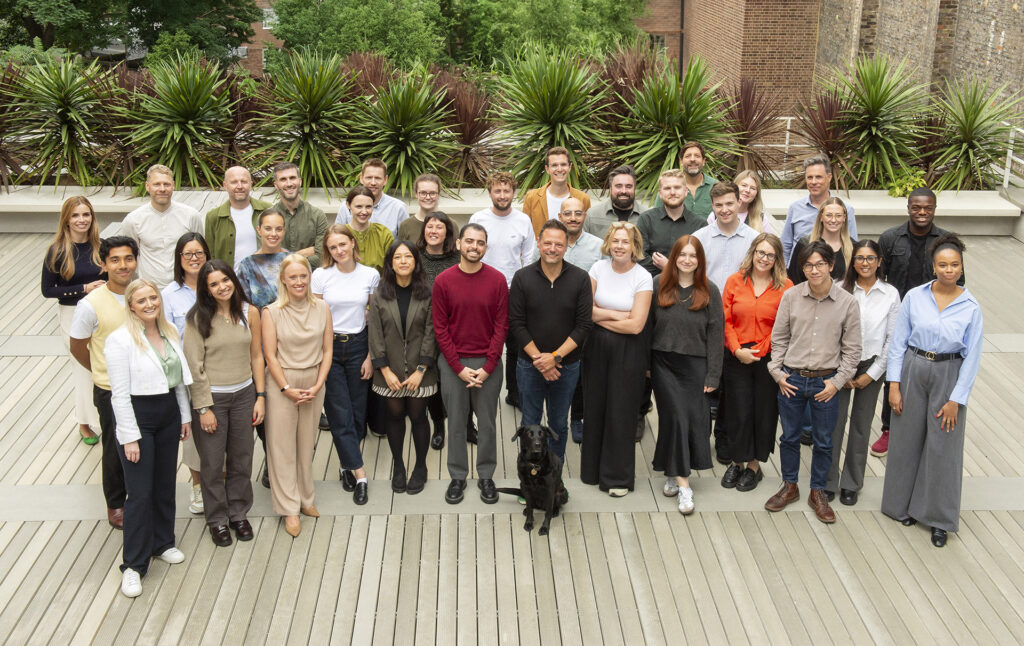
We are a majority-female organisation, committed to creating an environment where everyone feels valued, respected and empowered. Our EDI Strategy has been formulated alongside a specialist external consultant, to demonstrate a measurable, accountable approach to diversity and inclusion. Quarterly KPI reporting and annual EDI survey data drives measurable year-on-year improvement. Specific policies addressing chronic pain, menopause, and religious observance demonstrate meaningful inclusivity.
Following last year’s EDI Survey results, a Quiet Room was added to our offices; enhanced parental leave eligibility thresholds were reduced; and WFH / flexibility arrangements were extended to cover probationary periods. An EDI events calendar formally recognises cultural and religious significance throughout the year. Mental health provision, yoga, wellness contributions, a Running Club, and a Parents and Carers Group collectively address wellbeing across its recognised dimensions. A renewed recruitment policy and demographic data collection show our commitment to building an evidenced, progressively improving picture of organisational diversity.
2. Do you operate a no overtime culture, meet the living wage consistently, and stipulate a fair salary ratio between staff of all levels?
Fair pay and reasonable hours are not aspirations; they are operational commitments. Living wage is a non-negotiable baseline; salaries are benchmarked continuously, targeting the top end of the market. Our gender pay gap metrics are industry-leading, supported by being a majority-female organisation.
Timesheets and resourcing are reviewed weekly, enabling our team to flex across projects if needed. We have recently re-structured to support improved pastoral care, and have strengthened our flexible working policy, reinforcing a culture where any long hours are flagged and addressed rather than normalised. Our dedicated People and Culture Manager ensures none of this drifts.
Our benefits package reflects genuine investment in people: a 7% employer pension contribution, BUPA healthcare and mental health cover, enhanced parental leave, a baseline 27 days annual leave plus bank holidays, and two weeks remote working each year. We firmly believe people do their best work when they feel looked after.
3. Do you support charities, community groups, social enterprises, action groups and others through pro-bono work, charitable giving or in-kind donations?
One of our ten founding principles is “Give Back”, as we believe that with success comes responsibility to our local communities. In 2024, we donated £7,500, mobilised 54 volunteers, and contributed 162 hours of our time to St Luke’s community initiatives alone. Our South African team raised an additional £2,450 for 1-to-1 Africa through a coordinated international fundraising drive.
We fully fund an annual charity quiz, with 100% of ticket and raffle proceeds going to a different charity each year. In 2025, 60 guests raised over £3,000 for Evelina Children’s Charity.
We also organise an annual whole-office volunteering day; Stepney City Farm for the UK team; while in South Africa we collected 18kg of litter through a beach clean-up, supported sanitary product distribution, and ran community cooking days. Every employee also receives a personal volunteering day each year. ‘Giving back’ is therefore supported as a key part of working life.
4. Do you use an ethical framework to assess opportunities and/or supply chain partners and is them team consulted on these decisions?
Every project opportunity passes through a clear go/no go framework. Due diligence is undertaken on all prospective clients, and we actively encourage our architect clients to apply equivalent scrutiny to their own pipelines. Last year, a project was declined due to its connection with ammunition-testing
Supply chain decisions follow the same logic. Our Sustainable Purchasing Policy applies a multi-criteria scoring system across environmental, social, and ethical dimensions to every supplier, ensuring purchasing decisions are accountable rather than convenient. Significant suppliers are required to complete a Supplier Questionnaire and acknowledge a formal Supplier Code of Conduct.
Crucially, none of this happens in isolation. Monthly reporting to the full team covers pipeline, project decisions, and the reasons behind them. Operating and Trust Board meeting minutes are shared openly. Ethical decision-making is a collective responsibility: when decisions affect the team, the team is consulted.
Project
1. Does your work demonstrate deep engagement with local stakeholders and end users?
Meaningful stakeholder engagement requires structure, not just intention. Engagement is a managed process with multi-layered clients, complex stakeholder groups, and real accountability. The key to this is transparency and inclusion – we start by mapping the extent of existing stakeholders, before considering who has been historically excluded. Consultation workshops, feedback sessions, and decision points are integrated directly into the design programme. Supported by our DM toolset including comments trackers, client decision routemap, and brief derogations register.
This approach is tested through our project at the British Museum with Lina Ghotmeh Architecture, which requires nuanced engagement with the cross-section of the Museum’s Stakeholders. As a cultural institution and London landmark, the project requires meaningful dialogue with schools, research organisations, local interest groups and activists, at the same time as collection keepers and the Board of Trustees. The project’s purpose is to radically re-think the building’s future through a genuinely democratic conversation.
2. Does your work create connected and resilient communities which positively contribute to neighbourhoods and allow equality of access?
The most enduring buildings don’t just serve their users; they serve their neighbourhoods. We have many projects that demonstrate this in practice:
The London Museum with Stanton Williams, creates genuinely democratic public space, a place for performance, debate, and rest, designed to revitalise the area as much as to house a collection; LSE’s Firoz Lalji Global Hub with David Chipperfield Architects, has a ground floor reimagined as a public ‘agora’, extending the city into the building and hosting hybrid events designed to ensure equality of presence for both physical and remote participants; Ottawa Parliamentary Precinct with David Chipperfield Architects, anchors a Peoples’ Square, a public forum for parliamentarians, citizens, and Indigenous communities to meet on genuinely common ground.
Behind each project, our stakeholder engagement planning ensures community voices are systematically captured and fed back into design decisions, turning consultation from a procedural obligation into a meaningful driver of social outcomes.
3. Does the majority of your work promote equity in society, and consider all people, not only building inhabitants
No.