
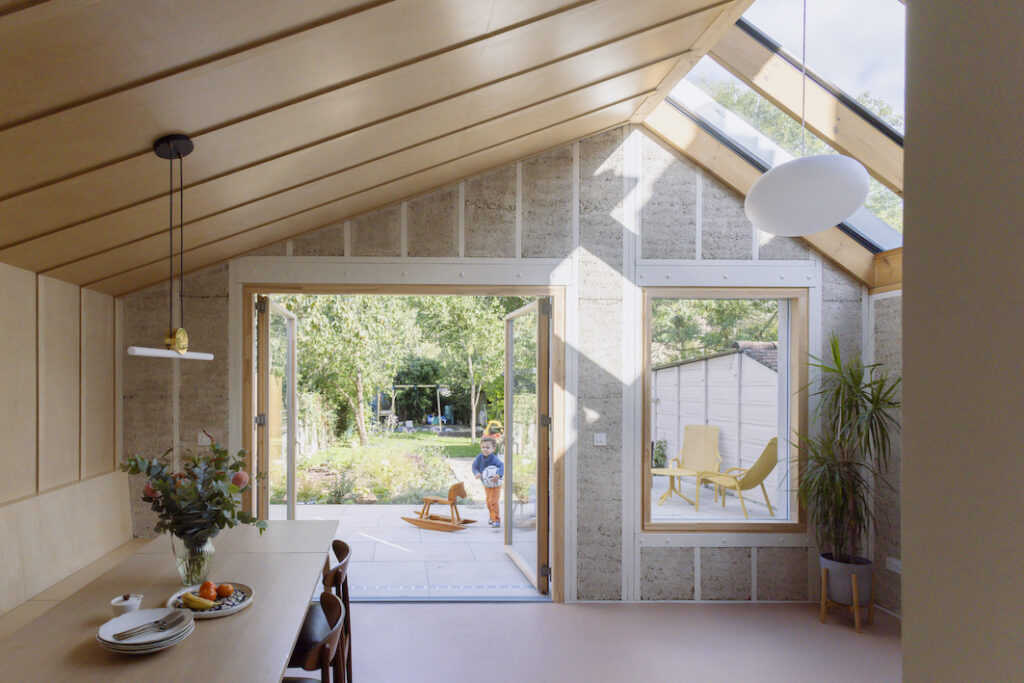
Submission by nimtim architects.
Being a good ancestor
Practice
1. Does the practice have a clearly stated purpose aligned with the planetary emergency? We are looking for a bold ambition here, and a practice culture which recognises the need for long-term thinking. For example, a strong mission, a theory of change, or a sustainability roadmap.
We have an ambition to reduce carbon operational carbon as part of our business practices and a similar one for the work we carry out. With regret we do not measure this as yet but we are working on that.
2. Does the practice have a clear succession plan, which passes on ownership and protects the values and legacy of those who built and contributed to the practice? For example is the practice an employee owned trust.
No, we are quite a small practice and as yet, don’t feel we have the status or profit margins to justify a succession plan but it is something we are looking into.
3. Does the practice share research and knowledge for the benefit of society and the wider world? For example, you regularly carry out post occupancy evaluation and share information with others.
We share much of our work on social media platforms including learnings and techniques around natural materials and retrofit. We also regularly share this with universities through lectures and talks.
Project
1. Does the practice advocate for long-term thinking at the outset of projects? Do you initiate projects with long-term thinking and challenge the client on design life? Also, can the practice demonstrate that this approach has worked – with a shorter or longer design life, or an innovative approach to financing or payback period?
Yes, but we don’t measure this at present.
2. Do your projects take account of the future climate and the need for resilience? For example, do the projects demonstrate flexibility, design for adaptation, design for disassembly, non-deterministic solutions, or demountable structures.
Yes, this is something we consider deeply particularly encouraging more sustainable drainage and better passive shading
3. Do the majority of your projects go beyond mitigating negatives and towards optimising positives? For example, are they meeting or exceeding the RIBA 2030 Challenge.
I would say yes but we are not measuring as effectively as we could/should.
Co-evolving with nature
Practice
1. Does the practice use biophilia within the office or regularly host meetings and retreats in natural settings? For example do you have extensive planting within the office or rely on natural patterns and imagery for stress relief or quiet areas.
Very plant-y in the office.
2. Can the practice share examples where it has considered nature in decision making? For example by having a nature proxy to encourage eco-centric decision making, using natural systems as inspiration for the company structure, recognising the seasonal nature of people’s capacity and workload or celebrating equinoxes and solstices together.
Have to say no to this but nice ideas.
I will always mention the equinox/ solstice in the office.
3. Is the practice supporting nature locally and nationally? For example, does the practice support local gardens, gardeners, planting programmes, rewilding programmes or advocate for changes in legislation to protect nature.
Yes – many of our colleagues are active in local gardens – two of us have horticultural qualifications and we’ve had two rewilding projects on our books.
Project
1. Can the practice demonstrate projects which strive to match the performance of a mature ecosystem? As a minimum this would mean achieving biodiversity net gain.
Yes, several.
2. Is the practice working on material stewardship? For example, evidence could be shown through repeated use of low carbon materials, extensive material libraries and research or publications supporting responsible use of materials and elimination of waste.
Yes – we have an extensive library and score products by their ‘sustainability’ whilst recognising this is a very complex and difficult area with lots of misinformation.
3. Do the majority of projects demonstrate the use of biologically-inspired approaches such as Bioregionalism, Biophilia, Biomimicry, Ecomimicry (also referred to as Ecosystems Thinking, Industrial Ecology or Industrial Symbiosis) or BioTRIZ?
I honestly can’t say yes.
Creating a just space for people
Practice
1. Does the practice have a progressive EDI policy and can you evidence many forms of diversity, which are welcomed and acknowledged, within the practice?
Yes,
2. Does the practice operate a no overtime culture, meet the living wage consistently, and stipulate a fair salary ratio between staff of all levels?
Yes,
3. Does the practice support charities, community groups, social enterprises, action groups and others through pro-bono work, charitable giving or in-kind donations?
Yes, where possible
4. Does the practice publicly refuse to work with certain clients, suppliers or organisations on ethical grounds?
Not necessarily publicly but yes.
Project
1. Do the projects demonstrate deep engagement with local stakeholders and end users? For example, is there evidence that your project engagement goes beyond consultation towards co-design?
Yes – see Sayes Court and Becontree.
2. Do your projects create connected and resilient places which positively contribute to their neighbourhoods and allow equality of access? For example, do your projects create economic opportunity, retain value locally and generate social value?
As much as is possible, yes.
3. Do the majority of your projects promote equity in society, and consider all people, not only the building inhabitants? For example, do your projects show due regard for workers within the supply chain and take active steps to avoid modern slavery?
Yes I believe so, although would struggle to evidence that.